
8 Things a Tennessee Camera Ticket Can’t Legally Do to a Driver

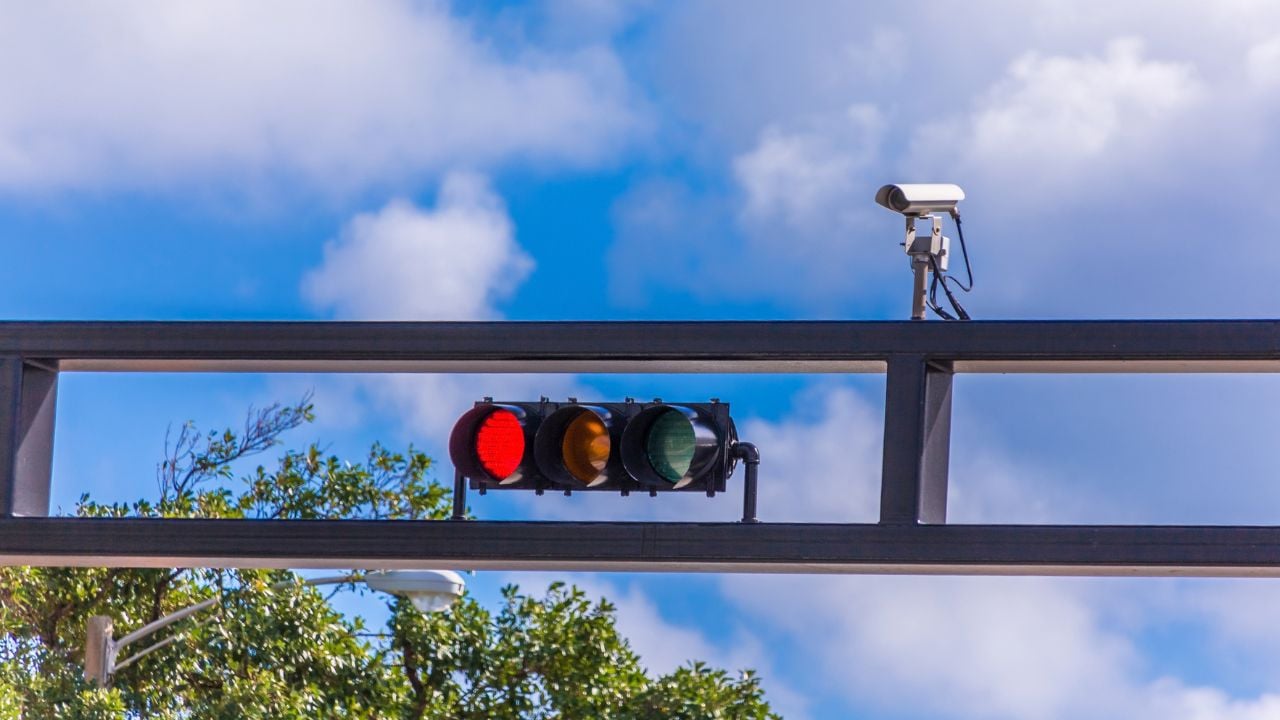
A camera at a Tennessee intersection can catch a driver running the red light in broad daylight and mail a citation days later.
That’s not the strange part.
Tennessee law puts hard limits on that citation once it reaches a driver’s mailbox.
These are the things a Tennessee camera ticket can’t legally do to a driver.
Note: This is general information, not legal advice. Camera-citation rules, fines and deadlines are subject to change.
1. $50 Ceiling
Paying a Tennessee camera ticket before a court date comes with a hard ceiling under state law.
State law caps the civil penalty at $50 when a driver pays the notice without a court date, no matter the intersection or the speed the camera clocked.
That’s the whole bill.
Fight the ticket in court instead, and that flat cap disappears.
The statute never sets a ceiling on what a judge can order once a case leaves the mail-in track.
What an Officer’s Ticket Would Cost Instead
Tennessee’s $50 cap belongs to this one camera citation, and it never carries over to a ticket an officer writes by hand.
An officer-issued ticket for the same red light is a moving violation instead.
That version can add points to a license and follow a driver into the next insurance renewal, something a camera ticket never does.
2. No-Points Rule
A driver’s license picks up no points from a Tennessee camera ticket, no matter how damning the video looks.
State law treats a citation based solely on camera evidence as a nonmoving violation, the same category as a parking ticket instead of a moving offense.
The tally never moves.
Tennessee suspends a license once points pile up from moving violations, and a camera ticket never contributes to that total, no matter how many intersections catch the same driver.
3. Insurance Firewall
Insurance rates don’t move because of a Tennessee camera ticket, and the law makes the citation say so in writing.
Every notice has to carry a line telling the driver that not paying it can’t hurt their credit, license, or insurance rate.
Rates hold steady.
That promise holds up because the same nonmoving classification keeps this citation off the driving record an insurer pulls at renewal.
4. Credit Report Shield
State law blocks anyone who handles Tennessee camera-ticket records from disclosing them to a consumer reporting agency, paid or unpaid.
That keeps a camera ticket off a credit report altogether, whether a driver pays it right away or lets it sit.
It stays invisible.
That protection holds even when a driver never pays the fine at all, which is more than an unpaid utility bill or a store card can promise.
5. Officer Sign-Off
A driver never gets a camera ticket on an algorithm’s word alone.
State law requires a Peace Officer Standards and Training (POST)-certified or state-commissioned law enforcement officer to review that footage.
That officer decides whether a violation happened before any notice goes in the mail.
A computer doesn’t vote.
That human review is what stands between a driver and a citation a computer flagged but a person never confirmed.
6. 20-Day Clock
A camera ticket runs on the state’s clock, not the city’s.
The notice has to go out within 20 business days of the alleged violation, and missing that window hands a driver a built-in defense in traffic court.
Late is late.
A citation mailed on day 25 instead of day 20 gives a driver something concrete to raise in court, mailing date and all.
7. Two-Notice Rule
Thirty days have to pass before a camera ticket can turn into a demand for payment.
The same notice law allows 30 days from the mailing date to pay.
If that first deadline slips by, a city has to send a second notice giving another 30 days before any extra penalty attaches.
Two chances, not one.
A driver who misses both windows still got two full months of warning before a city could add a dime on top of the original fine.
Psst! How much do you know about Tennessee driving law? Take our quiz and see how many you can get right.
Quiz
Tennessee Road Rules IQ
Answer these questions on Tennessee traffic law many drivers never learn. We bet you can’t get them all right. Prove us wrong?
Tennessee’s “Slow Poke Law” bans camping out in the passing lane on the interstate. What’s the fine for breaking it?
8. Legal Right on Red
Make a legal right turn on red in Tennessee, and a traffic camera has no case against a driver for it.
A citation built solely on camera evidence for failing to stop completely before a permitted right turn is invalid on its face, under the same law that governs these cameras.
The turn itself was legal.
Post a clearly marked "No Turn on Red" sign at that same intersection, though, and the rule changes.
The turn stops being permitted in the first place, camera or not.
What a City Has to Do First
A camera doesn't just appear at an intersection.
State law requires a licensed traffic engineer to complete a full engineering study of that intersection first.
The company selling the camera system isn't allowed to run that study or help pick the engineer who signs off on it.
Drivers get advance warning too.
A sign has to sit somewhere between 500 and 1,000 feet before the camera.
It has to meet the same federal size standards as any other road sign on that street, not some smaller version tucked out of easy view.
Neither requirement shows up on the ticket a driver gets.
Both have to happen before a city ever mails the first ticket from that intersection, engineer's stamp and roadside sign alike.
6 Charges That Turn One Missed Tennessee Power Bill Into a $324 Reconnection

Memphis Light, Gas and Water cut off power, gas, or water to tens of thousands of Memphis households in one recent year.
These are the charges that turn one missed Tennessee power bill into hundreds of dollars before the lights come back on.
6 Charges That Turn One Missed Tennessee Power Bill Into a $324 Reconnection
8 Things Kentuckians Say About Tennessee That the Numbers Don't Back Up
Kentucky's flat income tax dropped to 3.5% at the start of the year, and Tennessee's has stayed at zero the entire time.
These are the things Kentuckians say about their neighbor to the south that the numbers just don't support.
8 Things Kentuckians Say About Tennessee That the Numbers Don't Back Up
