
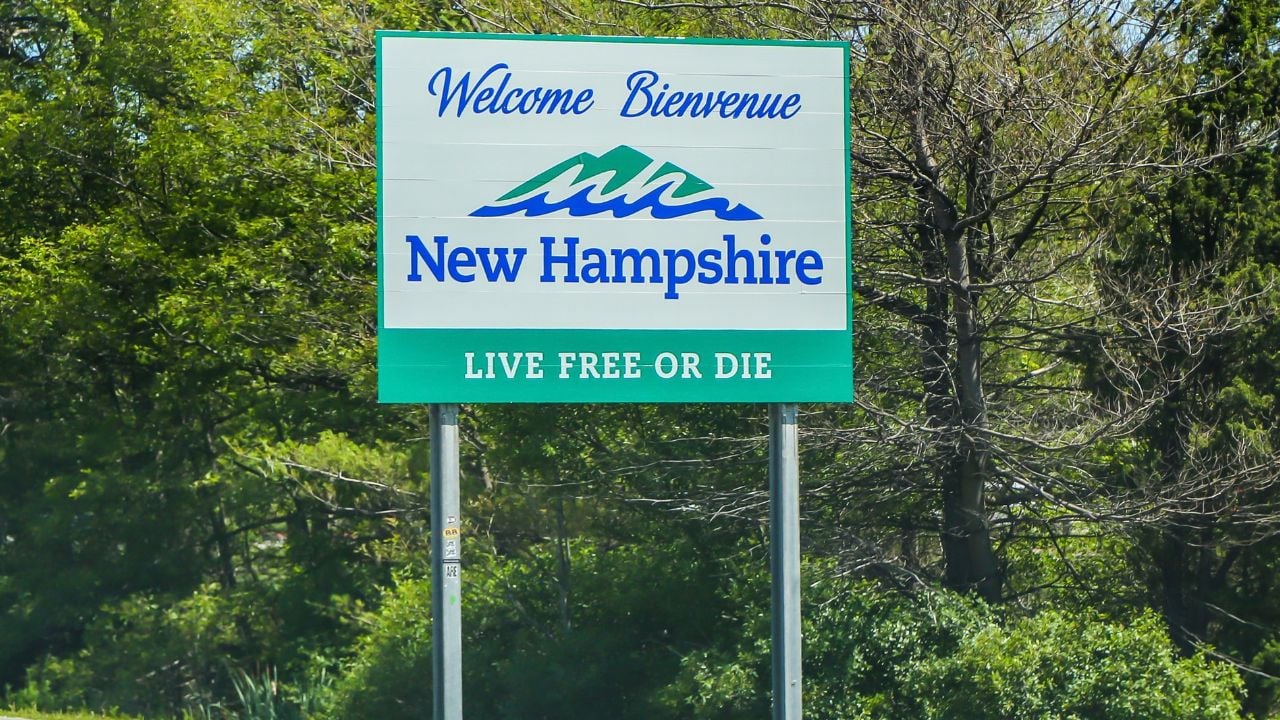
9 Reasons Bay Staters Keep Crossing Into New Hampshire and Staying

New Hampshire has gained a net 145,648 Massachusetts residents since 2005, according to Census migration data analyzed by the Josiah Bartlett Center for Public Policy.
These are the reasons Bay Staters keep crossing into New Hampshire, and why so many of them end up staying for good.
Note: This is general information, not tax or legal advice. Tax rates and rules in both states are subject to change.
1. Not a Cent of Sales Tax
New Hampshire charges 0% sales tax on anything, while Massachusetts charges 6.25% on general retail sales.
That gap turns an ordinary Saturday errand into a border run for many shoppers.
The habit sticks.
Pheasant Lane Mall in Nashua and the Mall at Rockingham Park in Salem both sit close enough to the state line for a quick trip.
A shopper can be home again before the parking meter runs out.
A couch, a laptop, or a whole holiday shopping list saves money on the spot.
Move across the state line for good, and every purchase for the rest of a life stays untaxed.
2. Wages New Hampshire Never Taxes
New Hampshire has never taxed a paycheck, no matter how much someone earns, while Massachusetts collects a flat 5% on every dollar of wage income.
A Bay Stater who already crosses the border for work still owes Massachusetts income tax on every dollar.
That’s true whether they’re driving into a New Hampshire office some days or logging in from home on others.
It holds as long as Massachusetts stays their legal address.
Massachusetts taxes a resident’s full income no matter where it’s earned, while a nonresident owes tax only on work performed inside the state, under state law.
Residency decides everything.
That’s the line that moves once someone relocates.
Massachusetts dropped a temporary pandemic rule in September 2021 and went back to taxing nonresidents only for the days they physically work inside the state.
A commuter who moves to New Hampshire but still drives into a Massachusetts office two days a week now owes Massachusetts tax on only those two days’ wages.
Go fully remote from a New Hampshire home office instead, and the same paycheck arrives without Massachusetts touching a cent of it.
3. New Hampshire’s Vanished Income Tax
New Hampshire erased its final income tax on January 1, 2025, when it repealed the 3% tax it used to charge on interest and dividends.
Wages were never part of that tax to begin with.
Zero. Full stop.
Retirees and investors living off a stock portfolio or a certificate of deposit (CD) ladder settle in New Hampshire for that reason.
That income no longer answers to any state government at all.
A retired Bay Stater who moves for that reason isn’t planning a weekend trip.
4. Massachusetts’ High-Earner Surtax
Massachusetts adds a 4% surtax on top of its regular income tax once a resident’s earnings pass $1,107,750 in 2026, according to the state Department of Revenue.
That pushes the top combined rate to 9%.
No exceptions.
New Hampshire charges nothing at that income level, or any income level.
The bill from that surtax comes back every single year a high earner keeps their address in Massachusetts, which is exactly why some stop keeping it there.
The Math Behind Massachusetts’ Surtax
New Hampshire charges nothing at any income level.
The math behind Massachusetts’ surtax is worth spelling out: It applies only to the slice of income above $1,107,750, not the whole paycheck.
Someone earning $1.3 million pays the extra 4% on just $192,250 of it, an added bill of about $7,690, while the rest of their income still lands at the regular 5% rate.
5. Move-In Car Discount
New Hampshire charges no sales tax on a car purchase, but Massachusetts closes that gap for anyone who doesn’t live there.
Buy a car in New Hampshire and register it in Massachusetts, and the state charges a 6.25% use tax on the sticker price, the same rate as the sales tax it replaces.
Same bill, different name.
The only way to keep the tax-free price is a New Hampshire plate attached to a New Hampshire address.
Keeping that price for good means becoming a New Hampshire resident, not just a New Hampshire shopper.
Psst! How much do you know about the tax gap between Massachusetts and New Hampshire? Flip these cards and see which claims hold up.
6. Cheaper Address Just Over the Line
Home prices drop noticeably once a buyer crosses from Massachusetts into New Hampshire’s Hillsborough County.
The median sale price there ran about $538,199 in August 2026, compared with a statewide Massachusetts median of $645,000 that April.
A down payment, basically.
A young family priced out of a starter home near Boston finds a similar commute distance in Nashua or Derry for tens of thousands less.
Buying there instead of renting near Boston is the plan, not a shortcut.
7. New Hampshire’s Untaxed Withdrawals
Massachusetts taxes a traditional pension or 401(k) withdrawal at its regular income tax rate, and New Hampshire taxes none of it.
Not a dollar of it.
Social Security stays untouched in both states.
The gap shows up on the retirement account, not the Social Security check.
A retired teacher pulling money from a 403(b) keeps more of every withdrawal once New Hampshire is the address on the tax return.
That’s the kind of math that turns a family’s old summer camp on a New Hampshire lake into a year-round address.
8. Standing Liquor Run
New Hampshire’s state-run liquor stores sell every bottle tax-free, and the state has built some of them right along the highways leading out of Massachusetts.
Hooksett alone has two outlets, one on each side of Interstate 93.
Nashua’s outlet runs about 32,000 square feet, according to trade publication SevenFifty Daily.
More than half of the system’s sales come from out-of-state shoppers, and about a quarter come from Massachusetts alone, the same reporting found.
Massachusetts hasn’t taxed alcohol sales since a 2010 ballot vote repealed it, so the appeal isn’t dodging a tax that no longer exists.
It’s New Hampshire’s prices running lower to begin with.
Nothing sneaky about it.
A single trip turns into a standing errand once someone realizes how often they’re already driving past the exit.
9. Two-Decade Head Start Already in Place
New Hampshire has gained a net 145,648 Massachusetts residents since 2005, according to the Josiah Bartlett Center for Public Policy’s analysis of Census migration data.
Annual crossings have only grown, averaging over 20,800 Massachusetts arrivals a year from 2015 to 2024, up from about 16,100 a year in the decade before.
That’s not a blip.
Newer arrivals cross into towns where the moving companies, the real estate agents, and the informal Massachusetts networks are already built for people making the same jump.
Following a friend or a sibling who already made the move turns a big decision into a much smaller one.
Property Tax Catch
New Hampshire’s reputation as an escape from Massachusetts taxes comes with one catch, and it’s the property tax bill.
New Hampshire’s average effective property tax rate runs about 1.50% of a home’s value, compared with roughly 1.00% in Massachusetts, according to the Tax Foundation.
Higher, not lower.
A retiree on a fixed income with a paid-off house feels this catch the hardest.
Their New Hampshire property tax bill can run higher every year than anything Massachusetts ever charged them.
For someone earning six figures and still renting, the trade still runs the other way.
No income tax and no sales tax outweigh one property tax bill on a house they don’t own yet.
10 Things the Record Shows About Boar’s Head at the Publix Deli Counter

The Boar’s Head label still sits behind the Publix deli counter, and it has carried more than a loyal following since 2024.
A federal paper trail followed the brand that year, and none of it started with a single unhappy shopper.
10 Things the Record Shows About Boar’s Head at the Publix Deli Counter
