
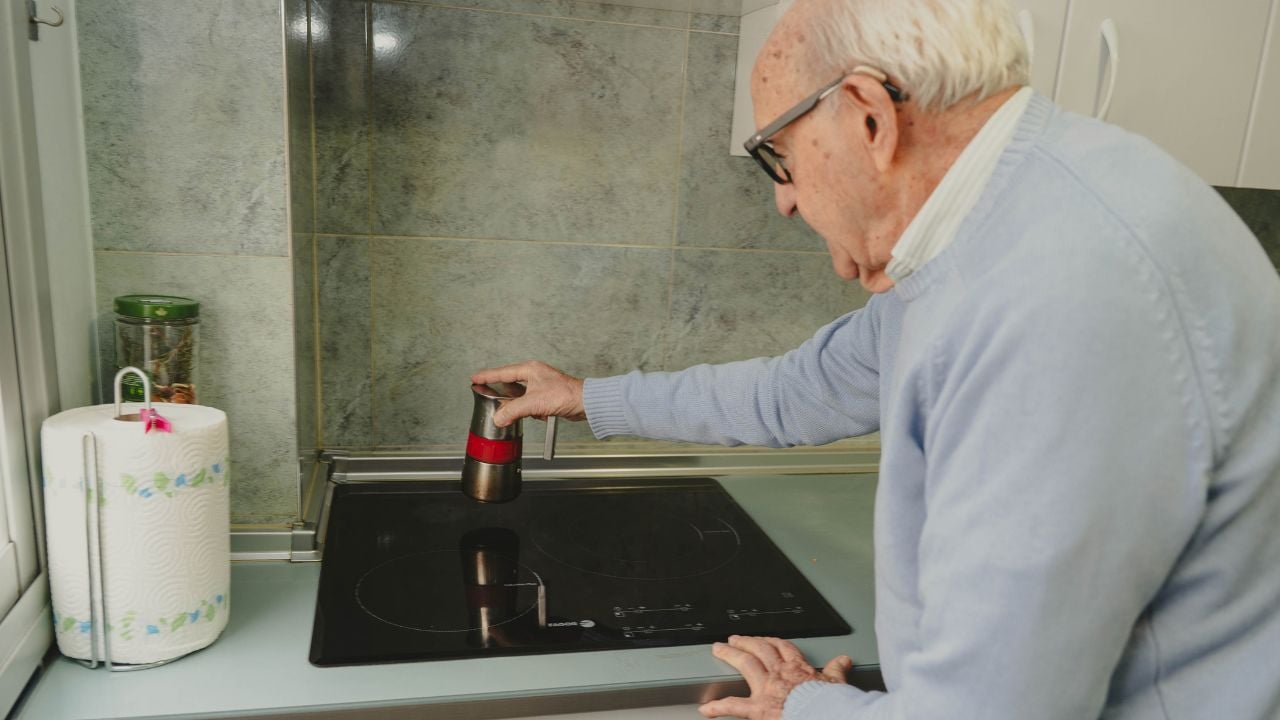
9 Kitchen Changes That Keep Older Pennsylvanians Cooking Safely

Fire Prevention Week, the National Fire Protection Association’s annual campaign, runs October 4 through 10 this year, and cooking is still the country’s No. 1 cause of home fires.
The risk isn’t spread evenly.
More than one in five Pennsylvanians are 65 or older, and that leaves even more room for a slip or a forgotten burner in the kitchen.
These are the kitchen changes that keep older Pennsylvanians cooking safely.
1. Moving the Stove Controls Forward
Front-facing stove controls let a cook reach every dial without crossing over a lit burner or a hot pan first.
Cooking equipment is the leading cause of home fires nationwide, per the National Fire Protection Association.
Reaching across a lit burner to adjust the dial behind it is exactly the kind of moment that starts one.
Many stoves, especially older or builder-grade models, still put those knobs behind the burners instead of in front of them.
It doesn’t have to.
AARP, the nonprofit advocacy group for older Americans, lists front-mounted controls among the simplest cooking-safety swaps a kitchen can make because they remove that reach for good.
2. Turning the Water Heater Down
The kitchen sink sees more hot water, more often, than almost any other tap in the house.
A cook rinses dishes and fills pots there every day, which makes it a tap that can scald a hand if the water runs too hot.
Turning the water heater down to 120 degrees keeps the tap hot enough for dishes and comfort, but far less likely to cause a serious burn.
That’s a change made once at the water heater, not something to remember every time someone runs the kitchen tap.
It never repeats.
Kansas State Research and Extension names a lower water heater setting among its top aging-in-place fixes.
The lower setting is the same fix that keeps the kitchen sink from turning into the riskiest tap in the house.
The Burn-Time Math Behind 120 Degrees
The higher a water heater’s thermostat is set, the less time passes before hot tap water causes a burn, and the Consumer Product Safety Commission has put numbers to it.
At 140 degrees, that takes only a few seconds.
At 120 degrees, the same burn takes close to 5 minutes instead.
That gap is the whole reason the thermostat matters more than any faucet upgrade.
3. Swapping in a Lever Faucet
A lever-style kitchen faucet turns on and off with one push instead of a twist that needs a firmer grip.
Arthritis and reduced hand strength make that twist harder with each passing year, and a wet, soapy grip makes it worse.
A lever handle, a light-touch handle, or a sensor faucet shows up throughout AARP’s HomeFit Guide as one of the easiest swaps in the kitchen.
None of them ask for a twisting grip to work.
One motion does it.
A single-handle faucet with a wide lever also cuts down on the fumbling that happens when hands are wet or cold.
4. Moving the Microwave off the Range
An over-the-range microwave puts a hot, heavy dish right above an older cook’s shoulder height, exactly where a slip does the most damage.
Lifting and lowering hot cookware overhead is hard at any age, and it gets harder with less grip strength or balance.
That placement is one AARP’s HomeFit Guide warns against directly, favoring a microwave moved down to counter height or built into a lower cabinet instead.
Less lifting, fewer falls.
A countertop microwave costs less to fix than a fall does.
5. Adding Task Lighting Over the Stove
Task lighting mounted above the stove and counter shows a cook exactly where the flame, the knife, and the hot pan are.
A single overhead ceiling fixture leaves the counter and stovetop in a cook’s shadow, which is exactly where the important work happens.
Dedicated task lighting over the sink, the stove, and any counter used for cutting or prep is a standard entry in AARP’s HomeFit Guide.
General room light rarely reaches those spots well.
Shadows hide mistakes.
A plug-in puck light under the cabinets works just as well as a wired fixture, and it takes an afternoon to install, not a renovation.
Psst! How much do you know about kitchen fire myths? Flip each card below and see how many you already had right.
6. Swapping Knobs for D-Shaped Pulls
D-shaped or C-shaped drawer pulls replace the round knobs that force a pinch grip to open every kitchen cabinet.
That pinch grip gets harder with arthritis, and a wet or greasy hand slips right off a small round knob.
AARP’s HomeFit Guide backs the swap for exactly that reason: A D-shaped pull works with a whole hand instead of just two fingers.
The whole hand grips now.
It’s a hardware store fix, not a contractor job, and many cabinets take a screwdriver and an afternoon.
7. Trading Deep Shelves for Pull-Outs
Deep, stationary shelves force a cook to lean into a low cabinet or reach up on a stool to find what’s in the back.
Pull-out drawers for lower cabinets and turntables for corner cabinets are two of the fixes AARP’s HomeFit Guide points to instead, so nothing sits out of easy reach.
Keeping the dishes and tools reached for every day somewhere between waist and shoulder height does the same job without buying anything new.
No stool required.
Someone climbing on a kitchen stool to reach a mixing bowl is exactly the kind of fall these changes are built to prevent.
8. Adding Slip-Resistant Floor Mats
A slip-resistant floor mat placed at the sink and another at the stove cover the two spots in a kitchen that get wet or greasy first.
Cushioned, slip-resistant mats at exactly those two locations are what AARP’s HomeFit Guide calls for.
Standing at either spot for any length of time is also easier on the knees and feet.
Two mats, two problem spots.
A loose throw rug does the opposite, so most aging-in-place guidance recommends anchoring or removing rugs from the kitchen.
9. Swapping the Open Flame for Induction
An induction cooktop heats the pan directly through a magnetic field, so the cooking surface itself never gets hot to the touch.
New York’s state energy research agency notes that many induction cooktops shut off automatically if no pan sits on the burner.
That closes off one of the most common ways a stove gets left on by accident.
There’s no flame to manage.
A countertop induction burner costs a fraction of a full range and works as a trial run before committing to anything bigger.
Pennsylvania’s Growing Share of Older Cooks
More than one in five Pennsylvanians are 65 or older, according to the U.S. Census Bureau.
That means a lot of Pennsylvania kitchens are used every day by someone 65 or older.
A small mistake at the stove lands harder in that age group than in any other.
That’s not a small group.
Pennsylvania’s aging population is exactly why so many of these changes are showing up in ordinary kitchens across the state, not just in specialized senior housing.
Help Paying for the Changes
Pennsylvania’s Area Agencies on Aging can help cover the cost of home modifications, including kitchen changes, through the state’s OPTIONS program.
Money helps too.
That coverage falls under a supplemental service, not the core benefit, so what qualifies depends on the local agency and an individual assessment.
Fire safety gets a push every fall, when Fire Prevention Week, the National Fire Protection Association’s campaign, runs October 4 through 10 this year.
Pennsylvania residents can also request a free smoke alarm through the American Red Cross’s Greater Pennsylvania Region, according to the state’s Office of the State Fire Commissioner.
Working smoke alarms cut the risk of dying in a home fire by half, per the Red Cross’s numbers, and free installation comes with the same request.
8 Reasons a Pennsylvania Life Insurance Payout Comes Up Short

A Pennsylvania life insurance policy is a contract, not a promise that every beneficiary collects the full amount printed on page one.
The number on the front page is a ceiling, not a guarantee, and a few common mistakes are why families end up short of it.
8 Reasons a Pennsylvania Life Insurance Payout Comes Up Short
9 Pennsylvania Yard Burning Rules That Neighbors Call the Township About

A single illegal open burn can cost a Pennsylvania resident up to $2,500 in fines, with up to 90 days in jail attached to the same violation.
State rules set the baseline, and local townships are free to go further, which is exactly how one afternoon fire turns into a neighbor’s phone call.
9 Pennsylvania Yard Burning Rules That Neighbors Call the Township About
