
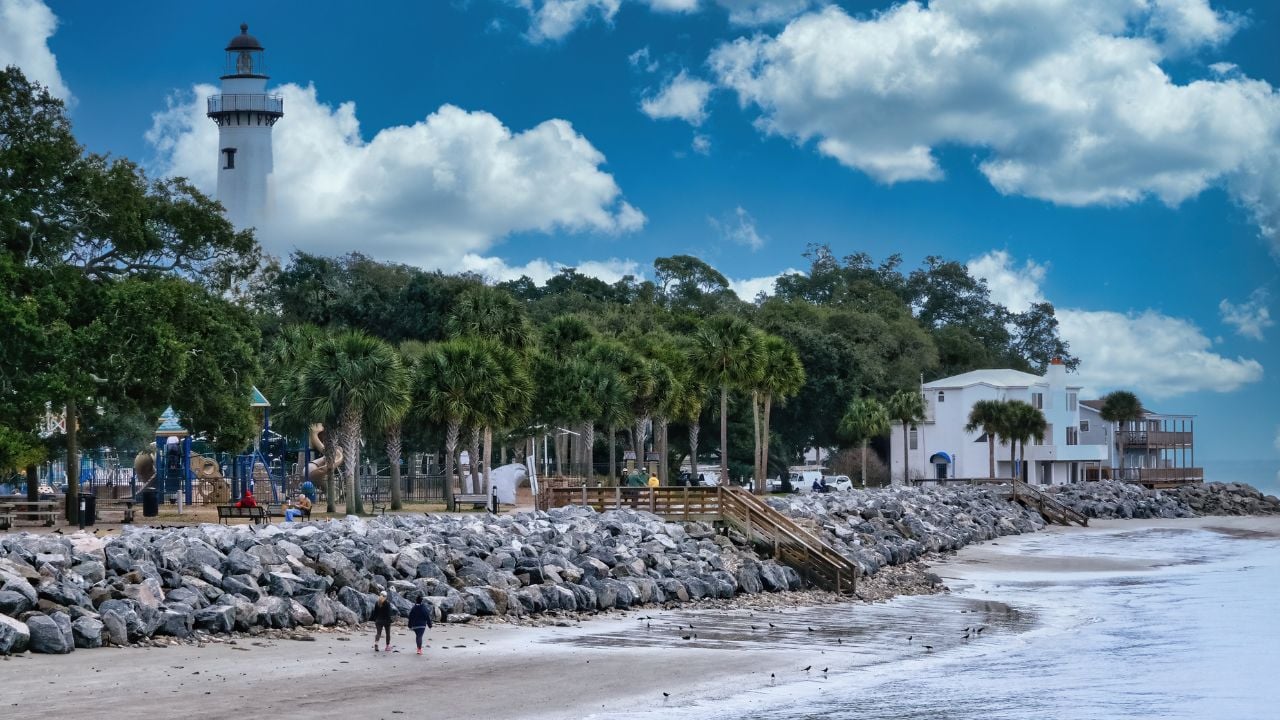
8 Georgia Coastal Stops That Are Harder to Reach Than Visitors Expect

The National Park Service finalized a new visitor use plan for Cumberland Island on August 28, 2026, amending rules that had stood since 1984.
Its visitor cap rose from 300 to 700. But it’s still a cap.
The other seven stops on this list follow rules that have nothing to do with any ferry cap.
These are the Georgia coastal stops that are harder to reach than visitors expect.
1. Sapelo Island
Sapelo Island sits a short boat ride off the coast near Darien, and the state runs the only public ferry out there.
It can’t be booked directly.
A landowning host has to reserve every seat.
That host might be a private property owner on the island, the Georgia Department of Natural Resources, or the Sapelo Island National Estuarine Research Reserve.
A traveler with no connection to any of them can’t buy a ticket, no matter how far ahead they plan.
The ferry leaves from Meridian, a dock well off U.S. 17.
The crossing takes 20 to 30 minutes each way.
The ferry runs three trips many days of the week, with fewer on Sunday.
2. Cumberland Island
Cumberland Island only opens to regular visitors through a National Park Service ferry, and even that boat runs on a strict reservation system.
The Park Service capped a years-long public review by finalizing new rules in late August 2026.
Those rules raised the ferry’s passenger cap from 300 to 700 a day, more than double the limit that had stood since 1984.
Conservation groups had pushed back during the review, worried about the island’s wildlife.
No bridge or causeway crosses the water to Cumberland Island.
The ferry from St. Marys is the only public way on, and its schedule changes with the season.
Missing that boat can mean a wait of hours for the next departure.
Reservations open six months out, but only to the month: Every date in a given month becomes bookable on the first of the month six months before.
Park staff can turn away anyone who shows up without one, right at the dock.
Stand-by seats are never guaranteed.
3. Ossabaw Island
Georgia bars visitors from casual sightseeing on Ossabaw Island by law.
Georgia bought the 26,000-acre island from its longtime owners in 1978, at half its appraised value.
That sale came with permanent conditions on how the state could ever develop the land.
A Heritage Preserve designation now restricts Ossabaw Island to research, cultural, and educational trips run through the Ossabaw Island Foundation and the state Department of Natural Resources.
Recreational sightseeing doesn’t qualify.
No exceptions.
A visitor has to apply for an organized trip and wait for approval before stepping off a boat there.
4. Wassaw Island
Georgia’s Wassaw Island has no visitor ferry, no dock with a ticket window, and no bridge of any kind.
No other way in.
The U.S. Fish and Wildlife Service manages the barrier island as a National Wildlife Refuge, and it offers no visitor transportation at all.
A private or chartered boat is the only option.
Georgia’s coastal tides average seven feet and swing as much as 10 feet during spring tides.
The refuge warns boaters to check tide tables before heading out because a mistimed trip can ground a boat on a mud flat for hours.
Once ashore, Wassaw Island has no restrooms, no store, and no cell coverage to speak of.
5. Blackbeard Island
Blackbeard Island carries the name of the pirate Edward Teach, but reaching it today has nothing to do with legend and everything to do with logistics.
The U.S. Fish and Wildlife Service manages Blackbeard Island as a National Wildlife Refuge, and it runs no ferry, no shuttle, and no other public transportation to get there.
A visitor has to arrange a personal boat or hire a local charter.
No exceptions for day-trippers.
The refuge bans overnight stays outright, campfires included.
Anyone who visits has to time the whole trip around a single day’s tide and weather.
Some sections of the refuge close seasonally to protect nesting wildlife, and the refuge posts those closures on-site rather than publishing them online in advance.
6. Wolf Island
Wolf Island might be the hardest coastal stop on this list to set foot on.
Congress designated it a National Wilderness Area, closing the refuge’s beach and marsh uplands to the public under that status.
Boats can idle in the surrounding creeks and sound, and people can fish, crab, or watch birds from the water.
Nobody sets foot on land.
The refuge exists to give shorebirds and nesting sea turtles a stretch of coastline with zero foot traffic.
There’s no boat rental counter, no marked landing, and no ranger station to check in with.
A visit means bringing everything, including local knowledge of the water.
No Fee, No Shortcut
Wassaw Island, Blackbeard Island, and Wolf Island are three Georgia wildlife refuges that charge no entrance fee at all, unlike the ferry ticket Cumberland Island requires.
That’s not a shortcut.
Getting to any of the three still means arranging a private or chartered boat and timing the trip around the tide.
Nobody on shore can help if the weather turns.
A charter out of Savannah or Darien still costs money, and a visitor still has to book it ahead.
The fee-free label rarely makes the trip any easier.
7. Little St. Simons Island
Georgia’s Little St. Simons Island is privately owned, and its only ferry belongs to the island’s lodge.
That boat leaves from Hampton River Marina on St. Simons Island, but a seat only exists for guests who’ve already booked a room.
No reservation, no seat.
The lodge caps its overnight guest list at 32 people across sixteen rooms, so there’s rarely a free bed even for someone determined to book one.
A handful of guided day trips run on a limited schedule for non-overnight visitors, and those also require a reservation well ahead of time.
Anyone who walks up to the marina without one finds no boat waiting.
Psst! How much do you know about Georgia’s barrier islands? Take our quiz and see how many you can get right.
Quiz
Georgia Barrier Island IQ
Answer these questions on Georgia’s barrier islands, their wildlife, and their history. We bet you can’t get them all right. Prove us wrong?
Roughly how many wild horses live on Cumberland Island today, according to National Park Service surveys?
8. St. Catherines Island
Georgia's St. Catherines Island has no public ferry, no visitor center, and no tour to book at any price.
You can't buy your way in.
A private nonprofit foundation owns the entire 14,640-acre island and runs it purely for research and conservation work.
Archaeologists have spent decades there documenting the Spanish mission Santa Catalina de Guale, one of the earliest European settlements on the coast.
The work stays private.
None of that research is open to the public.
The foundation that runs St. Catherines Island doesn't sell tickets, run tours, or take reservations from the public.
For a Georgia barrier island, that makes St. Catherines Island the rare case with no path in, no matter how far ahead a traveler plans.
8 North Georgia Mountain Trips Visitors Plan Wrong Every Fall
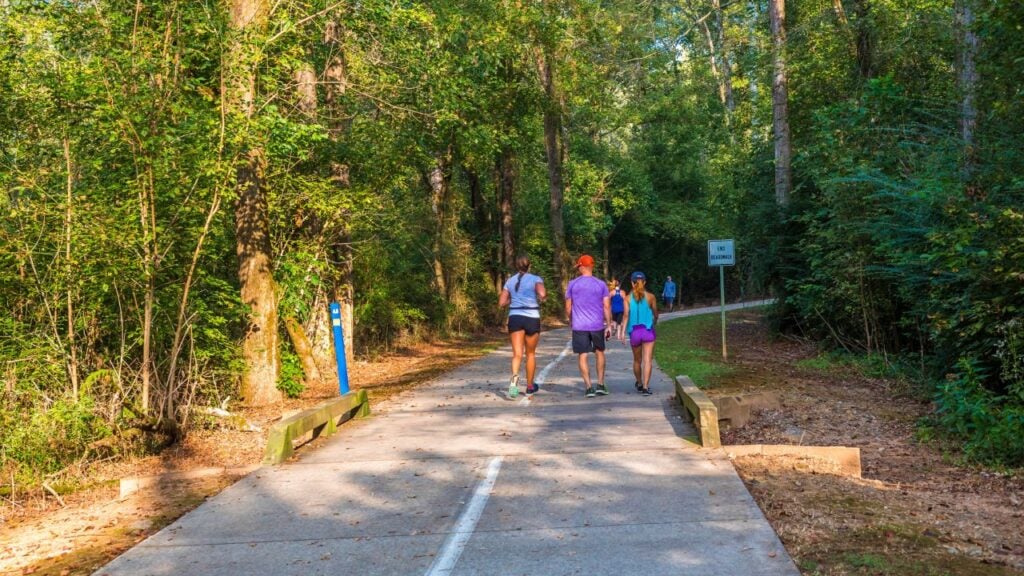
North Georgia's mountain parks require a $10 daily ParkPass, or $70 for the year, and that's just for one park system.
Half of the region's best fall stops sit inside the Chattahoochee National Forest, where a different set of rules applies.
8 North Georgia Mountain Trips Visitors Plan Wrong Every Fall
7 RaceTrac Perks Georgians Forfeit by Not Signing Up for Its Rewards Program

Georgia drivers paid $3.81 for a regular gallon of gas in late August 2026, 92 cents more than the same week a year earlier.
Many Georgians never download the RaceTrac Rewards app, and skipping it means leaving free perks and savings sitting at the pump.
7 RaceTrac Perks Georgians Forfeit by Not Signing Up for Its Rewards Program
