
8 Mattress Claims Marylanders Pay Hundreds Extra For

A pending class action accuses Mattress Firm of advertising a $1,399.99 “regular” price right next to a $674 sale price on the same mattress.
That’s a markdown of more than 50 percent.
Plaintiffs say almost nobody ever paid the higher price to begin with.
Mattress Firm isn’t the only place shoppers overpay.
These are the mattress claims Marylanders and shoppers everywhere often pay hundreds extra for.
Note: This is general information, not legal or financial advice. Pricing, financing terms, and return policies vary by retailer and are subject to change.
1. Comparison-Proof Name Game
Mattress retailers routinely sell the same, or a nearly identical, mattress under a different model name at every chain that carries it.
That makes a “$500 off” sticker on the showroom floor meaningless because there’s no other store’s price to hold it against.
GoodBed, a mattress-review and comparison site, found the naming is deliberate.
Manufacturers assign each retailer an exclusive name and cover fabric, so only one store in a given region ever carries that exact label.
That wasn’t an accident.
A shopper can’t type a model number into a search bar and find it cheaper two towns over because that model number was never sold anywhere else to begin with.
GoodBed has tracked the price of the same underlying mattress swinging by as much as $1,000 at a time, across retailers and over time.
Retailers, not manufacturers, keep the upside from a name shoppers can never comparison-shop.
A renamed mattress can never be price-matched, so a buyer routinely pays hundreds more than the identical mattress costs two towns over, with no way to catch it.
2. Fictional “Regular” Price
A 2026 lawsuit accuses Mattress Firm of running the exact same play on its price tags.
The complaint says the retailer advertised strike-through prices of $799.99 and $1,399.99 next to sale prices of $374 and $674, discounts of roughly 52 to 53 percent on those two mattresses.
Plaintiffs allege the mattresses were almost always sold at the lower number, which would make the higher one fictional.
Nothing was ever full price.
The suit also alleges the company rotated holiday and seasonal sale names while running the same discount without interruption, manufacturing urgency around a markdown that allegedly never ended.
Mattress Firm hasn’t been found liable, and the case is still pending.
The pattern it describes, though, is one shoppers report at other chains too.
A markdown that never ends isn’t a markdown.
It’s a mattress priced hundreds of dollars higher than it needs to be, every single day.
By the Numbers
$1,000: How far GoodBed found the same renamed mattress can swing in price across retailers.
$725.99: The gap between Mattress Firm’s alleged “regular” price and its sale price on one mattress, per a pending lawsuit.
$175 million: What Progressive Leasing paid the FTC after allegedly doubling what lease-to-own shoppers paid.
$325: Retroactive interest one furniture shopper faced after leaving just $10 unpaid on a deferred-interest plan.
$753,000: What a mattress company paid the FTC for falsely advertising imported beds as American-made.
3. Lease-to-Own’s Hidden Cost
Ever wonder how lease-to-own mattress financing can advertise “same as cash” and still cost a shopper double?
Furniture and mattress stores nationwide pitch lease-to-own financing, through companies like Progressive Leasing, as a way around a big upfront bill.
The Federal Trade Commission (FTC) sued Progressive Leasing in 2020, alleging its “same as cash” and “no interest” pitches hid the math.
Consumers who completed every scheduled payment frequently paid about twice the sticker price, the agency found.
Few finish the math first.
Progressive Leasing paid $175 million to settle the FTC’s charges.
The full cost breakdown, the agency said, sat behind an unmarked dropdown arrow many shoppers never clicked.
A mattress marked $900 lease-to-own can run close to $1,800 by the time every payment clears.
4. Deferred-Interest Trap
Store financing on a mattress purchase often comes with a year to pay the balance off interest-free, as long as it hits zero by the deadline.
It’s a trap.
About 80 percent of borrowers paid these plans off before the promotional window closed in 2020, per NerdWallet’s reporting on Consumer Financial Protection Bureau (CFPB) data.
That leaves roughly 1 in 5 cardholders facing retroactive interest anyway.
If a shopper misses the deadline, even by a little, the lender doesn’t just start charging interest going forward.
The lender charges interest retroactively instead, on the entire original balance.
NerdWallet’s case study involved $3,000 in furniture financed on a 12-month plan.
The shopper paid it down to a $10 balance and still got hit with about $325 in retroactive interest on the full original amount.
Owing $10 still cost $325.
A 2025 Bankrate survey put the average retail store card’s rate at just over 30 percent annual percentage rate (APR), applying broadly regardless of a shopper’s credit score.
Psst! How much do you know about the mattress industry’s history, fire codes, and recycling rules? Take our quiz and see if you can ace it.
Quiz
Mattress Industry IQ
Answer these questions on mattress history, fire codes, and recycling. We bet you can’t get them all right. Prove us wrong?
About how many mattresses do Americans throw away every year?
5. Free Delivery's Fine Print
A mattress store's "free delivery" rarely means free everything.
Leesa's policy states that adjustable bases "cannot be returned once they have been removed from the box."
The mattress bought alongside one still gets a full trial.
Saatva excludes its adjustable bases from returns too, and it takes a $99 processing fee out of the refund on a returnable mattress.
An adjustable base can add anywhere from a few hundred to several thousand dollars to an order, Consumer Reports notes.
Buy the mattress, add the base at checkout.
If the base isn't right, that add-on is a shopper's to keep either way, often hundreds of dollars on its own.
6. Warranty-Void Upsell
Several major mattress warranties list an approved foundation as a condition of coverage.
Casper's and Tempur-Pedic's do, and so do Purple's, Simba's, and Nolah's, per a Tom's Guide review of brand policies.
Not a nicety.
Use the wrong base, or no base at all, and a warranty claim on a sagging mattress can be denied outright.
That pushes buyers toward a brand-name foundation at checkout, on top of the mattress they already priced out.
Casper's queen-size foundation lists for $349.
Skip that cost to save money, and a denied claim can leave a buyer paying hundreds more to replace a mattress the warranty was supposed to cover.
7. "Made in the USA" Claim
A "Made in USA" label lets a mattress company charge more, and shoppers pay the premium expecting an American factory behind it.
Mattresses marketed as domestically made typically carry a higher price tag than comparable imported models, Sleep Foundation's buying guide notes.
It points to higher labor costs and material sourcing as the reason.
The FTC found Resident Home, the company behind DreamCloud and Nectar mattresses, advertised its beds as "100 percent USA-made premium quality materials."
Some were finished overseas or built with significant imported parts instead.
The company paid $753,000 to settle the charges in 2021, a repeat offense after a similar case against its parent brand in 2018.
It's not a one-time slip.
A shopper paying that premium has no easy way to check where the foam, steel coils, or fabric came from.
That's exactly what let Resident Home charge it while shipping foreign-made beds.
Psst! Which of these mattress-buying claims are true, and which are just marketing? Flip each card and find out.
8. "All-Natural" Label
"All-natural," "chemical-free," and "organic" mattress labels carry a price premium.
Naturepedic's buying guide points to higher material, certification, and manufacturing costs as the reason a certified-organic bed commonly costs hundreds of dollars more than a synthetic-foam model.
The FTC found three companies weren't backing those claims up.
In 2013, the agency barred Relief-Mart, Essentia, and Ecobaby Organics from advertising their mattresses as free of volatile organic compounds (VOCs) or chemical-free.
The same order barred Essentia from claiming its mattresses were made of "100 percent natural materials" without scientific testing behind it.
Ecobaby's restrictions centered on a certifier the company had invented to back its claims.
The FTC found Ecobaby controlled that certifier itself and used it to certify its products without applying any objective standards.
That's the clearest sign yet that a natural-mattress label alone proves nothing.
A shopper who pays extra for a certified-organic tag has no guarantee the tag itself means what it claims.
Reading the actual lab report is the only way to know if "natural" means anything at all.
The label on the showroom floor won't say. Only the paperwork behind it will.
9 Maryland Habits That Cost Transplants a Strange Look in Every Other State

Marylanders who've moved out of state still wear purple every Friday during Ravens season, and it isn't the only habit that gives them away.
These are the Maryland habits that cost transplants a strange look in every other state.
9 Maryland Habits That Cost Transplants a Strange Look in Every Other State
9 Maryland Foods Nobody Makes Right in Other Parts of the U.S.
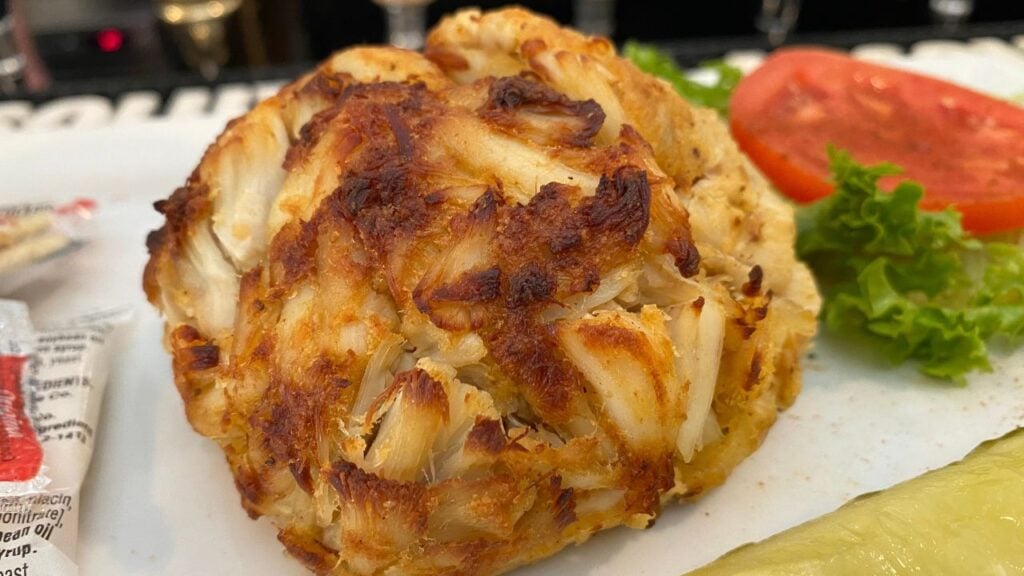
Walk into a restaurant outside the Chesapeake region advertising "Maryland-style" seafood, and the meal rarely tastes like what a native Marylander is used to.
These are the Maryland foods other parts of America keep getting wrong.
9 Maryland Foods Nobody Makes Right in Other Parts of the U.S.
