
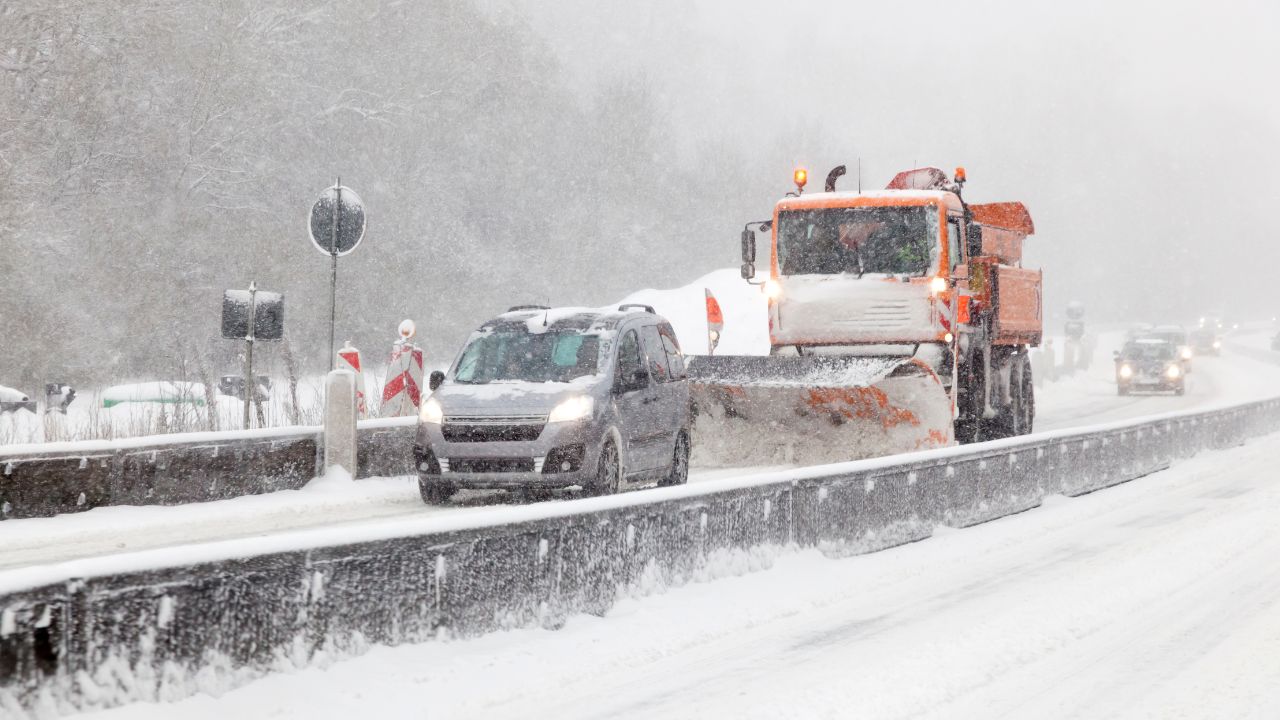
8 Things Minnesota Snowplow Drivers Wish Residents Understood

Ever wonder how many trucks it takes to keep Minnesota’s highways clear all winter?
More than 800, Minnesota’s transportation department says.
Every one of those trucks has a driver behind the wheel.
These are the things Minnesota snowplow drivers wish residents understood.
Note: This is general information, not legal advice. Traffic laws and penalties are subject to change, so confirm current requirements with the Minnesota Department of Public Safety.
1. Tailgating a Plow
Minnesota’s Department of Transportation stretches that snowplow fleet across more than 30,000 lane miles of state highway every winter.
The view from inside the cab is nothing like the view from a car behind it.
Mirrors cover the sides and rear.
A cloud of blowing snow can hide a tailgater completely, even when the road ahead looks clear.
MnDOT tells drivers to stay back 10 car lengths and turn off cruise control near a plow.
The agency also asks drivers to keep their headlights on around a plow, storm or not.
That’s farther than it sounds.
2. Passing the Plow
Minnesota has no law against passing a snowplow.
That surprises almost everyone who asks a trooper about it.
It’s legal.
It isn’t smart.
A plow usually only runs 30 to 40 mph, even on the interstate.
That gap in speed is exactly why passing looks so tempting.
A plow’s wing blade can stick out 2 to 10 feet past the truck, hidden inside the snow cloud it throws.
A driver who passes usually can’t see what’s happening in front of the plow.
By the time they find out, it’s often too late to react.
3. Move Over Law
Minnesota’s Move Over law puts a stopped snowplow in the same legal category as a squad car or an ambulance.
Drivers have to shift over a full lane on a multi-lane road, or slow down when they can’t.
Skip it, and the fine runs past $100.
That adds up fast.
A plow parked on the shoulder with its lights going counts exactly the same as a trooper’s cruiser under that law.
4. Mailbox Rule
MnDOT will replace a mailbox in Minnesota only when a snowplow or other equipment hits it directly.
Snow thrown from the blade doesn’t count, even when it flattens the post.
That’s the agency’s line.
Minnesota law also treats a mailbox that fails crash-worthiness standards as a hazard MnDOT can remove and replace on its own.
Anything more elaborate than a plain wood post is the resident’s expense.
Psst! How much do you know about Minnesota’s snowplow fleet? Take our quiz and see how many you can get right.
Quiz
Minnesota Snowplow IQ
Answer these questions on Minnesota’s snowplow fleet and winter road rules. We bet you can’t get them all right. Prove us wrong?
About how much does a single tandem-axle MnDOT snowplow cost to buy?
5. Windrow at Your Driveway
A plow leaves a ridge of packed snow across the end of every driveway it passes.
There's no way around it.
Plow crews call it a windrow.
It's just the snow the blade has nowhere else to put.
MnDOT's guidance tells residents to clear a pocket a couple of feet to the side of the driveway.
That gives the plow somewhere to push the ridge instead of piling it straight across the opening.
A shovel beats a phone call to public works.
6. Pushing Snow Into the Street
Minnesota makes it illegal to push snow back into the street once a plow has cleared it.
Minnesota Statute 160.2715 makes it a misdemeanor to deposit snow on a road.
A conviction can mean up to 90 days in jail and a fine of up to $1,000.
That's a steep price.
Every windrow a driver pushes back into a lane is one a crew has to clear a second time.
Beyond the $1,000 Fine
Minnesota's snow-dumping law carries two separate risks, not one.
The misdemeanor charge is the criminal side: Up to 90 days in jail, up to $1,000, brought by the state.
The civil side is separate.
If the deposited snow causes a crash, the property owner and whoever pushed it can both be sued by the driver who got hurt.
That's on top of anything the state charges.
7. Reflector Stakes
Plow operators drive through stretches where a driveway and a ditch look identical under six inches of fresh snow.
MnDOT's guidance spells out exactly what a driveway marker should look like, right down to the color.
A reflector should run at least three inches wide, sit no higher than five feet, and stand about 12 feet back from the edge of the road.
Blue works best.
Red and yellow can look like another vehicle's taillights in the dark.
MnDOT also says to mount the reflector on its own stake, never zip-tied to the mailbox post or another permanent post.
Some hardware stores sell a double-sided version already wired to a rod that pushes straight into the ground, visible to a plow coming from either direction.
8. Blocking the Plow
A snowplow can't clear a curb lane when a car is parked in it, which is why Minneapolis runs a three-day parking system every time it declares a snow emergency.
No exceptions.
The city has no fixed total of snowfall that triggers the call, either.
A hard-packed 3.5 inches in January can trigger one, while 6 fresh inches in March with a thaw on the way often won't.
Day one clears the emergency routes.
Day two moves cars to the odd side of the street.
Day three flips to even.
If a driver misses the window, the tow truck doesn't care whose car it is.
Every driver who moves a car on time is one less problem for the crew working that block.
That's the whole ask, nothing more than a clear lane.
9 Signs You Grew Up in Minnesota, No Matter Where You Live Now

More than 810,000 Minnesotans claim Norwegian ancestry, the highest share of any state in the country.
That heritage shows up in habits people carry for life, long after they've left the state, starting with a phrase every Minnesota kid learns before they know what it means.
9 Signs You Grew Up in Minnesota, No Matter Where You Live Now
9 Reasons People Are Leaving Minnesota in 2026

Minnesota has lost a net 47,865 residents to other states since 2019, a steeper decline than 33 other states saw over the same stretch.
The reasons range from taxes to winters, and a few of them might surprise someone who has never thought about leaving.
