

13 Things Illinoisans Are Tired of Explaining to the Rest of the Country

A campaign called New Illinois wants at least seven more counties to vote this November on whether to explore splitting away from Cook County for good.
That takes a while to explain.
It’s far from the only Illinois fact that takes more than one sentence.
These are the things Illinoisans are tired of explaining to the rest of the country.
Note: This is general information, not legal or tax advice. Rules and penalties mentioned here are subject to change.
1. The State Capital
Illinois hands its capital title to Springfield, not Chicago, a fact the state settled in 1839.
Chicago never got the nod.
A young state legislator named Abraham Lincoln helped make that case, joining Sangamon County’s Long Nine delegation that pushed lawmakers to leave Vandalia behind.
Springfield has held the title through every governor since, while Chicago holds the population, the airports, and the national headlines.
2. The Lincoln Nickname
Illinois calls itself the Land of Lincoln on every state welcome sign, an official slogan since 1955.
License plates carried the phrase a year earlier, in 1954, before lawmakers made it official.
That slogan leads many out-of-staters to assume Lincoln was born and raised in Illinois, and residents wind up correcting the same assumption more than once.
Lincoln was born in Kentucky.
He spent his boyhood years in Indiana, from age 7 to 21, before an Illinois-bound wagon carried the family west.
The state only got him as an adult, and it kept him anyway.
3. The Downstate Divide
Locals throw around the word downstate constantly, and out-of-staters who know Illinois only through Chicago usually assume it just means the southern end of the map.
It rarely means what a map would suggest instead.
A ProPublica Illinois investigation found no fixed boundary for the term at all.
The investigation quotes a local government expert saying downstate can even reach a town sitting north of Chicago’s latitude, as long as it sits outside the Chicago metro area.
Every time.
Ask where downstate begins, and the answer depends on whether the person answering lives in Chicago or somewhere else, never on where the town sits on a map.
4. Cook County’s Tax Math
Cook County mails property tax bills listing an assessed value far under a home’s actual worth.
A homeowner who just moved to Illinois from another state often assumes the county made a mistake.
Illinois runs two different assessment rules at once.
State law assesses homes outside Cook County at 33 1/3 percent of market value.
Cook County assesses that same kind of home at 10 percent.
Not close.
A state equalization factor then multiplies Cook County’s number back up.
The low figure on a newcomer’s bill was never a discount, just one step of a two-step formula that finishes somewhere else.
Why the Cook County Number Looks Low
Cook County’s assessment notice lists a number far below the home’s actual market value.
That gap is the rule working as designed, a different math track from the other 101 counties, not a mistake on the form.
Never compare that raw percentage straight across county lines, since Cook County’s equalization factor changes the final number before either bill is final.
5. The New Illinois Push
A secession campaign has spread county by county across Illinois instead of showing up as one statewide vote.
People outside Illinois who see a headline about county after county voting to leave usually assume the state is one signature away from splitting apart.
Every one of those votes is non-binding, directing a county board to study the idea rather than acting on it.
Thirty-three counties already passed non-binding referendums between 2020 and 2024 asking their boards to explore leaving Cook County or the state altogether.
That count is set to grow this November, when at least seven additional counties put the same question to their voters.
Forty counties, maybe more.
None of it binds the state legislature, so Springfield has never had to vote yes or no.
An Illinoisan usually ends up explaining that a symbolic county vote isn’t the same thing as a state coming apart.
6. The Fireworks Ban
Illinois keeps firecrackers, bottle rockets, and aerial shells illegal statewide, banning the fireworks that make a summer show worth watching.
Illinois is one of just a handful of states with a ban this strict.
Visitors driving in from Indiana or Wisconsin, where the same fireworks sell legally, are often stunned to learn an Illinoisan can be fined just for having them in the trunk.
Sparklers and a few other novelty items stay legal.
Everything louder stays illegal.
Possessing the banned kind is a Class A misdemeanor in Illinois, carrying up to a year in jail and a $2,500 fine.
Neighboring Indiana sells the good stuff year-round, and Illinoisans cross the state line every summer to buy what Illinois won’t sell.
Psst! How much do you know about Illinois history and geography? Take our quiz and see how many you can get right.
Quiz
Illinois IQ
Answer these questions on Illinois history and geography. We bet you can’t get them all right. Prove us wrong?
Where did Ray Kroc open the McDonald’s franchise that grew into the company he later took over?
7. The Ketchup Rule
Chicago hot dogs come loaded with seven toppings, and ketchup, as locals keep explaining, has never been one of them.
Mustard, relish, onion, tomato, a pickle spear, sport peppers, and celery salt make the cut.
Vienna Beef's founders were already selling their sausages to visitors at the 1893 World's Fair, a year before they opened their first Chicago storefront.
Ketchup, never.
Order one with ketchup anyway, and a longtime Chicagoan standing nearby is likely to notice.
8. The Everyday Pizza
Chicago's most famous pizza is deep dish, but many Chicagoans eat a completely different style day to day.
Neighborhood taverns often serve a cracker-thin crust cut into small squares instead of wedges, a style locals call tavern-style or party-cut pizza.
Not wedges.
Deep dish shows up on special occasions and vacations, while square-cut pizza turns up at the neighborhood tavern on an ordinary Tuesday.
9. Colors, Not Numbers
Chicago's L trains have run by color, not number, since 1993.
Visitors who grew up riding a numbered subway, like New York's 1, 2, or 3 train, often ask a Chicagoan which number the Blue Line is.
There isn't one.
The Red Line is one of Chicago's busiest transit routes, running the length of the city end to end.
No Line 1.
Before the change, riders navigated the L by names like Ravenswood, Congress, and Howard-Englewood, a system that made sense mostly to people who already knew it.
Chicagoans end up walking a visitor through the color system on practically every ride downtown.
10. Still the Sears Tower
Chicago's tallest building lost its Sears name in 2009, when an insurance firm bought the naming rights and renamed it Willis Tower.
Many longtime Chicagoans never adopted the new name.
Still Sears.
News anchors, cab drivers, and lifelong residents keep calling it the Sears Tower, more than fifteen years after the building's ownership changed on paper.
11. The City Flag
Chicago's city flag turns up on porches, tote bags, and forearms all over the city.
New residents and visitors notice fast, and many of them end up asking a Chicagoan what it means.
A Chicago tattoo artist told WBEZ, the city's public radio station, he used to ink the flag's four stars three or four times a month.
Many of those requests came from transplants rather than people born in the city.
Transplants claim it first.
Chicago's flag runs four red six-pointed stars across two white bars and two blue stripes.
Each star marks one moment in the city's past rather than a random design choice.
Fort Dearborn, the Great Chicago Fire, the World's Columbian Exposition, and the Century of Progress fair each earned a star when the city adopted the design in 1917.
Chicago flies that flag far more than it ever flies the Illinois state flag beside it, so a Chicagoan ends up doing the explaining almost every time.
12. The Flag Vote
Illinois asked the public to redesign its widely mocked state flag in 2025, running a statewide contest that pulled in nearly 5,000 submissions.
Chicago has already shown how attached people get to a flag.
People who don't live in Illinois assumed a redesign contest that big meant the state was finally ready to move on from a design mocked for years.
Officials narrowed the field to thirteen finalists.
Illinois voters then picked the existing flag anyway, with 43 percent of the vote, ahead of every replacement on the ballot.
Kept it anyway.
The vote was non-binding, so Springfield's legislature still decides whether Illinois' widely mocked flag design gets replaced someday.
People are left explaining a contest that ended in the status quo.
13. Superman's Official Hometown
Illinois has an actual town named Metropolis, and the comic book publisher DC Comics made it Superman's hometown in 1972.
The Illinois House of Representatives signed off on the title alongside DC Comics.
A fifteen-foot bronze Superman has stood outside the county courthouse since 1993, funded partly by fans who bought commemorative bricks.
Not fictional.
Metropolis sits on the Ohio River with fewer than 6,000 residents, and an annual Superman Celebration still fills its streets with costumed fans every June.
8 Chicago Parking Rules That Cost Illinoisans More Than a Ticket
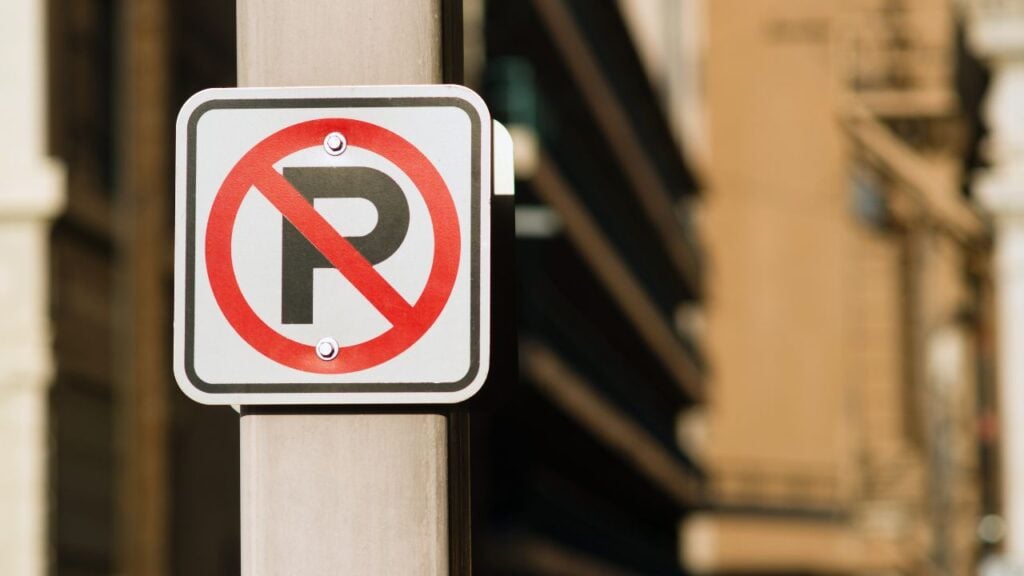
A single Chicago tow starts at $150, and that's before the ticket, the boot fee, and the daily storage charge show up on the same bill.
These are the parking rules that turn one wrong move into the most expensive part of the day.
8 Chicago Parking Rules That Cost Illinoisans More Than a Ticket
7 Aldi Savings Illinois Shoppers Over 60 Give Up Without Realizing It

Aldi rings up carts in every state, but the deepest discounts go to shoppers who know which few in-store moves unlock them.
Shoppers over 60 give up more of those savings than they realize, without ever knowing they had the option.
7 Aldi Savings Illinois Shoppers Over 60 Give Up Without Realizing It
