
15 Habits That Give Away a South Carolina Native Within Five Minutes

The South Carolina State Fair opens in Columbia on Thursday, October 15, and will run for eleven days.
That’s eleven days of natives and newcomers sharing one midway.
The difference between them shows fast.
These are the habits that give away a South Carolina native within five minutes.
1. Reaching for the Yellow Sauce
A native at a barbecue counter looks for the mustard bottle before the tomato bottle.
The state’s tourism office traces the yellow sauce to German families who settled the middle of the state in the 1700s and brought their mustard with them.
Cooks eventually paired it with pork.
The state splits into four sauce regions, with vinegar and pepper along the coast and two shades of tomato sauce in the Pee Dee and the Upstate.
A native can tell you which sauce their county runs on without looking up from the plate.
2. Hash Over Rice
Natives expect a ladle of hash on the plate next to the pulled pork, and they expect it over white rice.
Newcomers ask what it is.
Hash is a thick meat gravy simmered from pork, and CNN’s reporting found it on the menu at roughly half of the state’s barbecue restaurants.
Hash is hard to find across the state line, so some customers buy it by the bottle to carry home to North Carolina, Tennessee and Florida.
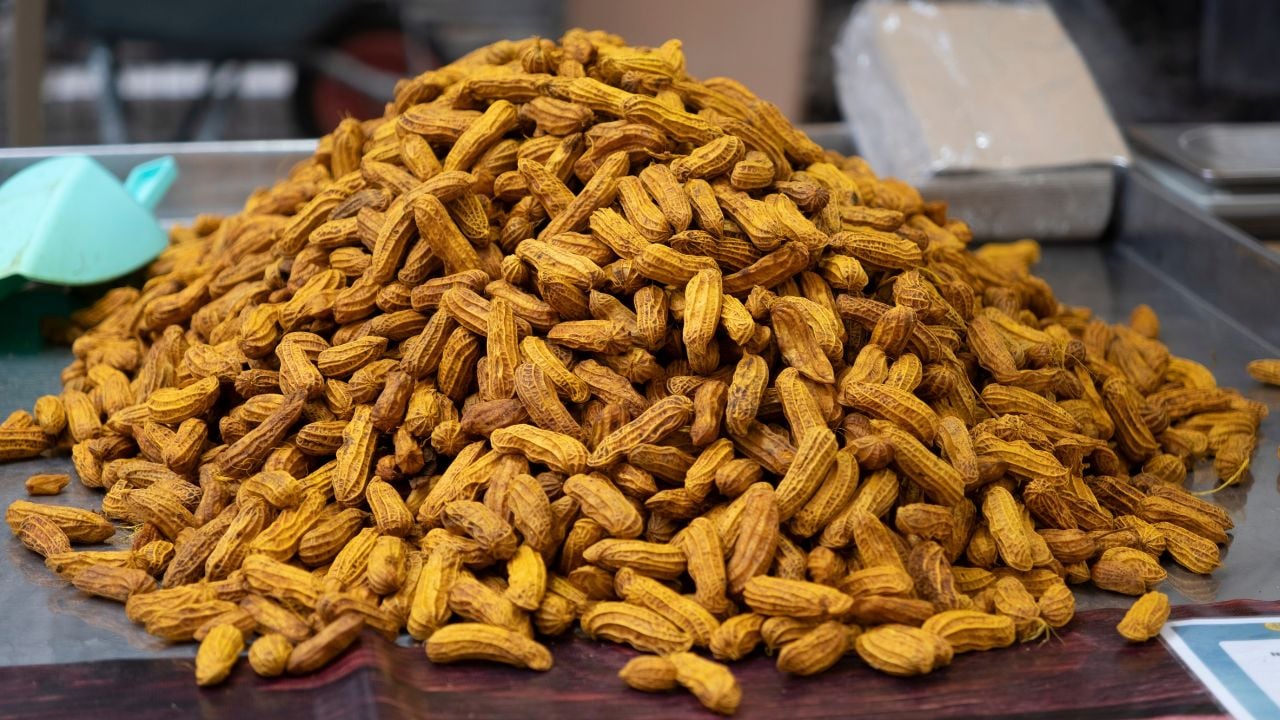
3. Roadside Boiled Peanuts
A native sees a hand-lettered “boiled peanuts” sign on a two-lane road and slows down without deciding to.
The state made it official.
Boiled peanuts became the official state snack food under Act 270 of 2006.
The same law says no school has to serve them.
Many natives eat them warm out of a soggy paper bag and toss the shells out the window.
Transplants try a peanut, call it a wet bean, and hand the bag back.
4. Duke’s or Nothing
Locals check the mayonnaise jar out of habit before they trust a tomato sandwich, and the jar had better say Duke’s.
That loyalty traces to one town.
Eugenia Duke started selling sandwiches to soldiers training near Greenville in 1917, and the soldiers asked for jars of the spread once they shipped out.
Her recipe used cider vinegar and no sugar.
Duke’s says it still makes the mayonnaise in Greenville today, nearly a century after she sold the business in 1929.
5. Red-Cap Blenheim
A native takes one look at a ginger ale bottle with a red cap and already knows what’s coming.
Many newcomers cough.
Blenheim Ginger Ale went into bottles in 1903 in the Marlboro County town of Blenheim.
A doctor there had mixed Jamaican ginger into the local spring water to cover its strong mineral taste.
The company moved in 1993 to the South of the Border property in Hamer after the man who built that roadside stop bought it.
The red cap is the Old #3 Hot, and the gold cap is the milder #5.
Natives reach for the red cap on purpose and watch the newcomer’s face.
6. Chicken Bog by the Pot
Pee Dee natives cook chicken bog in a pot big enough to feed a church, and they don’t call it a recipe.
Loris, in Horry County, has held a Bog-Off cooking contest since 1980, and the 2026 festival falls on Saturday, October 17.
The chamber of commerce expects around 35,000 people downtown for it.
That’s a lot of rice.
A transplant hears the word bog and pictures a swamp.
A native hears it and asks who’s bringing the paper plates.
7. Correcting the Peach State
Say “Georgia peaches” near a native, and they’ll correct you before you finish the sentence.
They have the numbers.
USDA figures for 2022 put South Carolina second in the country for peaches at 67,400 tons, behind only California.
Georgia came in third that year at 24,800 tons.
So South Carolina grew more than twice as many.
Georgia kept the nickname, though South Carolina grew the bigger crop that year.
Psst! How South Carolinian are you? Run through this checklist and see where you stand.
8. Calling It the Red Dot
A native sends you to “the red dot” for a bottle of bourbon and assumes you know what that means.
South Carolina’s liquor stores carry big red circles because the state’s alcohol board shrank their signs to a few inches of lettering in 1945.
A Charleston dealer hired a sign painter, who added a bright red circle borrowed from a cigarette pack.
The rules said nothing about circles.
Stores across the state copied it fast.
Regulators tried to kill the dot in 1968, and the General Assembly voted to keep it, with a limit of one dot per wall and none wider than 36 inches.
9. Golf Cart to the Store
Natives in beach towns already have a golf cart parked in the driveway before they ever ask if they need one.
Some of these towns hold a golf cart parade in summer, and a cart is standard kit for it.
Sullivan’s Island lines carts and bikes up outside a Middle Street church on the Fourth of July, and the parade rolls out at 9 a.m.
Registered entries compete for ribbons at the finish line.
A transplant finds out about the parade from a flyer taped to a stop sign the week it happens.
A native has been decorating the family cart for it since childhood and already knows the route by heart.
South Carolina law lets these carts run to the grocery store too, within limits.
The cart needs a state permit decal, a licensed driver at least 16, and a secondary road posted at 35 mph or less.
Unless a town or county sets different rules, the cart also stays within four miles of home and runs only in daylight.
10. Strong Opinions on the Palmetto
A native can spot a badly drawn palmetto on a flag from across a parking lot and will tell you about it.
South Carolina repealed its one official flag design around 1940 and never adopted another, so every manufacturer draws the tree a little differently.
When a state committee proposed one standard design in December 2020, the skinny palmetto on it drew thousands of complaints in a matter of days.
The committee started over.
The crescent goes back to the blue flag Colonel William Moultrie flew in 1776, and the palmetto joined it in 1861.
11. Haint Blue Overhead
Lowcountry natives paint the porch ceiling a pale blue and don’t explain it unless you ask.
Ask, and you’ll hear about haints.
The Gullah tradition holds that the color keeps restless spirits from crossing the threshold, and the shade shows up on porch after porch in Charleston’s historic district.
The paper trail is thin.
An architectural historian told The Post and Courier the earliest newspaper use of the phrase “haint blue” only goes back to 1985.
Oral histories from the 1930s and ’40s mention the practice, and a native never needed the footnote to pick the paint.
12. Rocket Meeting Spot
Natives at the State Fair settle a meeting spot in three words, and the words are “at the rocket.”
Newcomers ask which rocket.
The fairgrounds on Rosewood Drive have held a retired Air Force missile named Columbia since 1969.
It was built to carry a nuclear warhead.
Now it anchors the fair’s Rocket Plaza, and the 2026 fair runs October 15 through 25.
Lost kids and late friends use it as the meeting spot for the length of the fair.
Just about everyone finds it.
13. Clemson or Carolina
A native asks whether you pull for Clemson or Carolina within the first few minutes of meeting you, and the answer decides a few things.
Carolina means the Gamecocks in Columbia, never the school in Chapel Hill.
The two schools first played on November 12, 1896, on the infield of a horse track during State Fair week, with about 2,000 people paying a quarter to watch.
A riot after the 1902 game shut the series down until 1909.
The rivalry survived it.
Many natives pick a side as kids and hold it through marriages, job changes, and moves to the other end of the state.
14. Saying Beaufort and Horry Right
A native says BYOO-fert and O-ree without a pause, and a newcomer reading the road signs says neither.
Both names are traps.
Beaufort, South Carolina, dates to 1711 and shares its name and its Duke of Beaufort with a town in North Carolina that says BOH-fert.
Horry County, home of Myrtle Beach, drops the H altogether.
Schools in Loris taught kids a song to the tune of “Yankee Doodle” in the 1930s to drill the pronunciation.
Say “Horry” with the H, and every native in earshot will hear it.
Psst! How much do you know about South Carolina? Take our quiz and see if you can ace it.
Quiz
Palmetto State IQ
Answer these questions on South Carolina’s history and geography. We bet you can’t get them all right. Prove us wrong?
South Carolina created a brand-new planned city to serve as its inland capital in what year?
15. Baskets From the Highway 17 Stands
A native who wants a sweetgrass basket won't set foot in a downtown Charleston shop for one.
They know the stands line Highway 17 in Mount Pleasant, and many can name the family running the stand they stop at.
The coiled baskets are a Gullah craft with West African roots.
South Carolina named sweetgrass basketry its official state lowcountry handcraft under Act 234 of 2006.
The stands along the highway belong to weaving families.
Mount Pleasant's Culture, Arts and Pride Commission organized volunteers in 2021 to restore them, starting with four near the entrance to Boone Hall.
Many of the families picked the paint color for their stands.
A native pulls onto the shoulder and drives off with a basket that took somebody weeks to coil.
12 Southern Sayings South Carolinians Use That Northerners Hear Completely Wrong

In 1984, South Carolina lawmakers spent floor time voting a dance style into law as the state's official dance.
Transplants hear a neighbor mention it, picture something else, and spend the rest of the conversation confused.
12 Southern Sayings South Carolinians Use That Northerners Hear Completely Wrong
8 Ways South Carolinians Lose Land They Inherited Without a Will
More than 650 families holding upward of 40,000 acres across the Southeast have turned to one Charleston nonprofit to untangle who legally owns their land.
It's a more common scenario than you'd think.
8 Ways South Carolinians Lose Land They Inherited Without a Will
