
3 Cold-Weather Grooming Habits Indiana Veterinarians Say Do More Harm Than Good

Veterinarians at Purdue University, in West Lafayette, Indiana, warn that salt and ice-melt chemicals stuck to a dog’s paws after a winter walk can injure the skin underneath.
Skipping your dog’s paw wipe-down is one of many bad habits Hoosiers unknowingly have.
These are the cold-weather grooming habits (and lack thereof) that veterinarians say do more harm than good.
1. Bathing Too Often
Over-bathing a dog in cold weather strips its skin fast.
Purdue’s veterinarians say frequent winter baths pull the natural oils out of a dog’s skin, the same oils that keep it from drying out and cracking in cold, dry air.
Flaky skin isn’t bad luck.
It’s usually a bath schedule that never adjusted for the season.
Cutting back on baths and switching to a moisturizing shampoo protects that barrier instead of stripping it away every week.
A dog on the same weekly bath schedule all winter is usually the first to show it.
Stretching baths to every few weeks instead of every week gives that skin barrier time to recover between washes.
2. Skipping the Brush
Skipping the brush on a long-haired dog in cold weather because extra fur seems like extra warmth is exactly backward.
Purdue’s veterinarians say a dog’s coat traps a layer of warming air close to the skin, and that only works if the coat is kept clean and unmatted.
A heavily matted coat can’t do that job.
The tangles press flat, the air pocket disappears, and a dog that looks bundled up loses heat through those same spots.
That warmth is gone.
Regular brushing through the cold months keeps that insulating layer doing its actual job instead of just looking thick.
Psst! Think you know winter dog-grooming fact from fiction? Flip these five cards and find out.
3. Skipping the Paw Wipe-Down
Skipping the paw wipe-down after a walk is the habit Purdue’s veterinarians flag first.
Dr. Suma Rao and Dr. Lorraine Corriveau, both at Purdue’s Veterinary Teaching Hospital, say road salt and de-icer left on the pads can cause trauma to the skin there.
There’s a second risk, too.
A dog that licks the chemicals off its feet can end up swallowing something meant for a driveway, not a stomach.
That’s a genuine poisoning risk.
Purdue’s veterinarians note that some de-icing chemicals are toxic to a dog’s kidneys in a strong enough dose.
The wipe-down is doing more than keeping the floor clean.
A quick rinse or a warm towel over each foot takes less time than the walk itself did.
A warm, damp cloth over each paw after every winter walk breaks that chain before it starts.
Skipping Paw-Fur Trims
Leaving the fur between a dog’s toes long in cold weather feels like extra coverage, and it isn’t.
A quick trim of that foot fur before the first snow does more for a dog’s comfort than any boot.
The American Veterinary Medical Association says clipping that hair cuts down on ice-ball buildup between the toes.
Those ice balls wedge between the pads.
That’s enough to cause limping.
A dog that starts limping mid-walk on a cold day is often dealing with exactly this.
Rushing a Wet Dog Outside
Sending a freshly bathed dog straight back outside into cold weather undoes whatever the bath was supposed to fix.
A bath timed right before a quick bathroom trip outside can leave a small or short-coated dog shivering on the porch.
The American Veterinary Medical Association warns that a wet sweater or a wet coat can make a dog colder, not warmer, once it steps back into the cold.
That’s backward.
The same goes for a dog that’s simply wet, sweater or not.
Damp fur pulls heat away from the skin far faster than dry fur does.
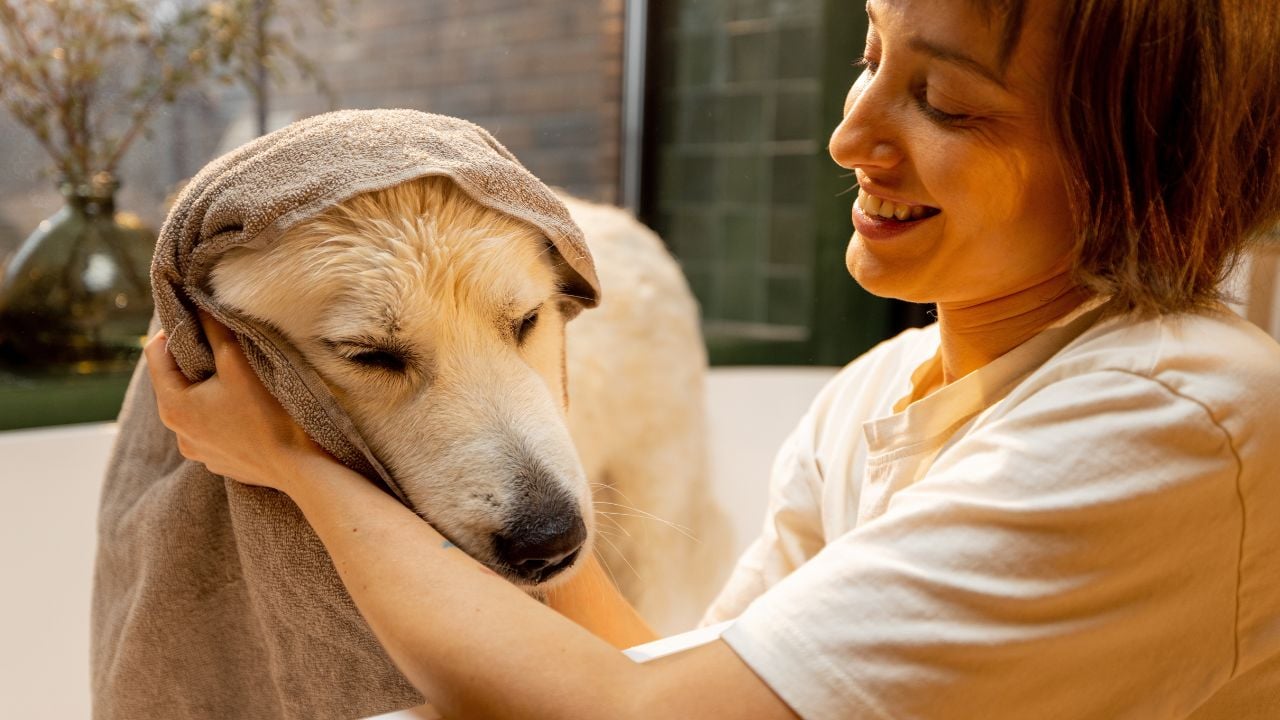
A full towel-dry, or a few extra minutes indoors before the door opens, is the difference between a warm dog and a cold dog.
The Cold-Weather Threshold Vets Watch
Frostbite can set in before a dog shows any sign of discomfort.
Veterinarians want owners watching the clock, not the dog’s behavior.
The American Kennel Club’s chief veterinarian, Dr. Jerry Klein, says dogs are at risk once the temperature drops below 32 degrees Fahrenheit.
Frostbite can start setting in after as little as 30 minutes outside.
The paws, ears, and tail take the hit first, since they carry the least fur and the least blood flow.
Skipping Nail Trims
Letting a dog’s nail trims slide through cold weather is easy to justify and hard to notice happening.
Long nails aren’t just a scratching hazard on the hardwood.
Veterinarian Dr. Brittany Kleszynski, writing for PetMD, points out that dogs spend less time walking on rough pavement once it’s cold.
Nails that would normally wear down on their own just keep growing instead.
Dr. Kleszynski warns that overgrown nails cause pain and sores.
That’s a genuine health problem.
Left unchecked, those sores can turn into an infection.
A short walk on cold days doesn’t wear a nail down the way a summer sidewalk does, so the clippers have to pick up the slack.
A monthly trim through the cold months keeps a dog’s gait normal even when its daily walk shrinks from a mile to a lap around the yard.
Ten minutes with the clippers now is a lot cheaper than a vet visit in February.
21 Hilarious Indiana Laws You’d Never Believe Existed

Indiana’s lawbooks hide a coroner who can arrest the county sheriff, a ban on fishing with bare hands, and a rule against coasting downhill in neutral gear.
Every one of them is still on the books, and many Hoosiers have never heard half the list.
21 Hilarious Indiana Laws You’d Never Believe Existed
7 Homecoming Parade Rules That Surprise First-Time Visitors to a Small Indiana Town
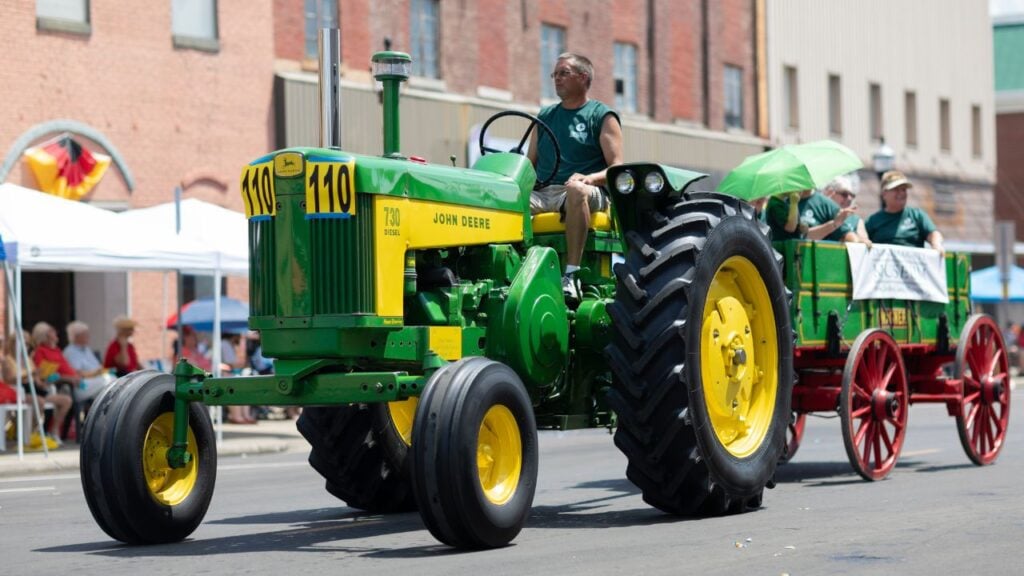
A small Indiana town’s homecoming parade looks relaxed from a lawn chair on Main Street, but Brookville runs its route on rules first-time visitors never expect.
Grand marshals, float order, and candy-tossing all follow a system locals take for granted.
7 Homecoming Parade Rules That Surprise First-Time Visitors to a Small Indiana Town
