
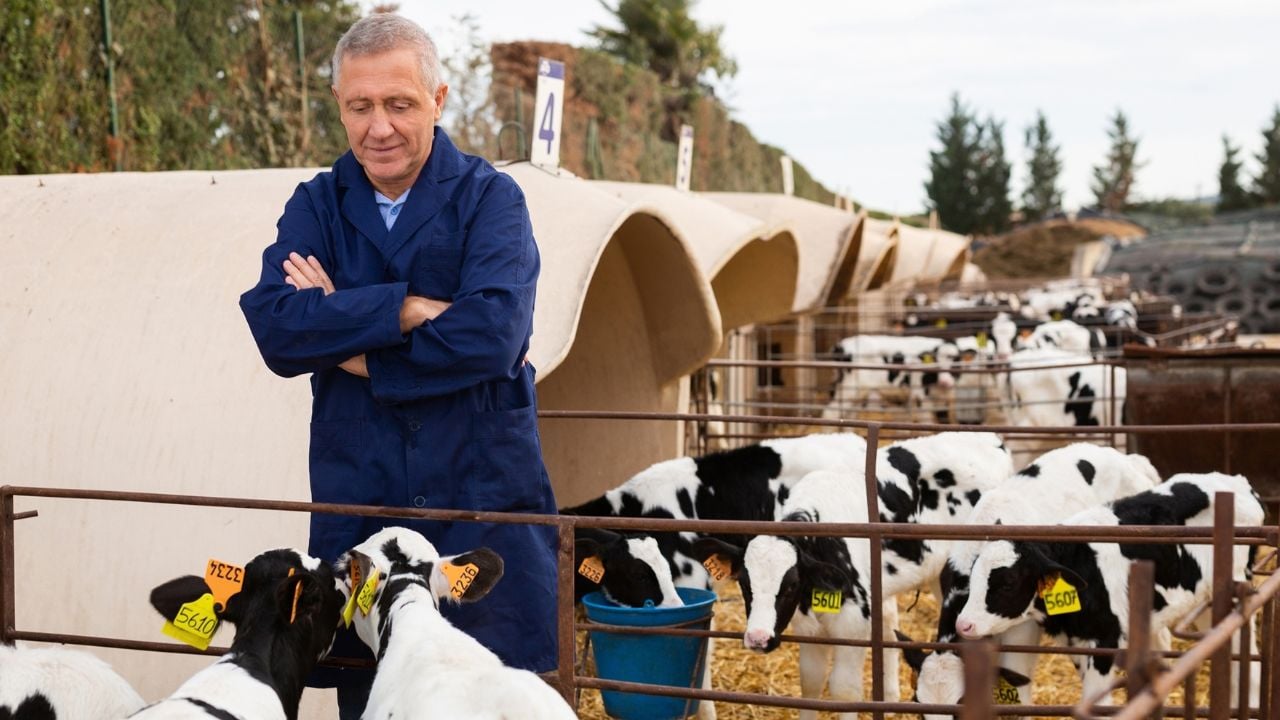
5 Things Vermont Dairy Farmers Do Before the First Hard Frost

Cows don’t take a day off because the weather turns.
On a dairy farm, one cold night can reshuffle a whole week of work.
These are the things Vermont dairy farmers do before the first hard frost.
1. Racing the Corn Silage Chopper
Dairy farmers spend early October watching their corn fields as closely as the sky, pushing to get silage corn chopped before an early frost arrives.
Corn needs time on the stalk to reach the right moisture for silage, and an early frost stops that process wherever the plant happens to be.
Vermont’s frost-free season has stretched by about a week since the early 2000s, according to the National Oceanic and Atmospheric Administration’s state climate summary.
Farmers now push further into October than growers a generation ago ever could.
When an early frost reaches the corn first anyway, Vermont’s Agency of Agriculture and University of Vermont Extension publish exact guidance for what comes next.
Wait until the plant reaches 30 to 35 percent dry matter, and chop a small test load through the machine to check.
A frozen, immature stalk doesn’t dry any faster than one that never froze.
Only time in the field does that.
Patience, not speed, saves it.
Whole-plant moisture drops by roughly half a percent a day in the field.
Guessing wrong by even a few days can leave a farmer with silage that ferments badly or won’t keep.
2. Pulling Cattle off Risky Pasture
Farmers watch the forecast closely as frost season nears, ready to move cattle off certain fields the moment a hard freeze is called.
Frost-stressed forage can turn dangerous fast, since a freeze spikes prussic acid and nitrate levels in sorghum-sudangrass and some cover-crop mixes almost overnight.
A field that looked perfectly safe the night before can poison a cow that grazes it right after a freeze.
Farmers with any at-risk acreage keep cattle out for about a week until the risk passes.
One freeze changes everything.
Vermont’s Agency of Agriculture flags the same danger in frost-stressed corn headed for silage.
It warns farmers to test for nitrate buildup before it’s fed rather than assume a frozen field is automatically safe.
What Counts as a Hard Frost
A hard frost isn’t the same as the first frost of the season on a Vermont dairy farm.
The National Weather Service defines a hard freeze as air temperatures at or below 28°F for an extended period, cold enough to kill off many crops for the year.
That’s colder than the 32°F mark that just dusts the grass silver.
That gap is the whole reason the timing matters.
A light frost near 32°F can wilt tender leaves without stopping a hayfield’s growth for the year, while the colder drop ends the season for good.
3. Timing the Last Hay Cutting
Dairy farmers grow much of the hay their herds need for winter.
They spend the weeks before frost weighing two different calendars: The growing degree days left in the season, and the forecast for that first hard freeze.
Alfalfa needs either a long rest of five to six weeks before a killing frost, or almost none at all.
A cutting inside about 200 growing degree days works too.
Cut in the gap between those two windows, and the plant burns through the carbohydrate reserves it needs to survive winter and green up again in spring.
That mistake shows up later.
So farms with an alfalfa stand worth keeping either take that last cutting well ahead of the frost or hold off and let the cold set the timing for them.
Psst! How much do you know about Vermont’s dairy industry? Take our quiz and see how many you can get right.
Quiz
Test Your Vermont Dairy IQ
Think you know Vermont’s dairy story? Prove it below.
Before dairy cows took over Vermont’s pastures, what animal dominated the state’s farms in the early 1800s?
4. Getting the Last Manure Out
Farmers watch for the season's first hard frost as their cue that the ground's freeze-up is close behind.
That's what starts the push to get manure spread before fields close for the year.
The state's Required Agricultural Practices already ban spreading on frozen ground or snow-covered fields, no matter what the calendar says.
Once the ground freezes solid, spreading isn't possible at all.
On top of that, a separate statewide ban shuts down all manure spreading from December 15 through April 1.
Any farm still holding a full pit once that date hits has to find another way to manage it.
There's no waiting it out.
About 480 dairy farms still operate in Vermont, according to a 2025 report state lawmakers reviewed, and every one of them answers to the same fall deadline.
Farms with the biggest herds have to plan even further ahead, since state rules require enough storage capacity to hold manure through the entire 107-day ban.
5. Counting Organic Grazing Days
Organic dairy farms track something conventional farms don't have to: The exact number of days their cows spent grazing all season.
Federal organic rules define a grazing season as at least 120 days a year, with cows pulling a minimum of 30 percent of their diet from pasture over that stretch.
Vermont typically runs well past that floor.
Vermont Organic Farmers, the state's organic certifier, told lawmakers this January that a typical Vermont grazing season stretches closer to 150 days.
Frost is what ends it.
Once the grass goes dormant for the year, the growing season ends no matter how many grazing days a farm still needs.
October's weather becomes a math problem as much as a farming one.
That count matters enough that a 2025 drought forced a rare exception.
When pastures ran short that year, the same certifier asked federal regulators for a waiver, temporarily dropping the requirement to 90 days for that season only.
The waiver covered ten counties: Addison, Bennington, Caledonia, Chittenden, Lamoille, Orange, Orleans, Rutland, Washington, and Windham.
Two Frost Clocks, One State
Dairy farms don't all answer to the same frost.
The National Weather Service's Burlington office puts the Champlain Valley's first freeze in the first two weeks of October in many years, a lag Lake Champlain's open water helps create.
Head northeast into the higher, colder farm country of the Northeast Kingdom, and that same first freeze often arrives weeks earlier, sometimes by mid-September in the most sheltered valleys.
A farm outside St. Johnsbury or Island Pond can already be counting its second or third frost of the season by the time a farm outside Vergennes or St. Albans sees its first.
No dataset breaks Vermont's mid-20s hard-frost threshold down by region the way the 32°F first-freeze numbers above are.
The documented split between the valley and the Kingdom stands in here as the best available signal for how that colder deadline likely shifts across the state too.
Weeks still separate them.
That gap between the two regions' first freezes often runs two to three weeks, wider still in the coldest Northeast Kingdom valleys.
That same split plays out in the grazing-day count from earlier, letting a Champlain Valley herd log more pasture than a Northeast Kingdom herd working toward the same 120-day minimum.
7 Things That Still Happen at Vermont Town Meetings That Out-of-Staters Can't Believe Are Real
Vermont's earliest records put the first town meeting in a Bennington tavern back in 1762, decades before Vermont was even a state.
More than two centuries later, the same meeting still runs on rules that catch first-time visitors completely off guard.
7 Things That Still Happen at Vermont Town Meetings That Out-of-Staters Can't Believe Are Real
8 Old Vermont General Store Habits That Still Feel Normal Today
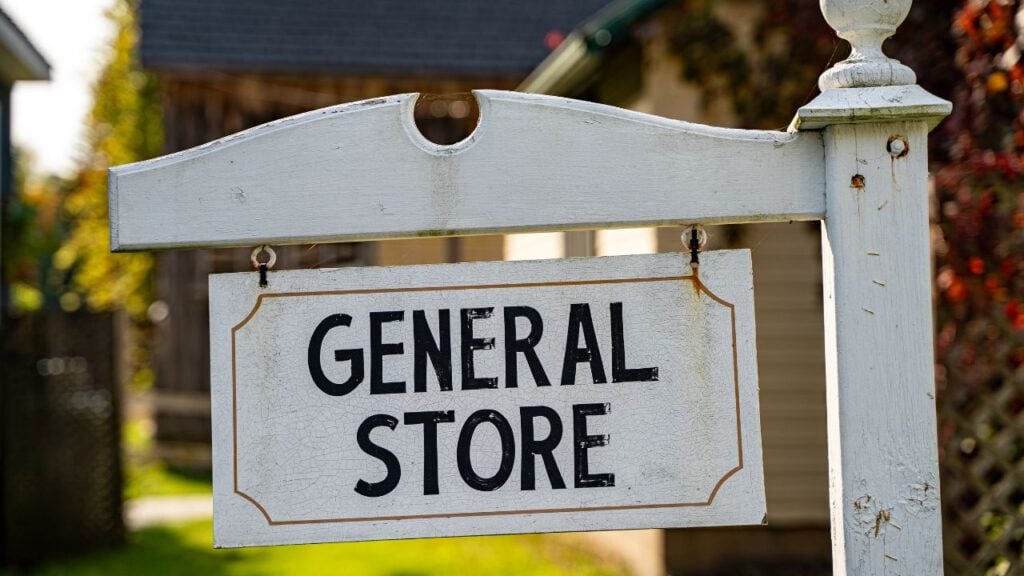
Vermont licenses roughly 80 stores to sell liquor on the state's behalf, and a lot of them still smell like a hardware aisle.
A shopper can grab eggs, a phone charger, and a bottle of bourbon at the same register without anyone blinking, which is exactly the part that catches newcomers off guard.
8 Old Vermont General Store Habits That Still Feel Normal Today
