

6 Documents Illinois Residents Get Turned Away From the REAL ID Counter Without

Few errands feel worse than waiting in line and getting sent home.
At the Illinois REAL ID counter, the wrong paper can do exactly that.
Here are the documents Illinois residents get turned away from the REAL ID counter without.
Note: This is general information, not legal advice. Document requirements and fees are subject to change, so confirm the current requirements with the Illinois Secretary of State.
Proof of Identity, Birth, and Citizenship
One certified document does triple duty on an Illinois REAL ID application, proving identity, date of birth, and citizenship or legal status all at once.
A certified birth certificate or a valid, unexpired U.S. passport both satisfy it for someone born a U.S. citizen.
Illinois only accepts a birth certificate certified by a state office of vital statistics or an equivalent agency in the state of birth, according to the state’s document chart.
A hospital keepsake copy doesn’t clear the counter, no matter how official it looks.
An expired passport doesn’t count either.
Someone who wasn’t born with a U.S. birth certificate on file has other options in this same slot.
A Certificate of Naturalization, a Certificate of Citizenship, or a Consular Report of Birth Abroad works exactly like a birth certificate would.
Anyone who isn’t a U.S. citizen fills the same slot with proof of legal status instead.
A valid foreign passport with a visa and Form I-94, a Permanent Resident Card, or an Employment Authorization Document all work.
Illinois treats all eight of these documents as equal options for one requirement, not as extra paperwork stacked on top of each other.
Your Full Social Security Number
A Social Security number only counts on a REAL ID application when the whole nine digits show up on paper.
A Social Security card, a W-2, or a pay stub all qualify.
A benefit statement from the Social Security Administration, the SSA-1099 form, works too, as long as the document shows the full number next to the applicant’s name.
A truncated number fails.
Many pay stubs and benefit statements print only the last four digits for privacy, and some applicants bring one of those without noticing the digits are cut off.
The counter sets that document aside, and the appointment has to wait for a different one.
Your First Residency Document
Proving residence comes next, and the state wants it on paper before printing a REAL ID.
A photo ID alone doesn’t cover it.
A lease, a mortgage statement, a deed, a utility bill, a bank statement, an insurance policy, or government mail addressed to you all count as a first proof.
An applicant with any of those has a first proof in hand.
It just can’t be the only document brought to the counter.
Which Illinois Residency Documents Need a Recent Date
Illinois only clocks some of its residency documents against the calendar.
A utility bill, a bank statement, or a medical statement has to be dated within the last 90 days.
A lease, mortgage, deed, or insurance policy carries no such expiration.
A six-month-old cable bill fails the date check, while a five-year-old mortgage statement still works fine.
Psst! Think you’ve got every Illinois REAL ID document lined up? Run through this checklist and see where you stand.
A Second, Separate Residency Document
Two separate residency documents are non-negotiable, not one, on a REAL ID application.
A single strong document, even a mortgage statement or a signed lease, only covers half the requirement.
A second document has to sit right beside it.
A bank statement, a credit card statement, a voter registration card, a pay stub, or a second utility bill can all fill that second slot.
It just has to carry the applicant’s current Illinois address too.
Some applicants show up with only their lease, assuming a driver’s license photo or a single strong document will cover the rest.
The clerk sends them home for a second piece of paper.
Proof of a Legal Name Change
A name mismatch stops the appointment cold at the counter, and the state checks the current name on file against the name on the birth certificate or passport.
A marriage certificate, a divorce decree, or a court order has to bridge the two names for the state to accept the rest of the paperwork.
The Illinois Secretary of State’s office has fielded complaints from applicants turned away over document issues.
Many of those complaints pointed to problems connecting a current name to an old one.
Illinois requires a document connecting every step in the chain when a name has changed more than once, married, then divorced, then remarried.
The most recent change alone isn’t enough.
A Separate Signature Document
A birth certificate carries a lot of information, but never a signature, and the state’s REAL ID checklist needs a separate document with one.
A current driver’s license or ID card, a credit or debit card, a Social Security card, a U.S. passport, or a military ID all satisfy this piece.
Many applicants already have one of those in their wallet.
First-time applicants without any prior state card often forget it, since nothing else in their stack happens to carry a signature.
Just 44% of Illinois residents held a REAL ID as of January 2026, according to Secretary of State Alexi Giannoulias’ office.
Many people working through this list are starting from scratch.
Original, Not a Photocopy
Photocopies never clear a REAL ID counter, no matter how sharp the scan looks.
Originals only.
That rule covers a scanned copy and a phone screenshot too, not just a copier printout.
Every document on this list has to be an original or a certified copy.
A laminated Social Security card can cause a separate problem anywhere, not just in Illinois, since the plastic coating covers features a clerk needs to check by hand.
Anyone with a laminated card can request a free replacement from the Social Security Administration before the appointment.
Waiting until after a rejected visit only adds a second trip.
The state asks for exact paperwork in other places too.
Its unclaimed property process spells out a whole document list before releasing a claim.
Letting unpaid tolls pile up, meanwhile, can end in a suspended registration, a different kind of paperwork problem.
REAL ID FAQ
Quick answers to what residents ask most about REAL ID documents.
Straight answers only.
What documents do you need for a REAL ID in Illinois?
You need one certified identity document, such as a birth certificate, passport, or the matching citizenship or immigration paperwork for your status.
You also need a document with your full Social Security number and two separate documents proving your Illinois address, plus one more document if your name has changed.
How much does a REAL ID cost in Illinois?
An Illinois REAL ID driver’s license costs $30, and a REAL ID state ID card costs $20, the same as Illinois’s standard licenses and ID cards.
What if your name doesn’t match your birth certificate?
Illinois requires a document connecting your current name to your birth-certificate name, such as a marriage certificate, a divorce decree, or a court order.
Do Illinois REAL ID documents have to be originals?
Yes.
The state’s document chart states that photocopies aren’t accepted, so every document has to be an original or a certified copy.
A replacement Social Security card takes a few weeks to arrive by mail, and Illinois won’t hold an appointment slot while it waits.
Illinois turns away a crisp, fresh photocopy exactly like a blurry one, since only the original counts, never the copy’s clarity.
6 Costs That Turn a Missed Illinois Tollway Bill Into Triple the Price
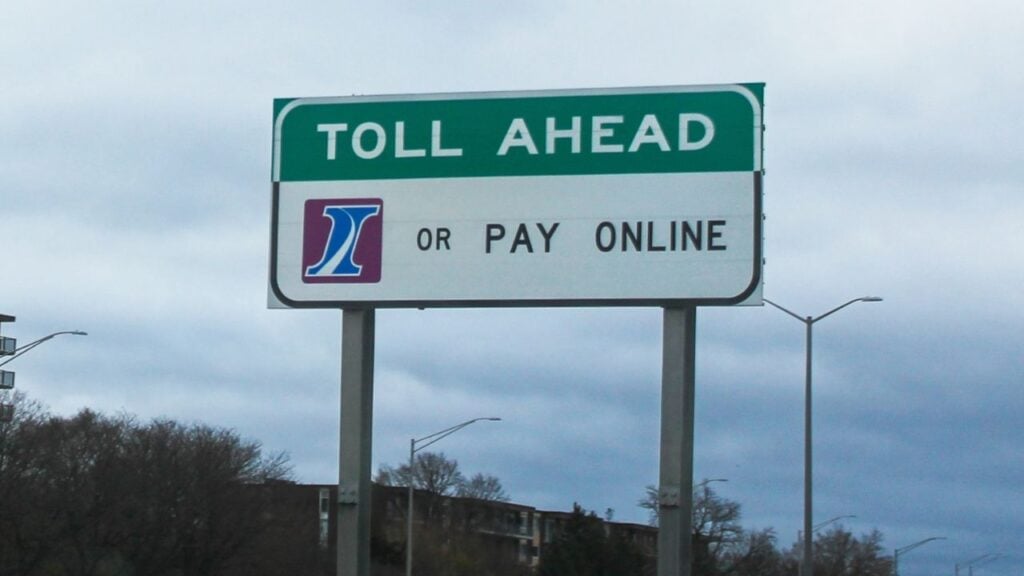
A 30-cent toll doesn’t sound like much to miss.
Illinois lets that number rise fast, and many drivers never see it coming until the mail does.
6 Costs That Turn a Missed Illinois Tollway Bill Into Triple the Price
9 Things That Change the Second You Cross From Indiana Into Illinois
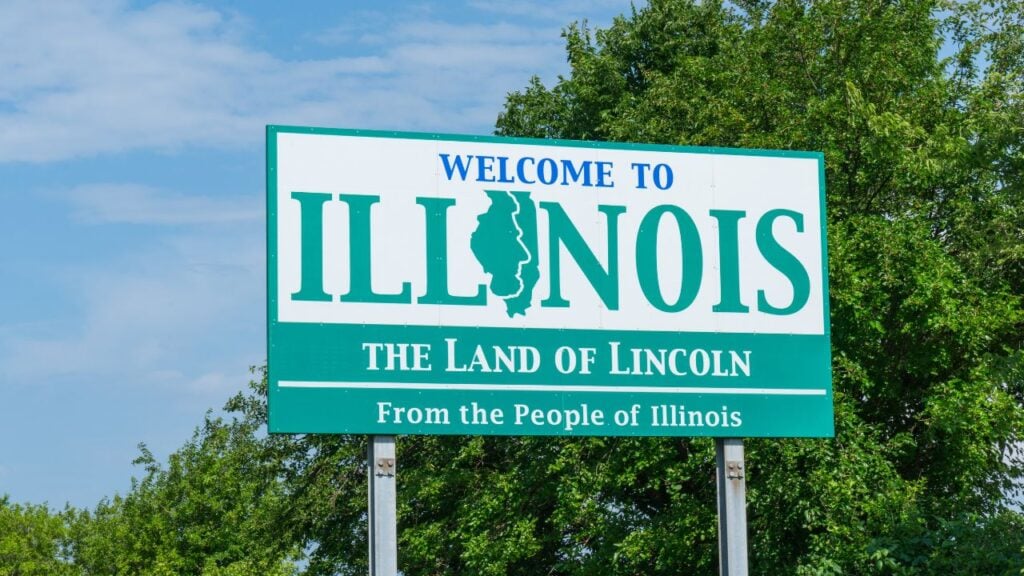
One state line changes more than the speed limit signs.
A driver crossing into Illinois trades away habits that felt permanent a few miles back.
9 Things That Change the Second You Cross From Indiana Into Illinois
