
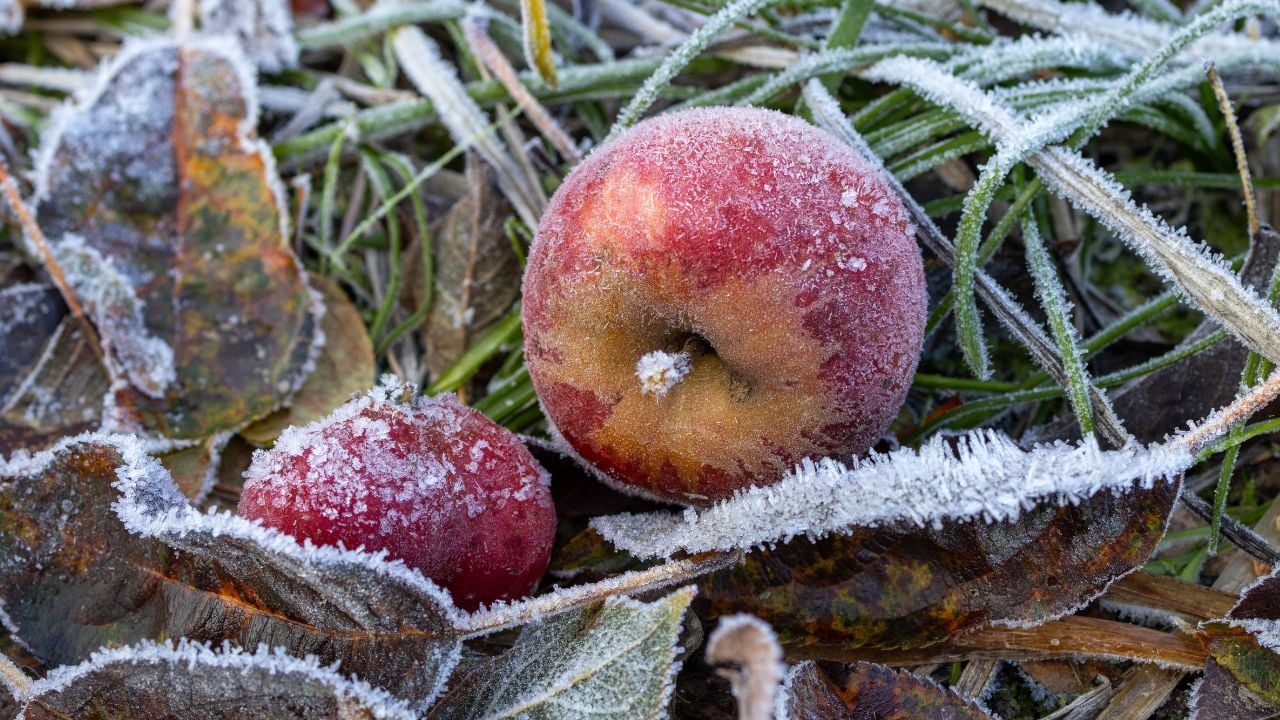
6 Signs the First Hard Freeze Is Close in a Vermont Orchard

It’s apple season in Vermont, and growers with fruit still on the trees are keeping a close eye on the weather.
One bitter night can hurt apples that haven’t been picked yet.
Here’s what an orchard shows when the cold is closing in.
1. Clear, Calm, Dry Nights
An orchard faces its highest freeze risk on a night when clear skies, calm wind, and dry air all line up together.
Meteorologists call that setup radiational cooling, and it happens to be the exact recipe a hard freeze needs.
Clouds normally trap the day’s warmth near the ground.
Take the clouds away, and that heat radiates straight off the ground into open sky.
Add calm air with no breeze to mix things back together, and temperatures near the ground can fall several degrees colder than the number on a car thermometer.
Nothing holds the heat in.
Growers who see three of those nights lined up in a row already know which forecast matters most.
2. Typical Freeze Window
Inside an orchard’s office, a grower keeps one eye on more than the sky.
The National Weather Service’s Burlington office keeps decades of past first-freeze dates for the region.
That record puts a typical Champlain Valley freeze in the first two weeks of October.
The lake is the reason it lands that late.
Lake Champlain keeps radiating stored summer heat back into the night air well after the calendar says fall has arrived.
The heat delays the freeze.
Inland orchards typically see their first freeze by late September.
Orchards right on the lake can hold out into the back half of October.
Frost vs. Freeze vs. Hard Freeze
Forecasters split a cold night into three tiers, and only the coldest one threatens what’s still hanging on the trees.
A frost advisory covers nights in the mid-to-upper 30s, and a freeze warning covers 32°F or below.
It doesn’t count as a hard freeze until the air drops to 28°F or lower.
That 28-degree line matters for the fruit too, since an apple itself starts to freeze around 29°F, just above it.
Apples still on the tree can shrug off a light frost or two, but a harvested apple rarely recovers from even one hard freeze.
3. Canopy’s Fast Drop
The clearest sign in an orchard sits overhead, not underfoot.
Shortening daylight and a run of cool nights trigger the same dormancy process in every apple tree on the property.
The fall foliage color finishes fast once that switch flips.
Cell fluid inside the tree shifts into the spaces between cells, which raises the tree’s sugar content and lowers the freezing point inside its tissue.
The leaves go first.
Once the canopy has mostly emptied out, an orchard has lost its last bit of insulation against a fast overnight temperature drop.
Growers watch the bare branches almost as closely as the forecast.
4. Boxelder Bugs on the Barn
Outbuildings across an orchard turn into a billboard for one particular insect right before the season’s coldest nights arrive.
Boxelder bugs cluster on the sunniest, best-sheltered walls of a building during the cold snaps that lead into a hard freeze.
Asian lady beetles are frequently spotted crowding those same walls as the weather turns colder.
They’re soaking up the last available warmth before ducking into siding, cracks, and any gap they can find to wait out the winter.
They aren’t coming inside yet.
Once true cold settles in for good, the bugs go still and stop trying the door altogether.
A sudden crowd on the south wall of the barn is one of the clearest signs the hard freeze is close.
5. Frost Pockets and Low Rows
The lowest ground in an orchard freezes first, sometimes hours before a thermometer mounted higher up shows any drop at all.
Cold air is denser than warm air, so it drains downhill overnight and pools in the lowest rows and hollows, the same way water would.
Growers call that a frost pocket.
Growers walking the rows before a forecasted freeze check the bottom of every slope first, since that’s where the cold shows up before it reaches anywhere else.
University extension guidance calls a gradual downhill slope the safest place for an orchard, precisely so cold air keeps draining instead of settling in place.
Low ground loses first.
Psst! How much do you know about frost, freeze, and Vermont’s apple orchards? Take our quiz and see how many you can get right.
Quiz
Vermont Orchard Frost IQ
Answer these questions on frost, freeze, and Vermont’s apple orchards. We bet you can’t get them all right. Prove us wrong?
Woolly bear caterpillars survive winter cold that would kill many insects outright. What lets them do it?
6. Race for the Last Apples
Crews inside an orchard move differently once a hard freeze is close, and the difference is easy to spot from the parking lot.
Cold-hardy storage varieties like Northern Spy, Idared, and Golden Russet usually come off the trees last.
They hold their quality in cold storage far longer than an early apple like a McIntosh.
That advantage only holds once the fruit is off the tree.
Time is short.
Crews push to strip those remaining trees before the cold reaches them.
A picked apple rarely survives freezing the way an apple still on the tree sometimes can.
A tree can ride out an occasional light freeze without much harm, since weeks of dropping temperatures have already raised the sugar concentration inside its cells.
A bin of Golden Russet picked an hour before the first hard freeze reaches an orchard still smells like the tree it came off of.
A bin left out one night too late turns into next week's cider instead, and every grower in the valley already knows which bin is which.
6 Things Vermonters Do During the Fall That Tourists Never See
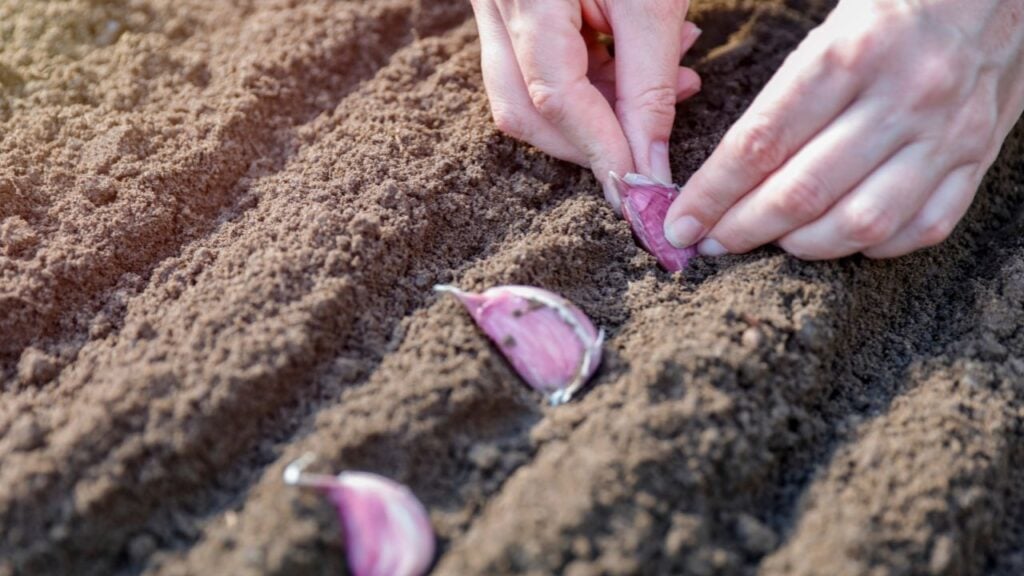
A Salvation Farms study once estimated Vermont farms leave roughly 14 million pounds of edible food unharvested or unsold in a single year.
People who don't own the field pick some of it anyway, and the tour buses roll right past every bit of it.
6 Things Vermonters Do During the Fall That Tourists Never See
7 Things That Still Happen at Vermont Town Meetings That Out-of-Staters Can't Believe Are Real
Vermont's early records put its first town meeting inside a Bennington tavern in 1762, decades before Vermont became a state.
That meeting never stopped, and more than two centuries later it still runs on rules that catch a first-time visitor off guard.
7 Things That Still Happen at Vermont Town Meetings That Out-of-Staters Can't Believe Are Real
