
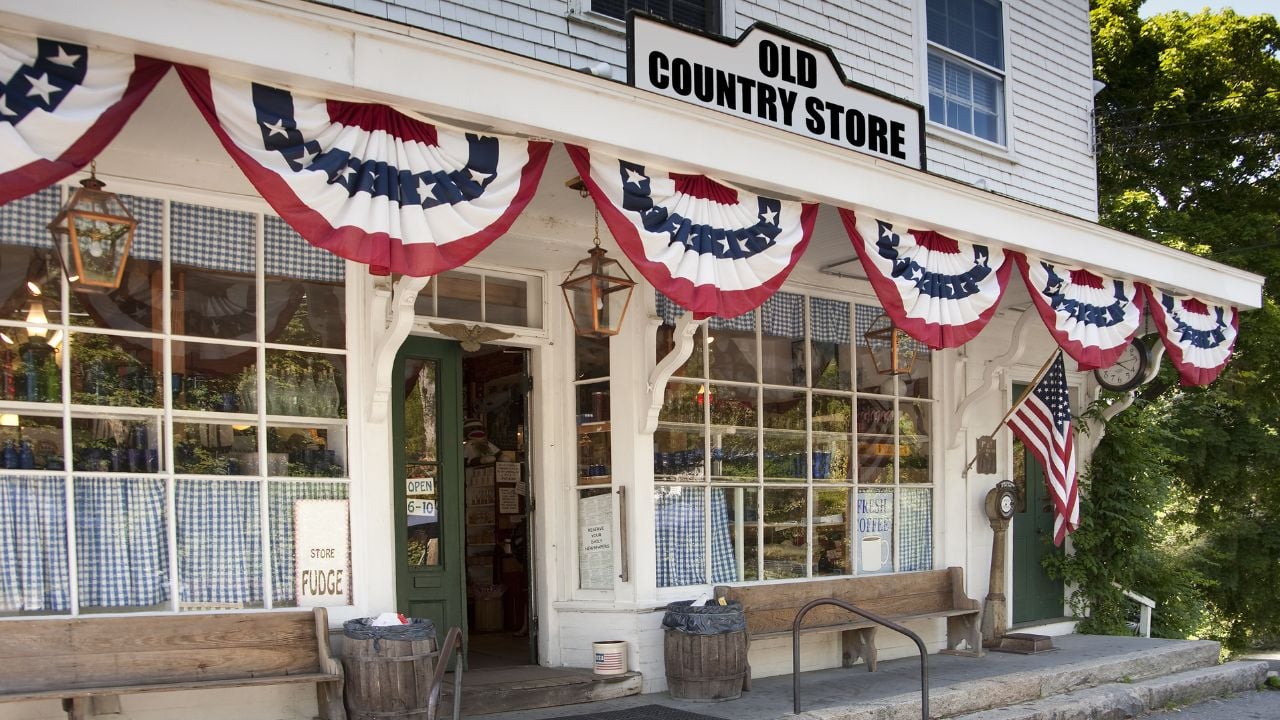
4 South Carolina Country Stores That Have Been Open for More Than a Century

Some South Carolina country stores have been open for a century or more, and they still ring up sales.
Here’s where you can step into that kind of history.
1. LeNoir Store
LeNoir Store has run behind the same Horatio counter since before 1808, when Isaac LeNoir’s will divided his land and his store among his four sons.
The building standing there now went up in 1869, and its National Register listing still calls LeNoir Store the oldest business in Sumter County.
Seven generations of the LeNoir family have worked that counter since.
Carrie Baker LeNoir, one of them, ran it for more than 70 years and served as Horatio’s postmistress for 35 of them.
She died in 2015.
The family kept going.
Her children still open the doors on weekdays from 8 a.m. to 5 p.m. and Saturday mornings until noon, so you can time a visit around it.
You can buy a loaf of bread and mail a letter at the same counter.
2. Wood’s General Store
Wood’s General Store traces back to 1864, when Tigerville settler B.F. Neves built the structure that still holds the counter today.
Tigerville’s first post office moved into the store in 1881, with postmaster Lemuel Jennings sorting mail alongside the dry goods.
John T. Wood became postmaster there in 1914, though the building still belonged to the Neves family at the time.
Wood and his descendants ran the counter for the Neves family for decades before they owned it.
Ownership finally passed to the Woods in the 1940s, when John’s son T. Pralo Wood bought the store after Neves died.
Three generations of Woods kept the place going until the last of them, Willie Wood, closed the doors sometime in the mid-1990s.
North Greenville University bought the empty building in 2007 and reopened it in 2012, more than a century after Neves built it.
You can still buy a snack there today, though the shelves now stock university gear and school supplies instead of feed and cloth.
The university renamed it Wood’s General Store in 2022, honoring the family that kept the doors open the longest.
Stop by on a weekday afternoon and you’ll find it open until 5 p.m.
Also the Town Post Office
LeNoir Store and Wood’s General Store both once held a federal postmaster contract inside the same building as the store counter.
You can still buy a stamp at LeNoir Store’s counter, the same spot that’s sorted Horatio’s mail since 1900.
You could grab your mail and your groceries in the same stop.
Darlington County’s E.W. Cannon Store held an earlier version of that same contract for Hartsville, from 1873 to 1878, eight years before Tigerville’s store picked one up.
3. Edgefield General Store
Edgefield General Store sells hand-dipped ice cream and local goods from a corner building that first went up under a different name in 1891.
Merchant James M. Cobb put the building up that year after fire destroyed the store that stood there before it.
Russian immigrant Israel Mukashy first opened a store in Edgefield in 1911, then moved into this building in 1920.
Mukashy ran the counter until 1950, when Greenville businessman Joseph Vigodsky bought the store and renamed it Carolina Sales.
Manager Archie Keesley ran the counter for Vigodsky’s store for nearly half a century, retiring in 1999.
That’s more than a century of continuous retail in one building, under three different names.
Rebekah Robeson started working the counter in 2015 and became manager in 2017 alongside her husband, John.
Ask at the counter and you’ll hear the whole run, Cobb to Mukashy to Vigodsky to the Robesons, in under a minute.
You can walk in today for the same hand-dipped ice cream and local goods, plus outdoor gear and gifts on the shelves the Robesons added.
4. Hester Store
Hester Store has stood at a crossroads in the Dacusville community of Pickens County since 1893.
Michael Washington Hester built it that year as the anchor of his family’s farm, sawmill, and cotton gin.
Its National Register listing puts the granite front and portico you’d recognize today at 1933, added four decades after the store opened.
The Hester family kept the counter running into the late twentieth century.
Katie Chaney bought the empty building in 2021 and set out to turn the upstairs into a bakery and the ground floor back into a general store.
Chaney’s bakery closed for good on December 24, 2023, about two years after she opened it.
The building sold to new owners who had no connection to Chaney’s bakery.
Siblings Tasha Carpenter and Cody Rathbone, both Coast Guard veterans local to Dacusville, bought it instead.
You can now walk in for hand-scooped ice cream, coffee, and breakfast where farmers once bought feed and seed, six days a week under the Carpenter and Rathbone families.
That’s 133 years of history under one roof, counting both gaps in the middle.
The Vanishing Country Store
Thousands of country stores once anchored crossroads all over the state, one for nearly every farm community that could support a Saturday crowd.
Paved highways changed that first, letting drivers cut straight past the local store toward a bigger store in the next town.
Chain groceries and convenience stores finished the job over the following decades, running longer hours than one family behind one counter ever could.
Very few survived.
You can still find a few, if you know where to look.
You’ve probably driven past the empty shell of a country store.
Many of the stores still standing survive only as a name in a county history book, not a working cash register.
The four stores above are the exceptions, not the rule.
Even a couple of the state’s best-known survivors eventually lost that fight.
Coker & Rogers Store: Closed in 1963
Coker & Rogers Store opened for business in the Pee Dee River town of Society Hill around 1828, a partnership between merchants Caleb Coker and Eli Gregg.
Local histories disagree on whether the building itself went up that year or in 1832.
You won’t find an answer for the “Rogers” half of the name.
No source ties a Rogers to the founding; only Gregg is ever named as Coker’s partner.
The family expanded the building in 1860 and kept the doors open until 1963, more than a century in the same hands.
Darlington County’s historians still call it the state’s longest-running single-family business.
You can trace one family’s name on that storefront from Andrew Jackson’s presidency to John F. Kennedy’s, a run modern businesses rarely match.
Union troops looted the shelves in 1865, working through the china, paintings, and carpets that Society Hill families had stashed there for safekeeping during the war.
Caleb Coker’s son, James Lide Coker, went on to found Coker Feed & Seed and become one of Hartsville’s leading businessmen.
Society Hill still credits the Cokers with that record.
Kaminski Hardware: Closed in 1973
Kaminski Hardware got its Georgetown home at 633 Front Street in 1869, when Prussian immigrant Heiman Kaminski acquired the store site for his hardware company.
Kaminski had arrived in Georgetown as a clerk in 1856, and within two decades he also held pieces of a boat-and-oar company and a medical dispensary.
His son Edwin ran the counter from 1926 to 1947, then Edwin’s younger brother Joseph took over until 1955, and Heiman’s great-grandson Nathan Jr. carried it to 1973.
That’s more than a century of Kaminskis behind the same Front Street counter.
You won’t find the family ringing up sales there anymore.
The Kaminskis sold the company in 1973 and the building passed to Georgetown County’s historical commission.
You can still find the Kaminski name in Georgetown’s business records for more than a century running.
Psst! Curious how these six stores stack up? Sort the table by year, or search for your town.
What It Takes to Last
A century-old country store doesn’t stay open because a plaque says it should.
The building needs an owner ready to spend money on a roof, wiring, and a foundation that was built for wagons, not delivery trucks.
A National Register listing doesn’t hand that owner a dime by itself, and it doesn’t stop them from locking the doors either.
What it does is open the door to a federal tax credit worth 20% of a building’s rehabilitation costs, once it’s turned back into an income-producing business.
On top of that, South Carolina adds a state credit worth another 10 to 25 percent.
You still have to spend your money first.
Then you wait for that credit to land on a tax return, filed months or years later. That gap is what keeps many of South Carolina’s empty storefronts empty.
9 Foods South Carolinians Call Something Different From Other Americans

Pinder is South Carolina’s word for a peanut, tracing to a different African root than the goober nickname heard elsewhere in the South.
Two words, two separate paths into English, and plenty more food terms in this state that trip up visitors from everywhere else.
9 Foods South Carolinians Call Something Different From Other Americans
6 Things That Change in a South Carolina Beach Town the Week Summer Ends
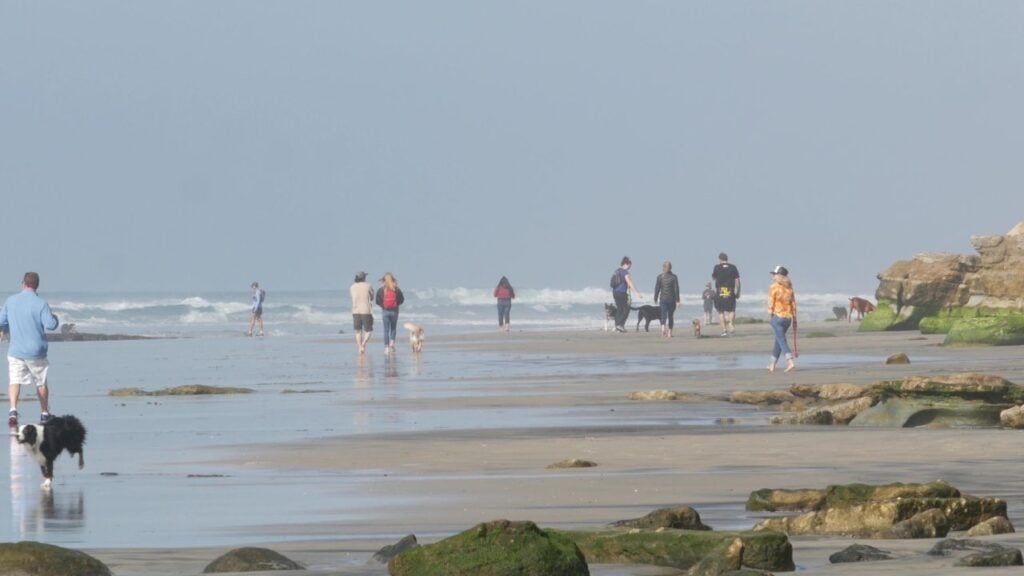
A 12-by-12 tent is legal on a South Carolina beach from the day after Labor Day until the day before Memorial Day.
The week the crowds thin out, a beach town rewrites its whole rhythm, and this piece counts down what changes first.
6 Things That Change in a South Carolina Beach Town the Week Summer Ends
