
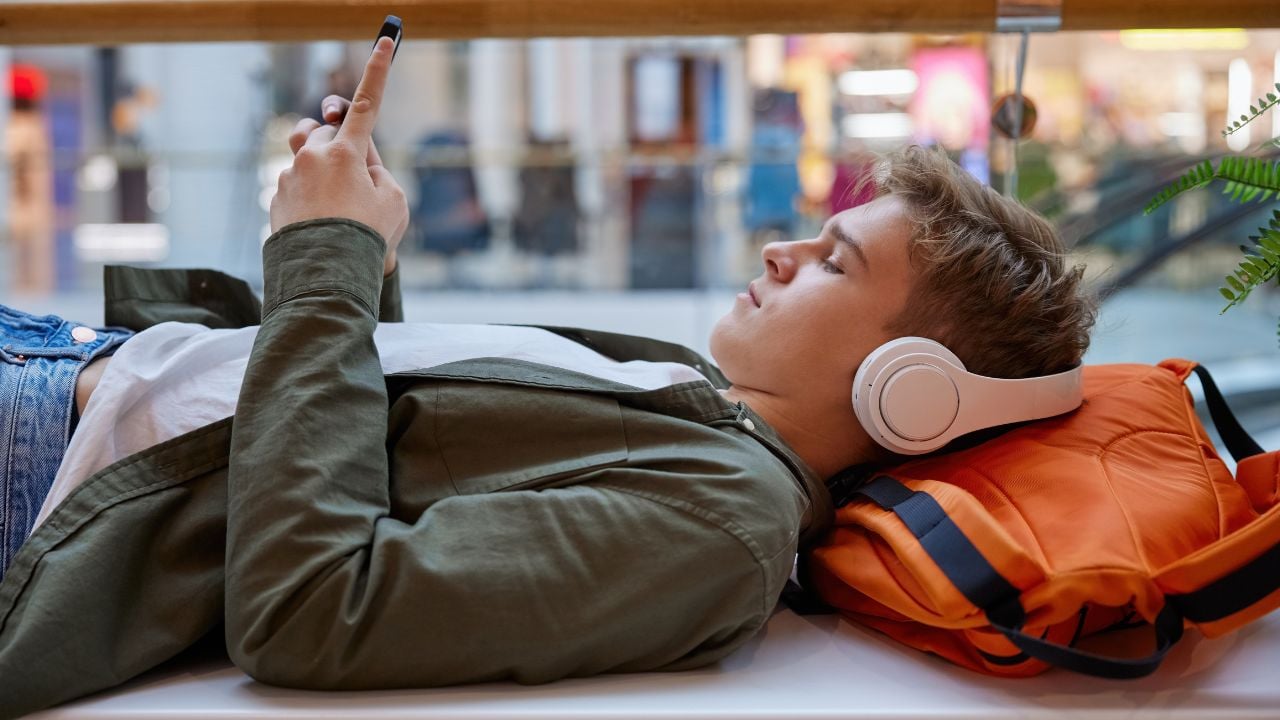
13 Things Ohio Kids Lost When Smartphones Took Over

Remember hunting for a quarter to call home from a pay phone?
Once phones moved into every pocket, a lot of small childhood moments went with them.
These are the things Ohio kids lost when smartphones took over.
The Neighborhood Pay Phone
Ohio’s payphones waited outside gas stations, diners, and street corners, ready for anyone who needed to make a call away from home.
You fed it a quarter and hoped you remembered the right number.
Basic cell phones thinned out that lineup first.
By 2016, Ohio had only 21.8 payphones for every 100,000 residents, down from 627.1 in 2000, according to FCC-tracked data.
A smartphone in your pocket is what finished the job: It put a number, a map, and a way to call for a ride all in one place.
There was no reason left to hunt for a payphone after that.
You learned to find someone nearby with a phone, or you started walking.
The One Phone Everyone Shared
A single landline usually hung on the kitchen wall, with a cord just long enough to stretch around the corner for privacy.
You picked it up and hoped nobody else in the house was already talking on it.
Someone usually was.
A busy signal meant you tried again later.
Ohio kids didn’t get a line until their phone could do more than call.
Nearly three-quarters of American teens owned a smartphone by 2015, according to Pew Research.
Once every kid in the house carried a smartphone built to text, call, and message friends on its own, there was no cord to fight over.
There was no message to take for a sibling, either.
You called your friend directly, every time.
Friday Night at the Video Store
Video stores turned a Friday night into an event: You walked the aisles, argued over a movie, and raced the return-by-tomorrow clock to dodge a late fee.
Blockbuster dominated that business, with more than 9,000 stores nationwide in 2004.
The dominance didn’t last.
The chain filed for bankruptcy in 2010, and its company-run stores closed for good by early 2014.
A smartphone is what ended the Friday-night trip for many kids.
Once Netflix released its iPhone app in August 2010, a movie streamed straight to the phone in your pocket instead of the store down the street.
Family Video kept the ritual alive in Ohio towns for years after that, until it rented out its last movie on January 6, 2021.
You haven’t rented a physical movie since, and you probably don’t miss the late fees.
Hours Killed at the Mall
A trip to the mall could burn an entire Saturday afternoon, with no plan beyond wherever your friends happened to be that day.
You wandered from the food court to the arcade to whatever store had a sale, just to see who else showed up.
Finding them took showing up in person.
A smartphone changed that part first: A group chat could tell you who was already there before you left the house.
A mall trip stopped being the only way to find your friends.
Ohio’s mall culture took a separate hit when Randall Park Mall in North Randall, once marketed as one of the world’s largest enclosed shopping malls at 2.2 million square feet, closed for good in June 2009.
It wasn’t the only one.
Major stores had already pulled out before the doors shut for the last time.
You still go to the mall sometimes, but you don’t need it to find your friends anymore.
Encyclopedia Homework Nights
Encyclopedia volumes filled a shelf that every school report sent you straight to, flipping through thin pages to find the right entry.
You copied facts by hand and hoped the set at home was recent enough to have the right information.
The shelf emptied out fast.
Encyclopaedia Britannica ended its 244-year print run in March 2012, the same years a phone within reach could pull up an answer faster than any bound set ever could.
You still look up an answer the second a question comes up, only now it takes a search bar instead of a set of encyclopedias gathering dust in the den.
Printed Directions for a Road Trip
Printed directions sat on the passenger seat for many family road trips, stapled together after somebody typed the route into a home computer the night before.
You read them out loud, watching for the next exit number.
One wrong turn could ruin the whole plan.
Once you had a phone that could recalculate a wrong turn by itself, that stopped mattering.
A long drive still starts with pulling up a map, just on a phone screen instead of a printed page stapled together the night before.
A Binder of Burned CDs
A zippered binder of burned compact discs, or CDs, stayed wedged in the car’s console, each disc labeled in marker with whatever mix you had put together that month.
You swapped discs with friends and copied songs off the radio when you couldn’t afford the album.
Streaming caught up to it first.
CD sales had already fallen 76.5% from their 2000 peak by 2011, according to Recording Industry Association of America (RIAA) figures, as MP3 players and digital downloads took over before smartphones even entered the picture.
The binder itself didn’t disappear until a smartphone could hold a friend’s entire music library at once.
There was nothing left to burn onto a disc that a phone couldn’t already carry in your pocket.
You kept your music on a phone from then on, with no burning, no labeling, and no zippered binder to keep track of.
Psst! How much do you know about tech history before the smartphone? Take our quiz and see how many you can get right.
Quiz
Tech Time Machine
Answer these questions on gadgets and firsts from before the smartphone era. We bet you can’t get them all right. Prove us wrong?
What did the world’s first text message say when it went out on December 3, 1992?
Waiting on Camera Film
Disposable cameras came out at nearly every birthday party, every vacation, and every school field trip, good for one roll of film and nothing more.
You dropped the film off at the drugstore and waited days to see if any of the pictures had turned out.
Many of them never did.
Kodak, the company that built its business on film and one-time-use cameras, filed for bankruptcy on January 19, 2012.
Shoppers had stopped buying cheap, low-end cameras by then, and started using the camera already built into their phones.
You take dozens of pictures a day now and delete many of them right away.
You see them the second you take them.
An Actual Wristwatch
A wristwatch was one of the first grown-up gifts a kid got, usually for a birthday or a graduation.
You checked it constantly, even when you didn't need to know the time.
The reasons for wearing one thinned out fast.
A Piper Jaffray survey reported in early 2007 found that nearly two-thirds of teens said they never wore a watch at all.
That same June, the first iPhone reached stores for $499.
A basic phone could already tell you the time.
A smartphone did more, waking you up, reminding you where to be, and putting every reason to check your wrist onto one screen instead.
Wearing a second device just to check the time stopped making sense once one device did all of it.
Notes Folded Into Triangles
Kids passed folded notes hand to hand across a row of desks to send a private message during class.
You learned to fold it into a tight triangle so it wouldn't come apart before it reached the right person.
Getting caught was the worst.
Often, the teacher read it out loud to the whole room.
That risk disappeared once a smartphone let a whole friend group trade the same message at once in a group chat, silently, under the desk, with nobody else the wiser.
Passing a note by hand is mostly gone, but the group chat you use now never has to survive a teacher's hands to reach the person it was meant for.
Being Unreachable Outside
Leaving the house meant you were unreachable until you walked back through the door.
Your parents had no way to check on you once you were out of earshot, and you had no way to call for an early ride home.
You just showed up again when you were done.
A basic phone could take a call, but a smartphone did something else.
Location-sharing apps let your parents see exactly where you were, running in the background on data instead of a call or a text.
You can text your ride from anywhere now.
For many kids, asking to just wander off has gotten a lot harder to explain.
A Pocket of Arcade Quarters
A pocket full of quarters got you into an afternoon at the arcade.
That arcade might have been a stand-alone building, or just a row of cabinets inside a bowling alley or a mall.
You picked your game, fed the slot, and hoped you didn't run out of quarters before you ran out of turns.
Getting more meant finding a change machine or asking a parent for another dollar.
Running out never felt good.
Free games on a phone made that whole routine unnecessary.
The quarters are long gone, but kids still burn just as much time on a game now, only the machine fits in a pocket instead of eating one.
When Did Smartphones Take Over?
Smartphones didn't take over in a single year, and the shift happened across roughly a decade.
Only 45% of American teens owned any cell phone in 2004, and that number reached 75% by 2010, according to Pew Research.
By 2015, 85% of young adults owned smartphones, per Pew's later numbers.
That stretch, roughly 2004 to 2015, is the window every item on this list points back to.
Saturday Morning Cartoon Appointments
Kids raced to park in front of the television before Saturday-morning cartoons started, since missing the opening usually meant missing the episode for good.
There was no second chance at it.
You picked your cereal and claimed the good spot on the couch before your siblings got there.
There was no rewinding it, and no watching it again later.
The CW television network aired the last Saturday-morning cartoon block in the country on September 27, 2014.
That was years after many kids had already moved on to watching cartoons whenever they wanted on a phone or tablet.
You can watch a whole season of any cartoon back to back now, any day of the week, on whatever screen happens to be closest.
Streaming apps queue up the next episode on their own now, with no channel, no time slot, and no alarm clock required.
11 Old-Fashioned Wellness Habits Ohioans Never Needed an App to Track
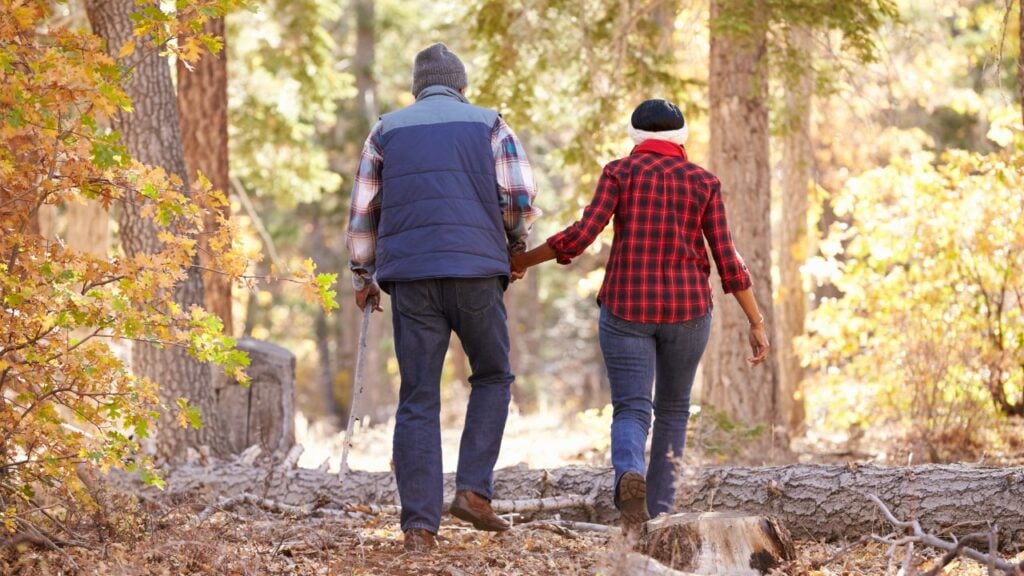
Ohio ranks 29th in the country for physical inactivity, with roughly 1 in 5 adults reporting no exercise beyond their regular job in the past 30 days.
Fitness trackers count steps and log workouts down to the calorie now, but many Ohioans built the same habits decades before any of that technology existed.
11 Old-Fashioned Wellness Habits Ohioans Never Needed an App to Track
8 Meijer Produce and Meat Habits That Separate Ohioan Regulars From Everyone Else

Meijer doesn't announce every useful shopping trick over the loudspeaker.
Ohioans who shop there regularly have learned to spot the clues themselves, while everyone else keeps cruising straight toward checkout.
8 Meijer Produce and Meat Habits That Separate Ohioan Regulars From Everyone Else
