
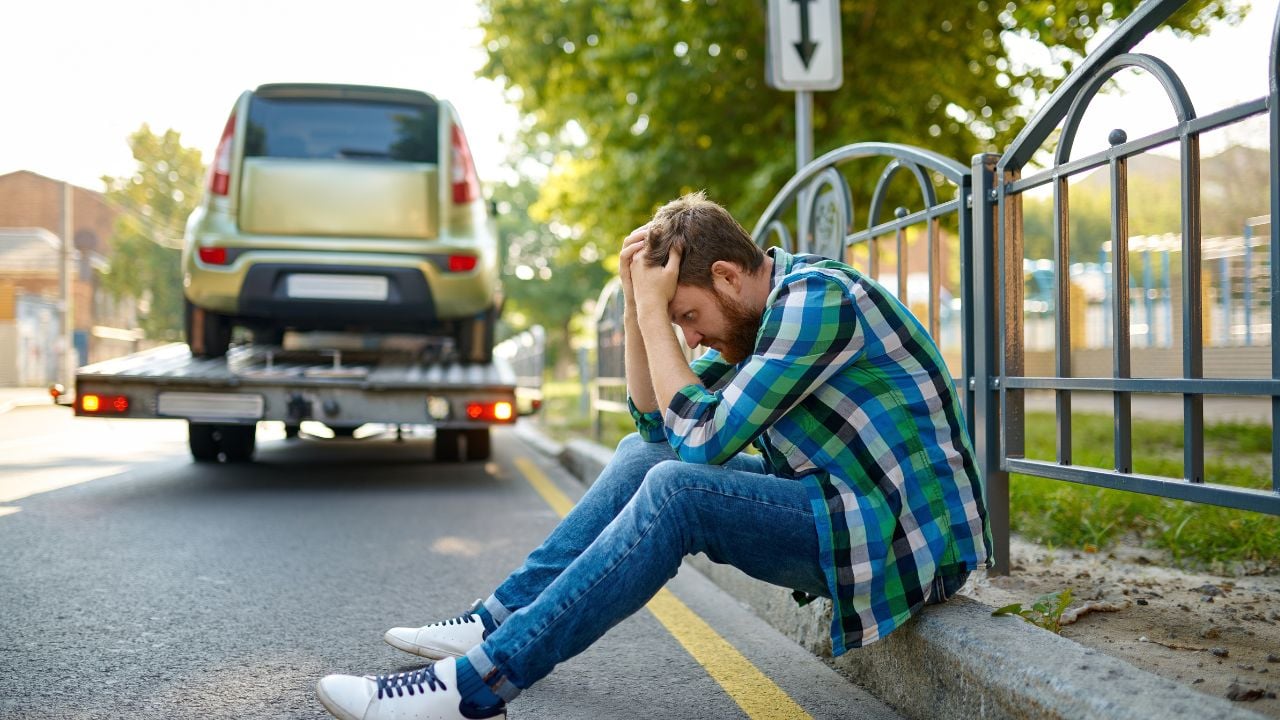
8 California Street Parking Rules That Get Cars Towed Without a Warning

Park in a California peak-hour tow-away lane, and the only warning you get is the sign on the pole.
It can be easy enough to miss.
Here are the California street parking rules that get cars towed without a warning.
Note: This is general information, not legal advice. Parking rules and towing fees are subject to change.
1. Railroad Track Rule
The railroad track rule keeps your car 7½ feet from the nearest rail, under Vehicle Code Section 22521.
Park closer than that, and a peace officer can have your car removed under Section 22656 without posting anything first.
No sign is required.
The same section does require posted signs before a tow farther out in the railroad right-of-way, so the statute draws its line at that 7½-foot mark.
You’ll run into the rule anywhere a track crosses a street or simply runs alongside it, and the crossing gate isn’t the measuring point.
The rail is the measuring point.
2. Bridge and Tunnel Ban
Vehicle Code Section 22500 bans parking on any bridge or inside any tunnel in California.
That ban covers every span and tube in the state, not only the Golden Gate.
The statute carves out narrow exceptions, mainly for maintenance crews.
A tunnel keeps just that one exception.
A bridge allows a couple more, for things like permitted bus loading or signed local parking.
If you leave your car unattended on a bridge or in a tunnel anyway, Section 22651 lets an officer remove it as soon as it obstructs traffic.
That subdivision comes first in the statute, ahead of stolen cars and blocked hydrants.
Nothing waits on your windshield.
The Caldecott Tunnel and the Coronado Bridge fall under the same wording as a two-lane county bridge over an irrigation canal.
So if your car dies mid-span, stay with it because an unattended car on a bridge is the exact case the section names.
3. Blocking a Driveway
Blocking a driveway brings the San Francisco Municipal Transportation Agency (SFMTA) more public tow requests than any other violation, according to its towed-vehicles page.
The state rule is short.
Section 22500 bars stopping in front of a public or private driveway.
Section 22651 then lets an officer tow a car blocking a private driveway when it’s impractical to shift it down the curb instead.
If you block someone’s driveway, a call from the homeowner brings the officer, and the truck follows.
In San Francisco you report a car across your driveway through 311.
You pay that $335 administrative fee plus the $317 tow fee to get it back.
San Francisco did launch a text-before-tow pilot in 2022, and it does cover blocked driveways.
The pilot only applies if you registered your plate and phone number with the city ahead of time.
Many drivers haven’t opted in, and the law never required that text in the first place: Section 22651 still allows the tow with zero notice, pilot or not.
Once your car’s hooked to the truck, even a registered text can’t stop it.
The Bill for a Towed Car in San Francisco
A towed car in San Francisco costs $652 to get back on a first tow, before storage.
Storage is free for the first four hours.
After that, the city charges $69 for the first day and $82 for each day that follows.
If your car has been towed before, the administrative fee rises to $385.
A car that needs a dolly adds $56.
4. Blue Curbs Without a Placard
A blue curb without a placard on the dashboard is a parking rule with a tow attached, under Vehicle Code Section 22507.8.
That section makes it unlawful to park in a space designated for disabled persons without the placard or plate.
It also bans parking on the crosshatched aisle beside that space.
Section 22652 then lets a peace officer, or a salaried city parking employee, remove your car once the police, the sheriff, or the California Highway Patrol (CHP) has been notified.
The paint is the notice.
Cities mark on-street spaces with blue paint on the curb and a wheelchair sign, and any sign put up since July 1, 2008, has to read “Minimum Fine $250.”
San Francisco’s color-curb page puts it plainly: Blue zones run around the clock, apart from a short list of exceptions the page spells out.
Outside those exceptions, your vehicle may be towed.
5. Double Parking
Double parking is the tow you can watch happen from the coffee shop window.
Stopping on the roadway side of a car already parked at the curb breaks Section 22500 outright.
That puts you in a live lane already covered by Section 22651, which lets an officer remove any car obstructing the normal movement of traffic.
The same subdivision covers a car left in a condition that creates a hazard to other traffic.
CHP lists a car blocking a lane or creating a traffic hazard among the vehicles it stores.
A stored car is the kind you get back from the tow company without a police release.
You still pay the bill.
San Francisco’s text-before-tow pilot leaves hazards out, so a car in the lane gets no text, either.
6. Four Hours on a Freeway Shoulder
Four hours on a freeway shoulder is the only rule of the bunch that runs on a clock, and it comes with no sticker.
Section 22651 lets an officer remove a car stopped or left standing for more than four hours on a freeway right-of-way.
The subdivision applies to a freeway with full control of access and no crossings at grade.
It adds one condition: If you’re there, you still can’t drive the car off the shoulder.
Being there doesn’t help you.
Three other subdivisions of the same statute spell out sign requirements before a tow, and the freeway subdivision carries none of that language.
CHP’s FAQ lists a car left parked on a freeway in excess of four hours as a stored vehicle, not an impound.
If you break down on I-5 at lunch, that clock runs out before the evening commute.
7. Peak-Hour Tow-Away Lanes
Peak-hour tow-away lanes are the one parking rule with its only notice hung on a pole above the curb.
Section 22651 lets a city tow from any spot where a local ordinance prohibits parking and authorizes removal, on one condition: Signs must be posted giving notice of the removal.
That’s the only warning.
Los Angeles writes the same rule into Section 80.77 of its municipal code, which covers any car parked in violation of an official sign that prohibits stopping and gives notice that the car may be removed.
Once the posted hour hits, nobody has to ticket you first, call you, or come back for a second look.
San Francisco’s text-before-tow pilot excludes peak-hour tow-away lanes outright.
Even a blue zone stops protecting you during posted tow-away hours, according to San Francisco’s color-curb page.
Psst! How much do you know about California’s driving laws? Take our quiz and see if you can ace it.
Quiz
California Driving Law IQ
Answer these questions on California’s driving laws and Department of Motor Vehicles (DMV) history. We bet you can’t get them all right. Prove us wrong?
California’s first permanent license plates, issued in 1914, were made of what?
8. San Francisco's Yellow Zones
San Francisco's yellow zones are curb space for commercial vehicles doing active freight loading, and parking there with a passenger plate gets you cited.
The tow follows if the sign specifies it's a tow zone.
The hours live on the sign or on a stencil painted onto the curb, so you have to read both before you pull in.
Your minivan doesn't count.
Some of those zones go further and reserve the curb for trucks with six wheels or more, which you can spot by the red-capped meters where the block is metered.
The 2022 text-before-tow pilot leaves yellow and white zones out, too.
So the first sign you've broken the rule can be an empty curb and a $652 bill at 450 7th Street.
9 Restaurant Chains Californians Assume Exist Everywhere
California has more restaurants than any other state, and almost none of its homegrown chains ever leave.
Ask for your favorite of those chains outside the state, and you'll get a blank look.
9 Restaurant Chains Californians Assume Exist Everywhere
7 Living Arrangements Older Californians Choose Instead of a Nursing Home
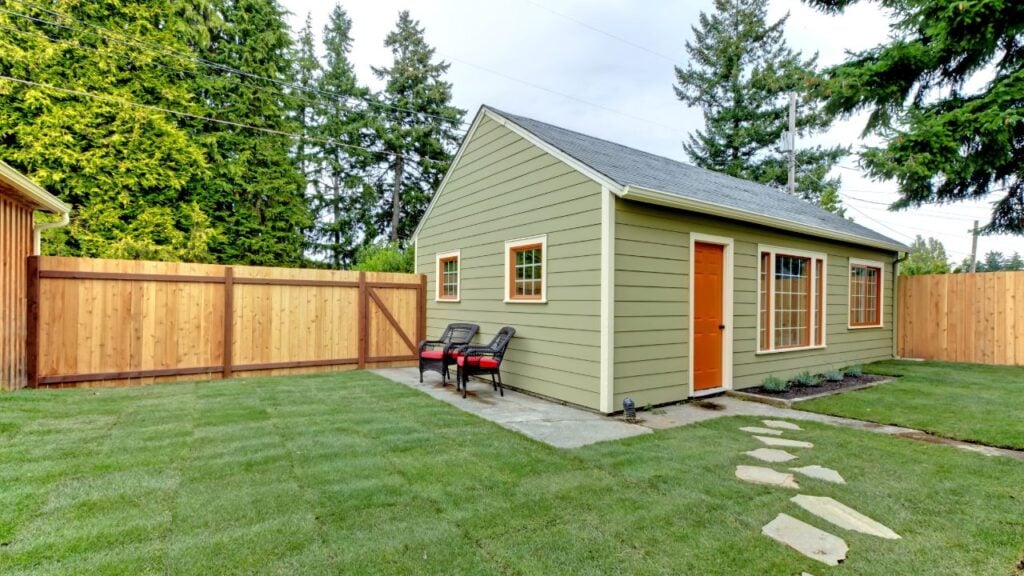
A semi-private room in a California nursing home runs a median $146,000 a year, according to the CareScout Cost of Care Survey.
Almost nobody budgets for that, and many older Californians have found somewhere else to live instead.
7 Living Arrangements Older Californians Choose Instead of a Nursing Home
