
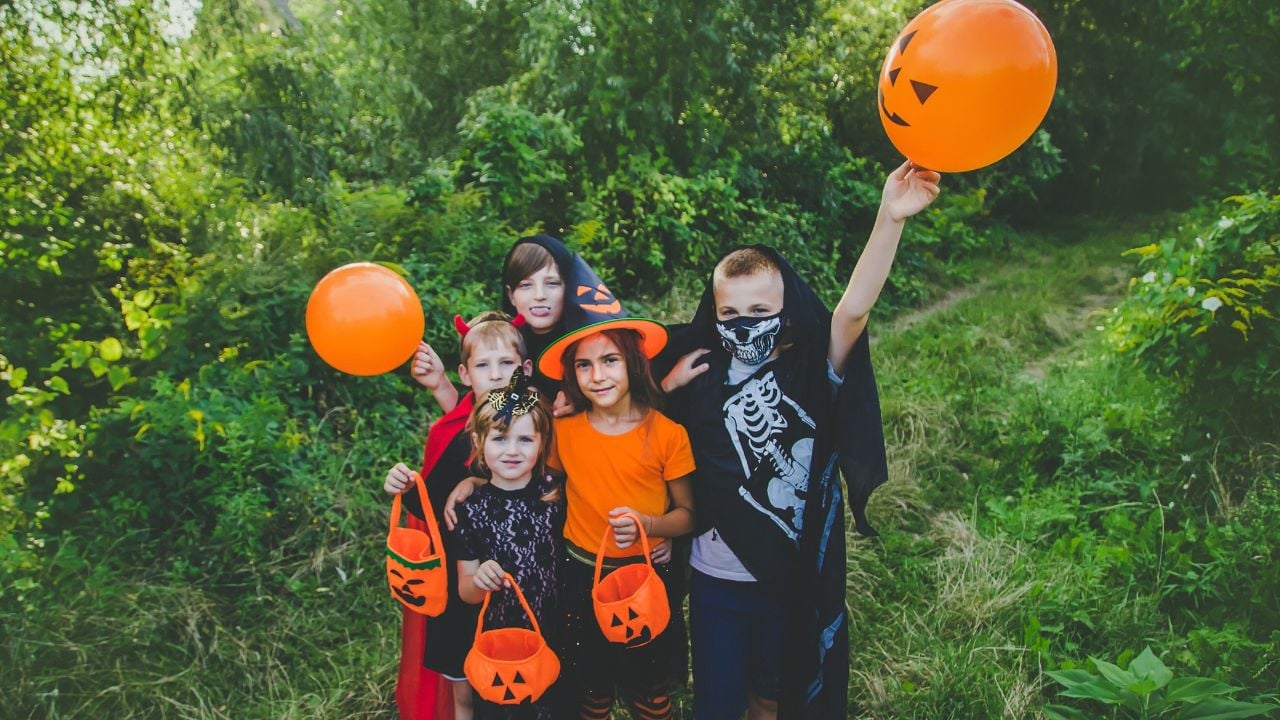
5 Fall Traditions Minnesota Kids Grew Up On That Have Disappeared

Think back to a Minnesota fall when you were a kid.
The air turned crisp, and your family had plans you never had to discuss.
Some of those plans no longer exist.
Here’s a look back at the autumn rituals that faded for good.
1. ZooBoo at Como Zoo
ZooBoo was the fall tradition at Como Zoo in St. Paul: A few nights of trick-or-treating every October, for 30 years.
Como Friends billed it as a safe alternative to trick-or-treating for kids 3 to 8, with animal visitors, live entertainment, and craft projects from 4:30 to 7:30 in the evening.
In its final years, a ticket cost $6 if you bought early and $7 after that.
Bring a kid, and you also paid for the zoo’s upkeep, since ZooBoo doubled as a Como Friends fundraiser.
Then it stopped.
The city announced why on Oct. 10, 2017: that year’s four nights would be the last ZooBoo in its current form.
A new seals and sea lions habitat under construction in the middle of the campus was one reason; ZooBoo also just needed a refresh.
Como Friends promised something new for 2019.
If you go looking for ZooBoo this fall, you won’t find it on Como’s October calendar, which lists polar bear programs and zookeeper talks instead.
2. School Costume Parades
You walked the school hallway every fall in a store-bought mask while your parents snapped pictures from the sidelines.
That was the costume parade.
It’s gone from schools in at least two Twin Cities districts.
Jeffers Pond Elementary in Prior Lake ended its fall festival and costume parade in 2018, according to Minnesota Public Radio’s MPR News.
An E-STEM day, short for environmental education, science, technology, engineering, and math, took its place.
The Prior Lake-Savage district said the goal was to focus on learning rather than Halloween.
Parents protested.
A St. Paul school went through the same controversy in 2016, after a principal’s letter told families it would no longer celebrate Christmas, Thanksgiving, Halloween, or Valentine’s Day.
Many districts across the state weighed the same question: Whether to celebrate holidays that not every family observes.
Prior Lake-Savage never brought the parade back.
3. Friday Nights at Parade Stadium
For decades, Friday and Saturday nights in the fall belonged to Parade Stadium.
Minneapolis high school football moved in starting in the fall of 1951.
The park board planned it as a 17,000-seat football stadium with parking for 600 cars.
That first fall, an NFL exhibition between the Packers and the 49ers drew a standing-room crowd of 20,000.
It hosted eight high school games that first season and 47 the next.
Friday and Saturday nights, mostly.
If you grew up on the Minneapolis side, you built your fall around those Friday and Saturday nights at the stadium.
It stood a few steps from where the Minneapolis Sculpture Garden went in during 1988.
The Walker Art Center paid to tear the stadium down in 1990 so the Sculpture Garden could expand.
By then, high school football had mostly moved elsewhere; the park board’s history says just five events were booked there in 1986.
A synthetic turf field went in on the site in 2006.
4. Vikings Sundays at the Met
The Vikings made outdoor Sundays in Bloomington a fall tradition starting Sept. 17, 1961.
That first regular-season home game at Metropolitan Stadium drew 32,236 fans, who watched the Vikings beat the Bears 37-13.
Minnesota Historical Society’s account of the stadium describes tailgating in the parking lot, in all weather, as part of going to a game.
There wasn’t a roof.
If you were a kid in the ’60s or ’70s, you might’ve sat in the removable bleachers crews added in the mid-1960s to fit more football fans.
The last Vikings game there was Dec. 20, 1981.
Fans took the place apart on the way out, taking seats and pieces of the goal posts as souvenirs.
Crews demolished the stadium on Jan. 28, 1985.
The Mall of America stands on the site now, so you can shop where the field once was.
5. Football at the Metrodome
Fall football moved indoors to the Metrodome on Sept. 12, 1982, when the Vikings opened their first season there against Tampa Bay.
The Gophers played there too.
You could watch college football on Saturday and the NFL on Sunday, both under the same ten-acre, air-supported roof.
That roof collapsed four times, according to the Minnesota Historical Society, the first only six weeks after crews finished it.
The Metrodome cost $55 million to build.
If you were still going to games by then, the Vikings played their last one under that roof on Dec. 29, 2013.
Crews demolished the Metrodome in 2014 to make way for U.S. Bank Stadium.
U.S. Bank Stadium now stands on the same footprint, roof and all.
Psst! How much do you know about autumn in Minnesota? Take our quiz and see if you can ace it.
Quiz
Minnesota Autumn IQ
Answer these questions on Minnesota’s fall weather, wildlife, and woods. We bet you can’t get them all right. Prove us wrong?
The warmest Halloween on record in the Twin Cities hit what temperature?
Anoka's Halloween Holdout
Anoka's Halloween celebration is the fall tradition that never disappeared.
It started in 1920, after years of pranks.
The 1919 version involved a herd of freed cows that wandered into the sheriff's office and the schoolhouse.
A Main Street theater owner named George Green pushed the idea.
The first celebration ran a parade, a bonfire, contests, and candy handed out afterward.
The point was to keep young people so busy they'd skip the pranks.
It worked.
The celebration has run every year since, except during World War II.
Its main parade now draws up to 100,000 people, according to the Star Tribune.
Minnesota still finds room for new fall traditions too: The Minnesota Zoo's Jack-O-Lantern Spectacular lights more than 5,000 pumpkins along a trail from Sept. 25 through Nov. 1.
Tickets run $23 to $30 for adults and $19 to $26 for kids, plus $10 to park if you aren't a member.
The pumpkin trail adds a quarter mile to your visit and takes about 40 to 50 minutes to walk.
9 Signs You Grew Up in Minnesota, No Matter Where You Live Now
You carry a Minnesota upbringing to every new zip code.
The signs show up in how you talk, how you drive, and how long it takes you to say goodbye.
9 Signs You Grew Up in Minnesota, No Matter Where You Live Now
11 Things Minnesotans Say That Baffle Everyone Else

Minnesotans didn't get their accent from Fargo.
The words that confuse visitors at the gas station go back a lot further than the movie.
