
9 Pennsylvania Roads Drivers Love to Hate, and Why the East and West Never Agree

Picture the same slow merge, the same brake lights and a whole state of drivers grumbling about different ones.
Pennsylvania drivers rarely agree on which road is the worst.
Here’s a tour of the stretches that test your patience, and why eastern and western drivers pick different winners.
Note: This is general information, not legal advice. Pennsylvania’s traffic laws, fines, and grace periods can change, so confirm the current rules with PennDOT.
1. Schuylkill Expressway
The Schuylkill Expressway earned its “Surekill Distressway” nickname after opening in 1958 gridlocked from its very first day of traffic.
Gridlocked from day one.
You can still feel that history every time you merge onto it near Philadelphia.
The Pennsylvania Department of Transportation (PennDOT) says the corridor now carries about 211,000 vehicles a day through the city.
That is roughly six times the 35,000 it was built to handle back in the 1950s.
Widening it still isn’t simple today, since the highway needs a long process of clearances and right-of-way before it can gain even a single additional lane.
The Conshohocken Curve, where I-76 meets I-476, tests your patience the same way.
A national freight-bottleneck study ranked it 76th-worst in the country for truck traffic.
2. Roosevelt Boulevard
Roosevelt Boulevard runs twelve lanes wide through Northeast Philadelphia.
A joint report from the city, SEPTA (the regional transit authority), and PennDOT found the corridor accounted for 14% of all of Philadelphia’s fatal crashes between 2013 and 2017.
That’s not an exaggeration.
You don’t need a report to notice the danger if you’ve ever tried to cross Roosevelt Boulevard on foot.
Speed cameras have cut speeding by 95% at camera locations citywide, including Roosevelt Boulevard’s, according to Philadelphia’s 2024 Vision Zero update.
The cameras are also credited with saving roughly one life a month.
Even with that record, Roosevelt Boulevard hasn’t shaken its reputation as the road Philadelphia drivers dread most.
What Roosevelt Boulevard’s Cameras Cost Drivers
Roosevelt Boulevard’s cameras don’t need an officer standing at the roadside to catch a speeder.
The Philadelphia Parking Authority and Philadelphia Police still review the video before a ticket goes out.
Philadelphia is rolling that same system out on Broad Street.
Violations there carry fines up to $150.
A 60-day grace period is built in before a camera catch turned into a ticket.
3. Vine Street Expressway
The Vine Street Expressway (I-676) took 44 years to go from a 1947 city planning exhibit to an open road.
Chinatown’s residents fought the project for over a decade before it got built at all.
You can thank that fight for the scaled-down four-lane design you drive through today, sunk below street level between two much busier highways.
A whole generation waited.
Engineers expected river-to-river trips of just a few minutes once it finally opened in 1991.
Instead, a two-wye interchange ties into I-95 just north of the Benjamin Franklin Bridge on one end, with a merge into I-76 on the other.
That turned your quick cut-through into a trench drivers still complain about, more than three decades later.
4. I-95 at Cottman Avenue
I-95 at Cottman Avenue has been a construction zone for most of the past decade.
PennDOT’s Cottman-Princeton rebuild spent years replacing the ramps, bridges, and utilities under this 1.4-mile stretch before finishing in the spring of 2024.
That project wasn’t even finished when a tanker truck fire in June 2023 burned hot enough to collapse the highway overpass near Cottman Avenue.
Governor Josh Shapiro declared a disaster to speed up funding, and crews rebuilt a temporary roadway in twelve days before finishing the full eight-lane restoration by May 2024.
The rebuilt roadway is backfilled in part with 2,000 tons of recycled glass to keep the new pavement from sinking.
You’d think that would be the end of it.
PennDOT has kept posting new lane restrictions and traffic-pattern shifts on this same corridor every year since, including work on the neighboring Bridge Street interchange that carried into 2026.
Your commute through this stretch still runs past orange barrels many years, collapse or no collapse.
5. Parkway East
Parkway East doesn’t get Philadelphia’s kind of press.
But a traffic study from analytics firm INRIX still ranked this stretch of Interstate 376 the fifth-most-congested road in the entire country.
Fifth in the whole nation.
You lose time on this corridor every day.
The average driver loses about 18 minutes crossing it, close to 72 hours a year.
Pittsburgh as a whole doesn’t fare much better, either.
The region’s drivers lose about 127 hours a year to traffic overall.
Psst! How much do you know about Pennsylvania’s most notorious roads? Take our myth-vs-fact quiz and see how many you can get right.
6. Parkway West
The Parkway West carries the other half of Interstate 376, running west toward I-79 in Robinson.
It backs up hardest at the interchange where I-79 traffic merges in.
That interchange is a headache.
You can blame the design near Settlers Cabin Park for a lot of that backup.
Local traffic reporting has pointed to the Ridge Road interchange as a spot PennDOT could have designed differently to avoid the daily squeeze.
Congestion on the Parkway West continues well past where Routes 22 and 30 meet it.
You’ll feel that stretch long after you think you’ve cleared the worst of it.
7. Fort Pitt Tunnel
The Fort Pitt Tunnel opened in 1960 built to handle about 40,000 vehicles a day.
It now carries roughly 107,000, and that math never balanced.
Its twin bores carry no emergency shoulder.
The eastbound approach drops down Green Tree Hill on a steep six-percent grade before you even reach the tunnel mouth.
That’s exactly what happened this past September, when a rear-end crash killed a driver and shut one bore for three hours.
You feel every one of those closures once traffic backs up toward Downtown Pittsburgh with nowhere else to go.
8. Route 28 at Etna
Route 28 squeezes from two lanes into one right around Etna and Highland Park, a bottleneck you’ll feel the moment rush hour starts heading toward Pittsburgh.
All of that traffic squeezes through the single remaining lane.
PennDOT posted a single-lane restriction on this stretch and then extended it indefinitely.
Your trip toward Pittsburgh can stretch the same way near the 31st Street Bridge.
The ramp onto southbound Route 28 has been closed on top of the mainline squeeze.
9. Route 22 in Monroeville
Route 22 through Monroeville has recorded multiple fatal crashes within just a few blocks in recent years.
Three deaths marked this stretch.
You’ll notice the pace the moment you drive it.
Nearby residents and business owners have told local news crews that drivers on this stretch routinely speed and change lanes without warning.
Your best move on this part of Route 22 is simple: Leave extra space and expect the unexpected from the car beside you.
The Pittsburgh Left Problem
The Pittsburgh Left lets a driver turn left ahead of oncoming through traffic at an intersection with no dedicated turn lane or arrow.
It grew out of a western Pennsylvania street grid with too few dedicated turn lanes.
Not in Philadelphia.
Pennsylvania’s traffic code settles the argument anyway.
Section 3322 requires any driver turning left to yield to a vehicle “approaching from the opposite direction which is so close as to constitute a hazard,” custom or not.
A national driver-courtesy survey from AYTM Market Research, run for Kars4Kids’ “Drive Human” campaign, graded Pennsylvania a D and ranked it 42nd out of 50 states.
Abrupt, unsignaled lane changes out of the left lane were one of the state’s worst habits, the kind you’ve probably watched happen from the next lane over.
8 Pennsylvania Farm Markets and Orchards Worth Driving Hours For
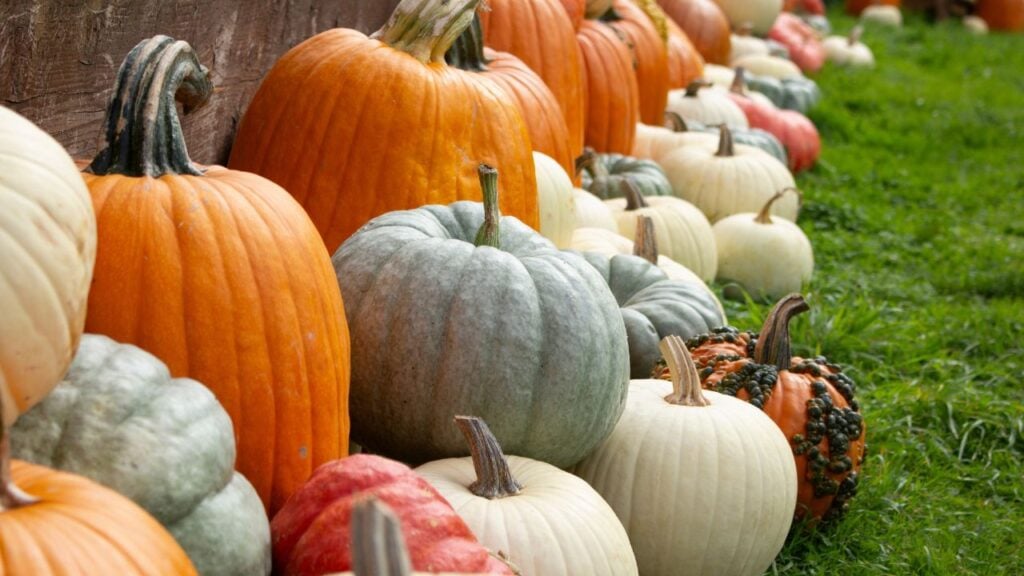
Pennsylvania growers brought in roughly 10.5 million bushels of apples this year, enough to rank the state fourth in the country for apple production.
These are the farm markets and orchards worth the drive before the trees go bare for the season.
8 Pennsylvania Farm Markets and Orchards Worth Driving Hours For
8 Loyalty Program Changes Giving Pennsylvanians Less for More
Rewards programs are always changing, and not always for the better.
These are the loyalty program changes giving Pennsylvanians less for the same money.
8 Loyalty Program Changes Giving Pennsylvanians Less for More
