
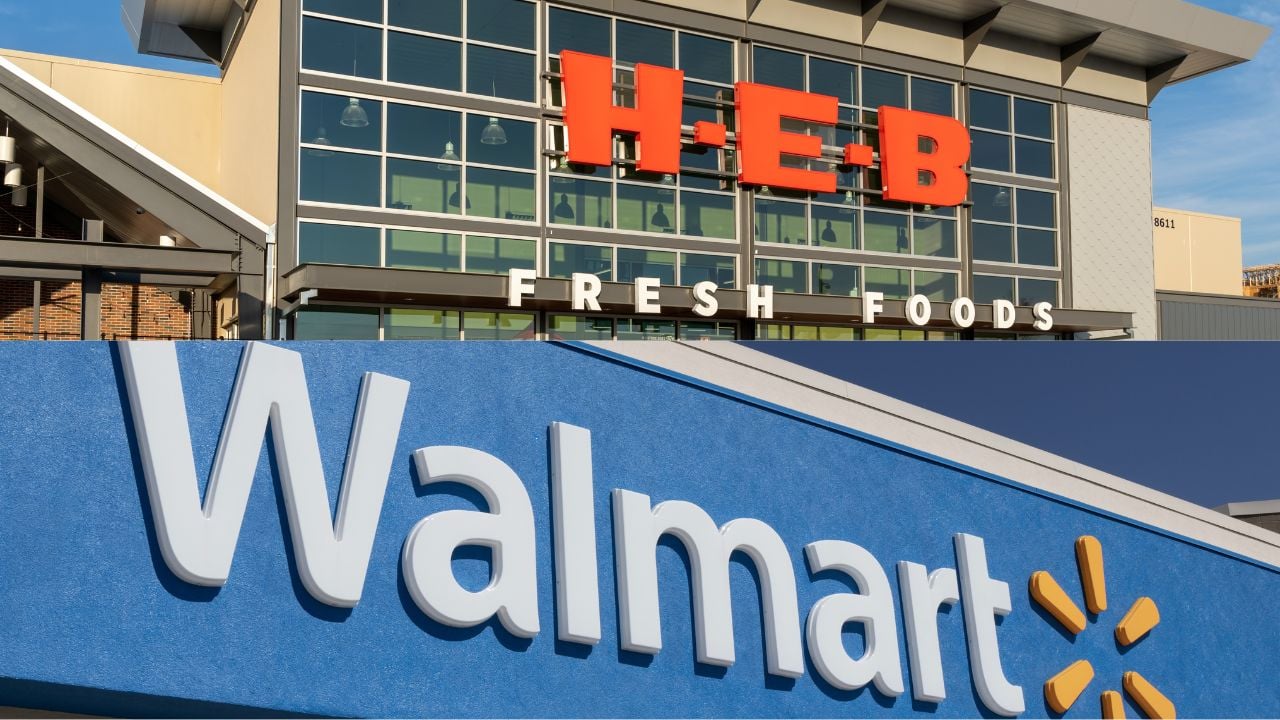
11 Big Differences Between H-E-B and Walmart Every Texan Should Know

Texans have strong feelings about where they shop.
H-E-B and Walmart both stock the basics, but the two companies work in very different ways.
Here’s our unbiased analysis of how they compare.
1. Private Company, Public Company
H-E-B is privately held, and the Butt family is still its primary owner.
Walmart, on the other hand, has traded publicly on the New York Stock Exchange since 1972.
You can buy a share of Walmart today, and you can’t buy one of H-E-B no matter how much cash you bring.
2. Decades and Miles Apart
Walmart got its start in 1962, when Sam Walton opened the first store in Rogers, Arkansas.
H-E-B is 57 years older.
Florence Butt opened a single grocery store in Kerrville, Texas, in 1905.
Walmart’s headquarters sits in Bentonville, Arkansas, and you’d cross a good part of two states just to reach H-E-B’s front door in San Antonio.
You’re looking at nearly ten hours behind the wheel.
3. Two Countries, Nineteen Countries
You won’t find an H-E-B in Oklahoma, Louisiana, or any other neighboring state, no matter how close you live to the line.
Every H-E-B location sits in Texas or in Mexico, nowhere else.
H-E-B stays put.
Walmart works on a completely different scale.
Its stores and websites reach nineteen countries.
Walmart runs more than 10,900 stores, plus numerous e-commerce websites, across those nineteen countries.
What These Store Counts Include
H-E-B’s roughly 450 stores cover the whole company, including its stores in Mexico, and that count spans all of its divisions.
Walmart’s count works differently.
It covers more than 4,500 stores under the Supercenter, Discount Store, and Neighborhood Market banners.
Sam’s Club runs as a separate warehouse chain, with a membership and a store count that stand apart.
4. A National Grocery Ranking
Dunnhumby‘s 2026 Retailer Preference Index named H-E-B the top grocery retailer in the country for the fifth time in nine years.
That’s not just marketing.
The report drew on more than 11,000 American shoppers rating price, quality, digital tools, and other measures that matter to them.
Walmart showed up in a different group.
Dunnhumby placed Walmart among the “savings-focused” retailers, a group that is narrowing the quality gap with traditional competitors.
If you’ve ever picked a store purely because it was the cheapest option nearby, you already understand where Walmart’s strategy comes from.
5. Store Brands, Different Reputations
H-E-B’s store-brand groceries topped Bain & Company‘s 2024 national ranking of the most loved private-label brands in fresh and perishable food.
Loyalty like that is rare.
Shoppers who love a grocer’s store brand are seven times more loyal to that grocer.
Walmart’s answer is Great Value, a brand that has been around since 1993 and now shows up in nine out of ten American households.
In April 2026, Walmart announced a redesign of nearly 10,000 Great Value food and consumables items, which it calls the most extensive private brand update in its history.
If you’ve bought a bag of chips or a carton of eggs with the Great Value label on it, you’ve already shopped this comparison.
Psst! Curious how H-E-B and Walmart stack up? Compare the numbers for yourself below.
6. A Fee, or No Fee
Walmart+ will cost you $98 a year, and that single membership unlocks free shipping, a fuel discount, and a streaming subscription.
H-E-B leans on coupons instead.
H-E-B’s digital coupons are selected on its website or mobile app, and the same app handles curbside pickup.
You either pay H-E-B’s shelf price or load a digital coupon before you shop.
Walmart says annual members with at least twelve months of membership save an average of $382 a year using those perks.
That’s the trade-off.
7. H-E-B’s Disaster Relief Fleet
H-E-B operates a fleet of mobile kitchens and dedicated disaster relief units, and the company has called on it for more than one Gulf Coast hurricane.
During Hurricane Harvey in 2017, H-E-B put $6 million and more than 60,000 hot meals into relief efforts.
The fleet went out again for Hurricane Laura in 2020, delivering more than 15,000 meals from its mobile kitchens.
You can count on that track record.
Walmart leans on its store network instead, with a location within 10 miles of nearly 90% of Americans.
Walmart says its stores and clubs often serve as hubs for emergency management before, during, and after major weather events.
That’s a nationwide system built to respond wherever you are, not a fleet built around one state’s disasters.
For H-E-B, Texas is everything.
8. Different Banners, Different Neighborhoods
H-E-B operates several distinct banners under one roof, including Central Market, Joe V’s Smart Shop, and Mi Tienda, each built for a different kind of shopper.
Every banner answers to H-E-B.
Central Market skips many mass-market brands and leans into specialty ingredients, while Joe V’s Smart Shop is a discount-focused format.
Walmart’s core banners work differently: Supercenter, Neighborhood Market, and Discount Store, all of them sold under the one Walmart name.
Sam’s Club sits apart from all of that, as a separate warehouse chain with separate storefronts.
Every H-E-B banner answers to one company, while Sam’s Club stands on its own.
9. Grocery Store vs. Superstore
A Walmart Supercenter carries a lot more than groceries, with departments for fashion, home goods, and pets, plus an Auto Care Center, and some locations add a fuel station out front.
It’s a one-stop trip.
H-E-B is a supermarket chain at heart, so expect a grocery store rather than a full department store.
You can buy a television, a bicycle, and a bag of dog food in the same Walmart trip.
At H-E-B, you’re mostly there for the food, and that’s by design.
10. Employers on Different Scales
Grocery Dive has called H-E-B the state’s largest private employer, and the company reports about 175,000 partners across its stores in Texas and Mexico.
That’s a lot of paychecks.
Walmart employs about 1.6 million people in the United States alone.
Walmart is the largest private employer in the country.
You’ve probably got a neighbor who’s worked at one of these companies, maybe both over the years.
Either way, you’re looking at a serious slice of the American workforce.
Psst! How much do you know about the history behind H-E-B and Walmart? Take our quiz and see how many you get right.
Quiz
How Well Do You Know H-E-B and Walmart’s History?
Nine questions on the two chains. See how many you get right.
Before he founded Walmart in 1962, what kind of store did Sam Walton run in Newport, Arkansas?
11. Two Different Delivery Networks
H-E-B bought Favor, an Austin delivery startup, in 2018, and still runs it as a courier network across Texas.
Favor picks up orders from restaurants and other local stores too, not just H-E-B.
That's the model.
Walmart runs its delivery through Spark Driver, a national network of independent-contractor drivers who fulfill orders placed on Walmart.com and deliveries for other retailers through Walmart's GoLocal program.
You can order from an independent Texas restaurant through Favor, and a courier brings it straight to your door.
You can just as easily get a delivery from another local business through Walmart's GoLocal program.
8 Texas Barbecue Joints Worth a Two-Hour Drive
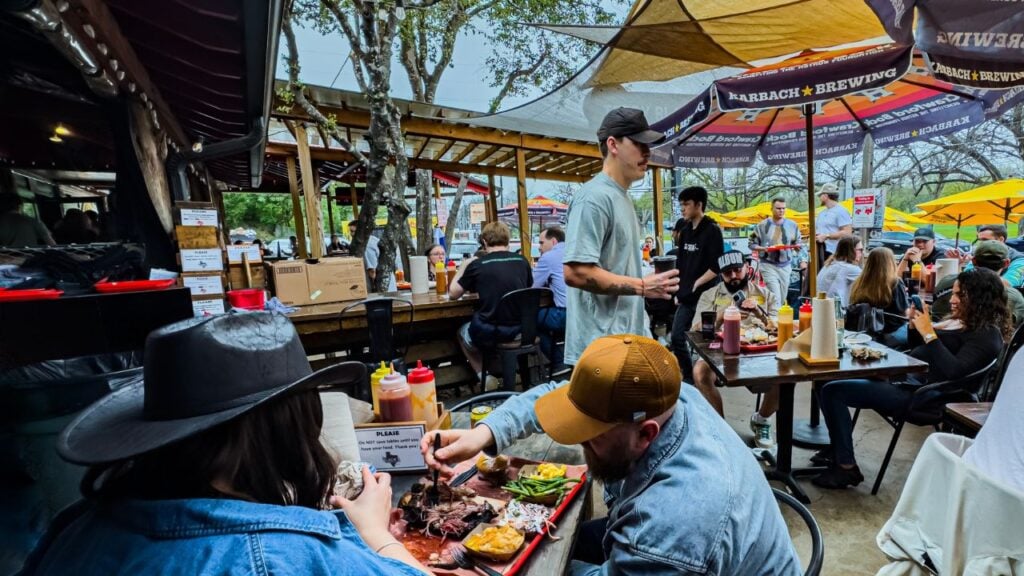
For its 2021 Top 50 list, Texas Monthly sent a team of editorial staffers to 411 barbecue joints across the state over eight weeks.
The magazine then named its fifty best.
A few of those pitmasters have built reputations worth the drive.
8 Texas Barbecue Joints Worth a Two-Hour Drive
8 Problems Texans Should Expect in a House Built Before 1970
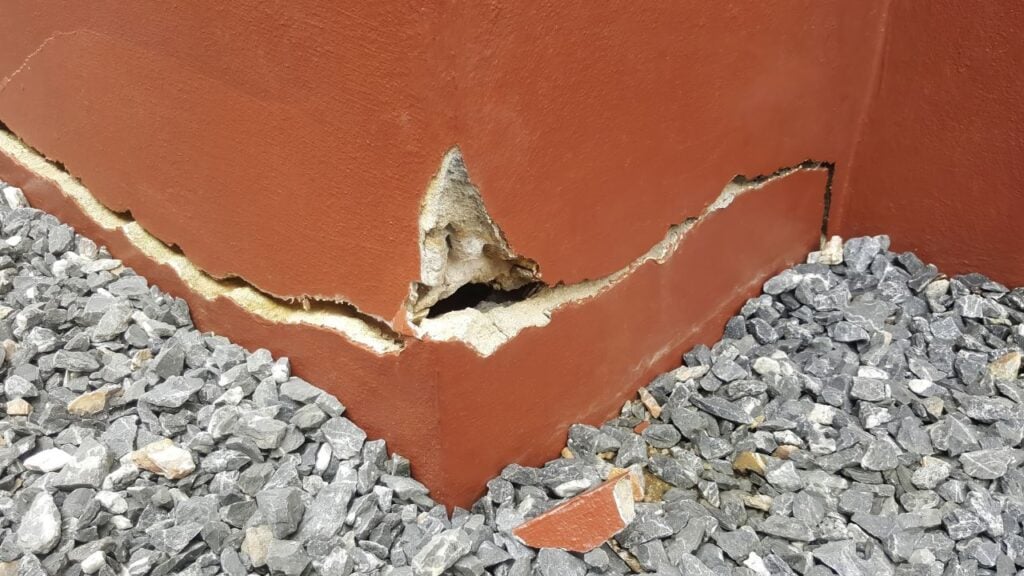
The U.S. Consumer Product Safety Commission has found that aluminum wiring installed before 1972 is 55 times more likely to have wire connections at outlets reach fire hazard conditions.
A lot of older Texas homes still carry that wiring today, along with a handful of other problems a buyer rarely sees coming.
8 Problems Texans Should Expect in a House Built Before 1970
