
9 Things Ohioans Can Be Fined For in Their Own Driveway

You pull into your driveway after a long day and park right where you always do.
Depending on your town, that spot, or whatever is sitting in it, could come with a fine.
Here’s what Ohioans may get hit with without ever leaving their own property.
Note: This is general information, not legal advice. Local ordinances and fine amounts vary by city and township and are subject to change, so check your town’s code.
1. Campers and Boats Kept Too Long
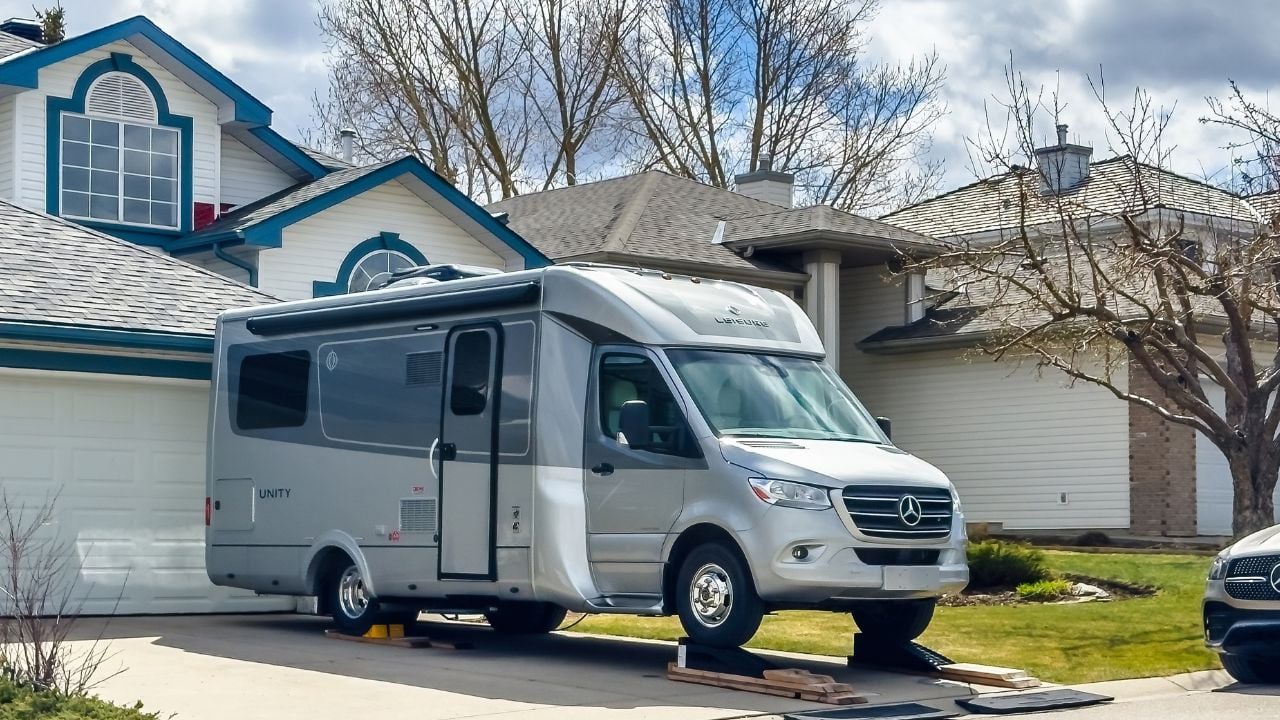
A camper parked in your driveway can turn into a fine in Ashtabula.
Ashtabula’s code limits campers, motor homes, and travel trailers on residential property to 72 consecutive hours, or seven days total in any 30-day stretch.
That’s three days straight.
A camper or boat 20 feet or shorter, trailer included, can stay on an improved driveway if no part sits within 20 feet of a public sidewalk.
If there’s no sidewalk, no part can sit within 25 feet of the nearest curb line.
A camper or boat of any length can also stay if no part sits closer to the street than the foundation wall of the house or garage nearest the street.
If your camper doesn’t meet those conditions, the fine tops out at $100, and each day counts as a separate offense.
Cleveland gives a boat in your driveway 48 hours in any 21-day period, and only for loading and unloading.
Otherwise, the zoning code allows a boat, boat trailer, or jet ski only in a closed garage on your property or on one improved rear-yard surface.
If you ignore a lawful order under Cleveland’s zoning code to move the boat, that’s a first-degree misdemeanor, with a fine ceiling of $1,000.
2. Building Without a Permit
Ontario requires a permit before you build or change a driveway that opens onto a public street.
A new driveway in a residential district needs a permit and a fee before any work begins.
Changing the width of an existing driveway in the right-of-way needs a permit too, and the city issues it at no charge.
The code also says the city isn’t charged with installing or repairing a private driveway.
Resurfacing your existing driveway with new concrete or asphalt needs no permit if nothing changes in the right-of-way.
If you skip a required permit, the code makes it a fourth-degree misdemeanor, and the fine can reach $250.
3. Cars Across the Sidewalk
Waynesville makes it illegal to leave your car in a private driveway in a way that blocks the public sidewalk.
Police can cite you.
Waynesville calls it a minor misdemeanor, which tops out at a $150 fine under Ohio law.
Forest Park’s list of common ordinances says vehicles parked in driveways can’t block the sidewalk.
Ohio law also puts sidewalks off limits for parking.
Under that law, one prior traffic conviction within a year makes a violation a fourth-degree misdemeanor.
Two or more prior convictions make it a third-degree misdemeanor.
Those levels raise the fine ceiling to $250, then $500.
4. Project Cars Under a Tarp
Mansfield lets you repair an inoperable car in your driveway, as long as an opaque tarp covers it.
One test in Mansfield’s code calls a vehicle inoperable when it has no valid license plate and is wrecked, dismantled, discarded, or incapable of being driven.
The tarp has to be opaque and cover the whole vehicle.
You can repair or restore only one vehicle outside an enclosed structure at a time.
Once the city serves notice, an inoperable vehicle can stay no longer than ten days.
Weekends and holidays don’t count.
A first offense is a fourth-degree misdemeanor, which carries a fine of up to $250.
Each later offense is a second-degree misdemeanor, with fines up to $750.
Ohio’s Misdemeanor Fine Ceilings
Ohio Revised Code Section 2929.28 sets the maximum fine for each misdemeanor level.
A minor misdemeanor tops out at $150, and a fourth-degree misdemeanor at $250.
A third-degree misdemeanor tops out at $500, and a second-degree misdemeanor at $750.
A first-degree misdemeanor tops out at $1,000.
Each amount is a maximum, not a set price.
5. Cars for Sale
Grove City requires a car for sale to sit in a paved parking area, which describes many driveways.
The For Sale sign can’t top four square feet, and it has to go inside your car.
The sign has to be affixed inside the vehicle.
You can offer one vehicle at a time, and no more than one vehicle in any six-month period.
The car has to be properly licensed and operable.
The car has to belong to whoever owns the property, and the property has to be improved and occupied.
A violation is a minor misdemeanor, and the fine can reach $150.
Grove City counts each day the violation continues as a separate offense.
6. Unpaved and Worn Surfaces
Beavercreek wants your driveway paved and kept in good repair.
A new house there has six months from its certificate of occupancy to get the driveway paved.
A gravel driveway built before July 25, 2005 can stay gravel, as long as you don’t expand it.
A first offense is a minor misdemeanor, with fines capped at $150.
A second offense within two years is a third-degree misdemeanor, and the court must impose a fine of at least $500.
Dover requires a car parked between the front of the house and the street to sit on a paved driveway.
Dover treats a driveway paved with concrete, gravel, aggregate or asphalt as paved.
In Dover, a violation is a minor misdemeanor, and each day counts as a separate offense.
7. Unlicensed and Junk Cars
Eastlake can cost you when a car without current plates sits in your driveway.
Under the code, any vehicle without current-year plates counts as unlicensed unless it sits in a fully enclosed building or garage.
Eastlake’s code has police issue a written warning first, and a ten-day period starts the next day.
Each five days the car stays after that counts as a separate offense.
A repeat offender faces a fourth-degree misdemeanor, with a fine of up to $250.
Cleveland’s code covers any junk motor vehicle, as state law defines it, that sits uncovered in the open on private property for more than 72 hours.
Once you receive the police chief’s notice, you have ten days to put the vehicle in a garage or other suitable structure, or to remove it from the property.
A first offense is a minor misdemeanor, a second is a fourth-degree misdemeanor, and each later offense is a third-degree misdemeanor.
Those levels carry fine ceilings of $150, $250, and $500.
8. Width Limits
Harrison limits your driveway to 25% of the width of your lot at the front or side lot line.
If you want a second driveway, the code says the two have to be at least 70 feet apart.
The code also bars a parking area in a front yard, paved or unpaved, except on a driveway or parking surface the code permits.
A violation is generally a minor misdemeanor, and the fine tops out at $150.
9. Work Trucks Overnight
A commercial vehicle in your driveway overnight can break Beavercreek’s code.
The code bars overnight parking or storage of any commercial vehicle outside a fully enclosed building on a lot used for residential purposes.
The code’s list of commercial vehicles includes box trucks, dump trucks, delivery trucks, and tow trucks.
If you break that rule, the penalties match those for Beavercreek’s driveway-surface rules.
A second offense within two years carries a required fine of at least $500.
Psst! How much do you know about owning a home? Take our quiz and see if you can ace it.
Quiz
Homeowner IQ
Answer these questions about owning a home in Ohio. We bet you can’t get them all right. Prove us wrong?
Ohio law lets you set off consumer fireworks on private property, with the owner’s permission, on a short list of days. Which of these is on it?
Garage Sales
Parma limits a garage sale at your home to the area of the garage and driveway.
You need a permit before you hold a garage, basement, lawn, patio, or yard sale in a residential district.
The city allows no more than three sales a year at one residence.
Parma bans Sunday sales.
Grove City requires a license to sell five or more articles from a residence or its yard in its residential and rural districts.
Only two licenses go to one address in any twelve-month period, and no sale can run past sunset.
If you break the chapter, the penalty is a fourth-degree misdemeanor with a fine ceiling of $250, and each day is a new offense.
6 Things an Ohio HOA Can't Fine You For, No Matter What the Bylaws Say
Think an Ohio homeowners association (HOA) can fine you for anything its board puts in the bylaws?
The answer could save you a fine you don't owe.
6 Things an Ohio HOA Can't Fine You For, No Matter What the Bylaws Say
9 Things an Ohio Home Inspector Usually Isn't Required to Check

You pay for a home inspection to learn what's wrong with the house.
The list of what an inspector can skip may surprise you.
9 Things an Ohio Home Inspector Usually Isn't Required to Check
