
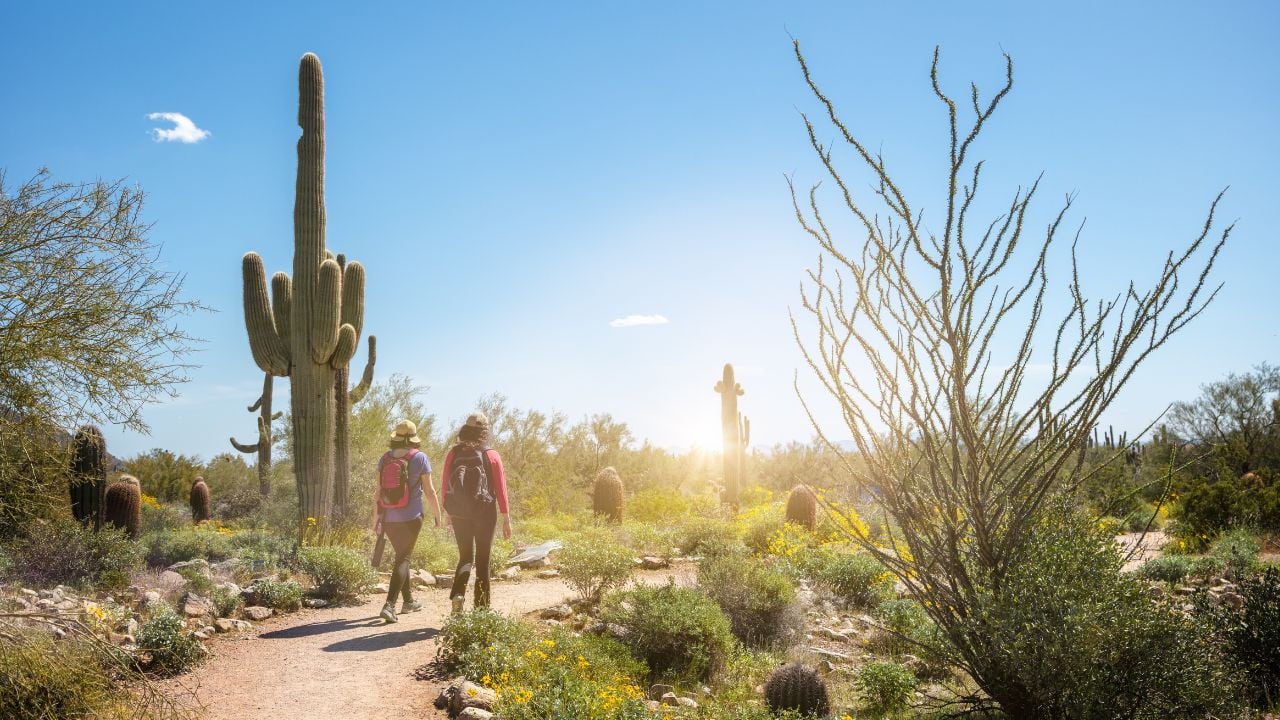
6 Things That Make Arizona Fall Unrecognizable to Anyone From Back East

Anyone who grew up back East has a picture of what fall is supposed to look like.
Arizonans know it can look and feel totally different.
Here’s what can throw off a transplant once the season turns in the Grand Canyon State.
1. First-Freeze Dates
Arizona’s first freeze of fall depends on where you’re standing, according to the National Oceanic and Atmospheric Administration (NOAA).
Its 1991-2020 normals give Flagstaff a 50 percent chance of a first 32-degree freeze by September 28.
Boston’s 50 percent date is November 9, about six weeks later.
Tucson’s is December 9.
Phoenix’s is January 3.
A normal October afternoon in Phoenix reaches 89.2 degrees.
That’s about seven degrees above Boston’s normal July high of 82.1.
If you drive from Flagstaff to Phoenix, you cross more than three months of normal first-freeze dates.
Arizona Growing Seasons in Days
NOAA’s normals list a growing season length for each city, counted at 32 degrees.
Phoenix’s is a full 365 days, at a 50 percent chance of that length or longer.
Boston’s is 218 days, Philadelphia’s is 224, Tucson’s is 307 and Flagstaff’s is 115.
Season length and first-freeze date are separate statistics.
If you’re comparing gardens, Phoenix’s season is 147 days longer than Boston’s.
2. Dry Octobers After the Monsoon
The monsoon season officially ends on September 30, according to the National Weather Service in Flagstaff.
In Phoenix, you’d get 0.56 inches of rain in a normal October.
Boston’s normal is 4.03 inches, more than seven times as much.
Flagstaff’s high country gets 1.52 inches, still under half of Boston’s total.
If you set out a rain gauge in Phoenix instead of Boston, you’d collect about one-seventh as much in a normal October.
3. What Goes in the Ground
Fall is planting season in Maricopa County, where the University of Arizona’s vegetable calendar lists two optimal growing seasons, one in spring and one in fall.
Broccoli, carrots, lettuce, spinach and kale are among the crops you can sow from seed in October.
In Massachusetts, the University of Massachusetts Amherst’s extension says October is the month to plant garlic.
After the ground freezes, cover the beds with 3 to 4 inches of straw mulch.
If you’re used to tucking your garden in for winter, an October in Maricopa County means sowing instead.
4. Peak Color by Elevation
In 2025, the Massachusetts Department of Conservation and Recreation expected peak color in mid-October for most of the state.
Certain areas in Western Massachusetts were expected to peak slightly earlier.
In Arizona’s Coconino National Forest, the Forest Service says fall color often begins in late September and peaks throughout October.
Many trees in Flagstaff’s higher elevations reach their prime in early October.
Deciduous trees in Oak Creek Canyon continue to display color well into November.
If you’re planning a leaf-peeping trip, you get a window from late September into November, not one mid-October peak.
Pick your elevation.
5. State Fair Into November
The fall Arizona State Fair runs Thursday through Sunday, from October 1 to November 1.
The Big E in West Springfield, Massachusetts, ran September 18 to October 4.
That puts the Arizona State Fair’s last day four weeks after the Big E’s.
If you missed the Big E, you have this weekend and two more at the Arizona State Fair.
The Big E is already over.
6. Skipping Daylight Saving Time
You won’t set your clocks back this fall in Arizona, according to the National Institute of Standards and Technology.
Arizona doesn’t observe daylight saving time, with the exception of the Navajo Indian Reservation, which does observe it.
In Boston, daylight saving time ends at 2 a.m. on November 1, 2026.
On November 2, the sun sets at 4:36 p.m. in Boston.
In Phoenix, sunset that same day comes at 5:35 p.m.
Phoenix gets the longer evening.
That’s 59 minutes more evening light for you in Phoenix than in Boston.
The sun rises later in Phoenix that day, at 6:48 a.m., than in Boston, at 6:19 a.m.
Psst! How much do you know about Arizona? Take our quiz and see if you can ace it.
Quiz
Arizona IQ
Answer nine questions on Arizona’s geography, wildlife, and history. We bet you can’t get them all right. Prove us wrong?
At Saguaro National Park, a saguaro cactus normally begins to grow branches (arms) at about what age?
Halloween Temperatures
On Halloween, Arizona's fall still means an 83.4-degree afternoon in Phoenix, according to NOAA's 1991-2020 normals.
That night, you'd normally see a low of 59.6 degrees.
If you're used to a Boston Halloween, the normal high in Boston on October 31 is 56.9 degrees, with a low of 42.6.
Phoenix's normal low beats Boston's normal high.
7 Arizona Trips Locals Refuse to Take Until the Heat Breaks
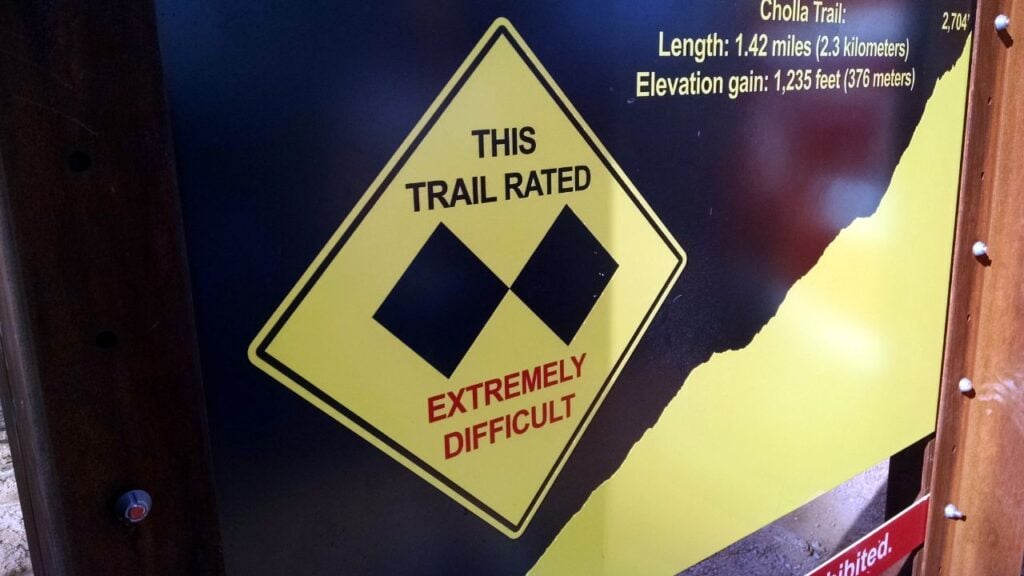
Some Arizona trips look great on a map and miserable in the heat.
That post sorts out which ones to save for cooler weather.
7 Arizona Trips Locals Refuse to Take Until the Heat Breaks
Arizona Leads America's Search for Pumpkin Spice Lattes. Are You Among Them?
This post looks at which states show the most interest in pumpkin spice lattes.
Arizona leads, and the post explains what that ranking measures.
Arizona Leads America's Search for Pumpkin Spice Lattes. Are You Among Them?
