
7 Ferry Habits That Save Washingtonians Time and Money on Washington State Ferries

Two people can take the same Washington State Ferries trip and pay very different amounts.
The difference often comes down to a few choices made before boarding.
Some of them can save you time as well.
Here are the habits that can save Washingtonians time and money on the ferry.
1. Dodging the 3% Card Surcharge
You pay a 3% surcharge on Washington State Ferries when you buy a ticket with a credit or debit card.
The ferry system has charged it since March 1, 2026.
The ferry system’s ticket information lists ways around it.
One is paying with cash.
Another is an ORCA regional transit card that wasn’t loaded at one of its facilities.
If you’re walking on, load your ORCA balance before you reach the terminal.
What the Ferry Card Surcharge Adds
Washington State Ferries’ 3% surcharge adds 54 cents to the $18.00 adult walk-on fare from Anacortes to Orcas Island.
That fare comes from the ferry system’s Oct. 16, 2026 fare table.
If you pay a reservation no-show fee by card, the 3% applies to that fee too.
Cash you load onto an ORCA card at one of its terminals still carries the 3%.
2. Walking Aboard Instead of Driving
On Washington State Ferries, an adult walk-on from Seattle to Bainbridge Island pays $11.35 for a round trip, according to the fare table for Oct. 16, 2026.
A car under 14 feet and its driver pays $16.05 each way on the same table.
If you’re traveling alone, that makes a round trip $32.10 by car and $11.35 on foot.
Walking on, you need to be aboard at least five minutes before a sailing.
With a car, you should plan to be in line at the tollbooth at least 20 minutes ahead on most routes.
On many routes, that lets you arrive 15 minutes later when you walk.
That’s a later alarm.
On a reserved Anacortes to San Juan Islands sailing, the ferry system recommends arriving 45 to 60 minutes early.
3. Driving After Peak Season
Washington State Ferries adds a peak-season surcharge to full-fare vehicle fares from May 1 through Sept. 30.
The ferry system’s weekly update puts that surcharge at 35%.
The 2026 surcharge ended Sept. 30, so your fare may be lower starting Oct. 1.
A standard vehicle and its driver on the Anacortes to Orcas Island route paid $72.75 in the Sept. 30 fare table.
The table for Oct. 16 lists $54.15 for the same trip.
The fare dropped.
If you pay full fare to drive from October through April, you skip the surcharge.
Before you book, you can check the fare for your travel day and route in the ferry system’s online fare calculator.
4. Booking Reservations the Day They Open
Vehicle reservations are strongly recommended on two Washington State Ferries routes: Anacortes to the San Juan Islands, and Port Townsend to Coupeville.
If you skip the reservation, there’s very limited stand-by space on all sailings.
Book early.
With a reservation, the ferry system’s reservation terms guarantee you a space on that sailing.
You have to arrive within your arrival window, and a few listed exceptions apply.
The winter season’s spaces become bookable in late October, so that’s when to check the page.
On the Anacortes and San Juan Islands route, the first 30% of standard spaces go live at 10 a.m. Pacific two months before the season starts.
Another 30% opens at 7 a.m. two weeks before each sailing.
The last 30% opens at 7 a.m. two days before you sail, so set an alarm if you want a certain sailing.
On the Port Townsend and Coupeville route, 80% of spaces release two months before the season, and 20% stay open for emergency and stand-by vehicles.
5. Canceling a Reservation by 5 p.m.
Washington State Ferries charges a no-show fee if you don’t show up for your vehicle reservation.
The fee equals 25% to 100% of the one-way vehicle and driver fare for the vehicle size you reserved, according to the ferry system’s reservation terms.
You can cancel or change a reservation online or by phone without a fee until 5 p.m. Pacific the day before your sailing.
Set a reminder.
Once that deadline passes, you get one free change to your reservation.
If you cancel after that change, a no-show fee applies.
6. Buying a Multi-Ride Pass
If you ride the same route often, a Washington State Ferries multi-ride passenger pass costs up to 20% less than single fares when you use every ride.
The pass covers 10 round trips, or 20 one-way trips on the Port Townsend and Coupeville route.
If you drive on, the vehicle pass covers 10 round trips, or five on the Anacortes and San Juan Islands route.
From Oct. 1 through April 30, a vehicle pass saves you 20% to 25% at most, as long as you use all its rides.
From May 1 through Sept. 30, the most you can save is 35% to 45% if you use every ride.
Multi-ride cards are excluded from the peak-season surcharge, so a pass also keeps you clear of it.
Both multi-ride passes are valid for 120 days from the day you buy them.
If you commute on foot, a monthly passenger pass gives a discount over single fares at a minimum of 13 round trips a month.
Compare your route’s pass price with what you’d pay in fares.
Monthly passes work on every route except Anacortes and San Juan Islands.
The ferry system also warns that expired unused rides can’t be refunded at the discounted rate.
Use every ride.
7. Claiming Free and Half-Price Fares
Kids 18 and younger travel free on Washington State Ferries as long as they aren’t driving a vehicle.
If you’re 65 or older, or you have a disability, you pay half the regular passenger rate.
The Oct. 16 fare table lists $5.65 for Seattle to Bainbridge Island, compared with $11.35 at the full adult rate.
You buy that ticket in person and show proof of your age or disability.
That break is smaller when you drive.
A car under 14 feet and its driver pays $13.20 in that table, compared with $16.05 at the full rate.
The Kingston Boarding Pass
At the Kingston terminal, Washington State Ferries requires vehicles to get a boarding pass during peak traffic times.
If you’re driving, you pick it up from the Washington State Patrol at Lindvog Road.
Without a pass, you’re sent to the end of the line.
Psst! How much do you know about riding a ferry? Take our quiz and see if you can ace it.
Quiz
Ferry Rider IQ
Answer ten questions on riding a ferry. We bet you can’t get them all right. Prove us wrong?
Which of these does the ferry system ban in passenger areas?
Cameras, Live Map and Text Alerts
Washington State Ferries posts terminal cameras and approximate vehicle spaces for its terminals.
You can look at them online before you head to the dock.
The ferry system's site also shows where your ferry is on a live map.
You can sign up for text alerts for Washington State Ferries on the state's travel alerts page.
The page has you enter your phone number, then choose a route you travel often or opt in to all alerts.
9 Reasons Washingtonians Keep Driving Into Oregon and Never Go Back
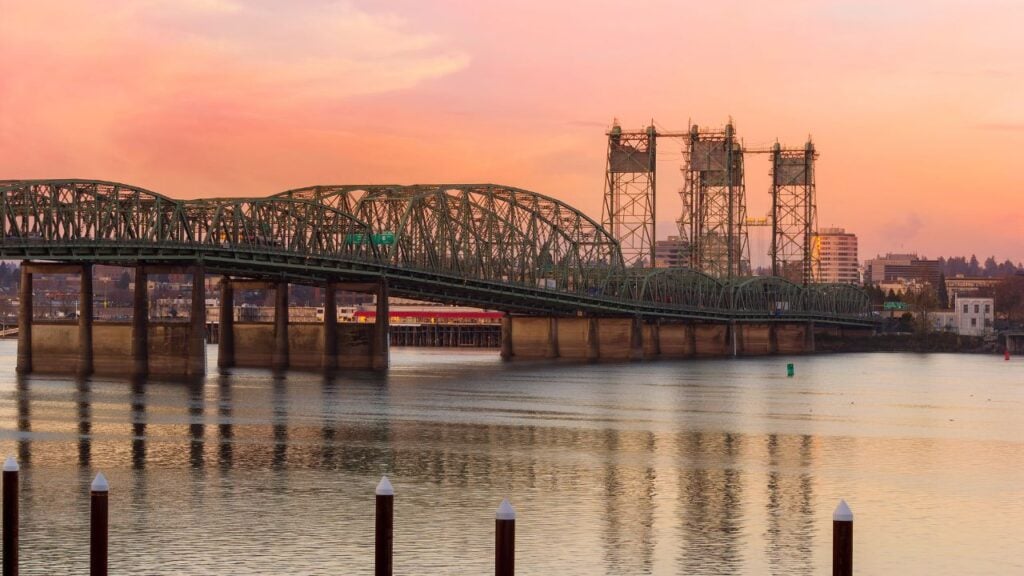
Washington raised its gas tax on July 1, 2026.
Clark County drivers already know one fix, and it involves the Columbia River.
9 Reasons Washingtonians Keep Driving Into Oregon and Never Go Back
8 Moisture Problems Washington Homeowners Discover Too Late
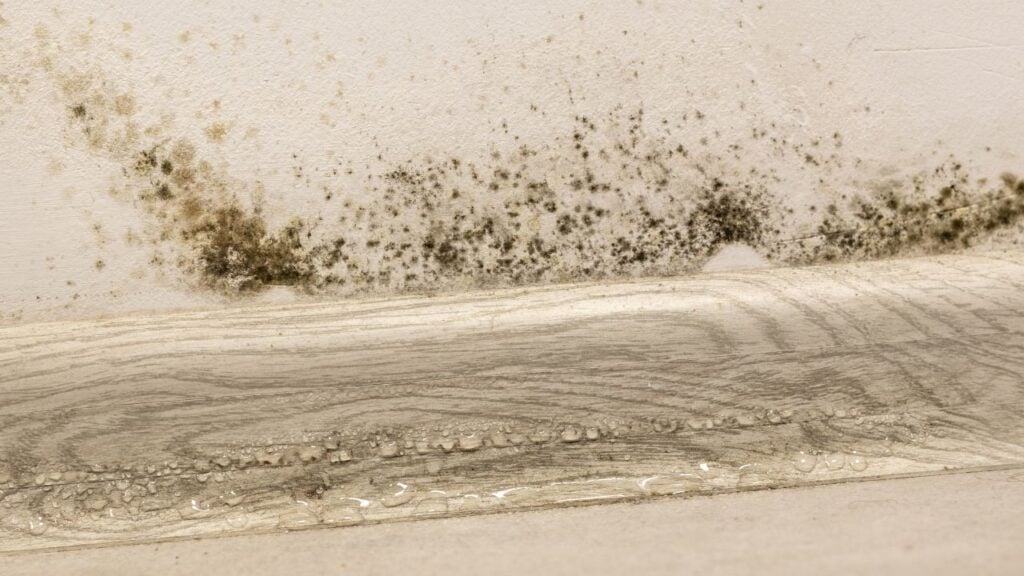
The wet season in western Washington begins in October and peaks in winter.
Some of the moisture trouble inside a house starts where you can't see it.
