
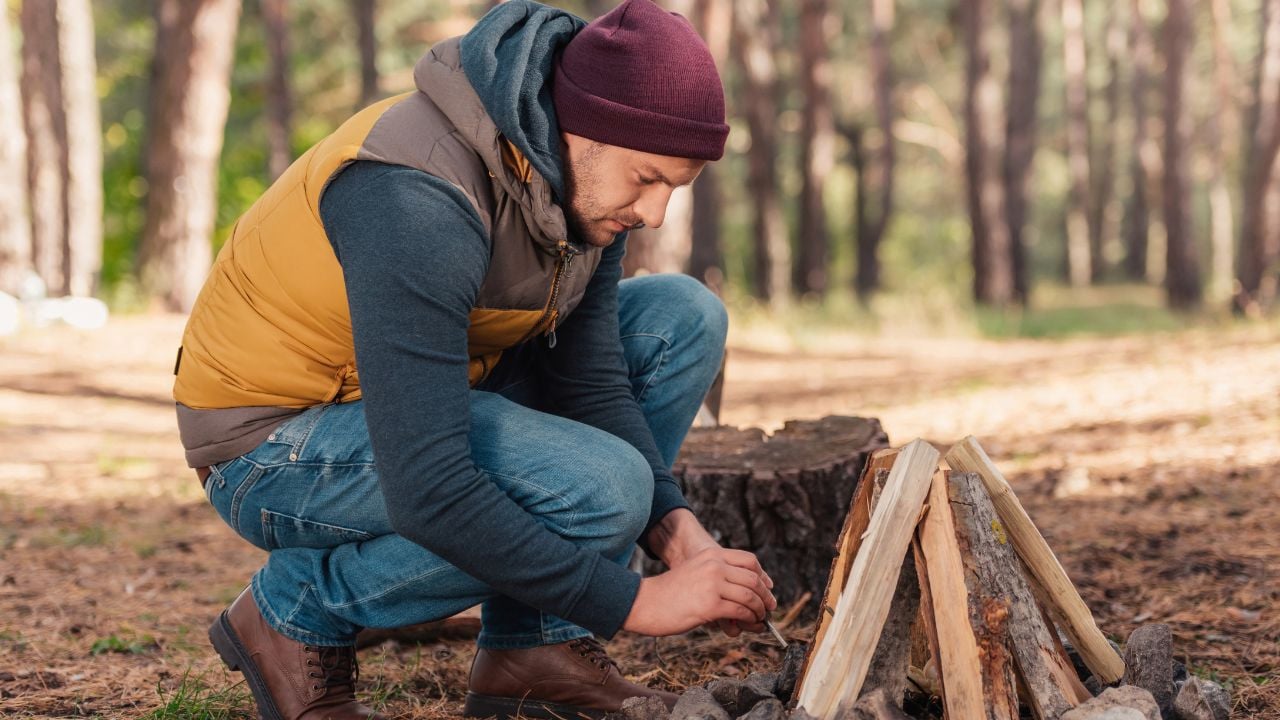
6 Open-Burning Rules That Can Turn a Vermonter’s Fall Brush Pile Into a Fine

A pile of fall brush can look like a simple job to burn off.
But in Vermont, fire rules are often strict, and a small slip can cost you.
Here’s what to check before you light an open fire.
Note: This is general information, not legal advice. Burning rules and fine amounts are subject to change, so confirm the current requirements with your town forest fire warden.
1. Skipping Your Fire Warden’s Permission
Vermont law says you can’t light a brush pile without first getting permission from your town forest fire warden, unless an exemption applies.
The permission has to state when and where you can light the fire.
Within 12 hours of granting it, your warden also has to issue a written Permit to Kindle for record purposes.
Permission comes before the paper.
If you light a fall brush pile without that permission, Section 2675 of Title 10 of the Vermont Statutes Annotated sets a fine of up to $75 per violation.
The complaint for that violation goes on a form called the Uniform Fire Prevention Ticket.
If your violation continues after a fire prevention complaint, each day may be deemed a separate violation under Section 2675.
2. Burning During a Statewide Ban
A statewide burning ban starts when the state tells town forest fire wardens to issue no burning permits for a specified period, under 10 V.S.A. § 2645(b).
If your brush pile needs a warden’s permission, you can’t get it during a ban.
Lighting it anyway breaks § 2645(a), the rule that carries the fine of up to $75 per violation.
Some fires are exempt from the permission rule under § 2645(c), including fires 200 feet or more from woodland.
On September 22, 2025, the Department of Forests, Parks and Recreation (FPR) ordered all town forest fire wardens to cease issuing burning permits.
The order pointed to 78% of Vermont in severe drought and dry falling leaves that created a high risk for rapid fire spread.
FPR rescinded the order on October 24, 2025, after the wildland fire danger forecast dropped to Moderate statewide following more than two inches of precipitation.
It lasted about a month.
In that release, FPR said the higher-than-normal wildland fire activity was primarily caused by escaped debris burns or unattended campfires.
Wardens may still restrict permits based on local and daily conditions.
3. Burning Painted or Treated Wood
Vermont’s burning statute, 10 V.S.A. § 2645(a), bars you from burning wood, brush, weeds or grass altered by paints, stains, preservatives, oils, glues or pesticides.
That’s a long list.
It reaches the brush and weeds in your pile, not only boards, and it covers wood coated on the surface and wood treated by injection.
The state’s air pollution rules separately list pressure-treated wood among the materials you can’t burn in the open.
Altered wood is barred in § 2645(a) itself, so a violation there falls under the same Section 2675 fine.
What Counts as Natural Wood
Vermont’s open-burning statute, 10 V.S.A. § 2645(d), defines natural wood as trees, lumber and pallets, as long as the pallets haven’t been chemically treated.
That definition of trees includes logs, trunks, branches, limbs and stumps.
Sawdust, plywood, particle board and press board don’t count as natural wood.
If your brush pile holds plywood, the Department of Environmental Conservation (DEC) goes further and lists plywood among the materials you can’t burn at all.
4. Trash in the Brush Pile
Your brush pile isn’t a loophole for trash.
DEC says open burning of trash isn’t allowed in a burn barrel, a homemade incinerator or simply in a pile on the ground.
Paper, cardboard, asphalt shingles and plastics are among the trash you should never burn.
The TV station WCAX reported in 2019 that the Vermont Environmental Court had approved a $10,750 penalty for an illegal burn in Wolcott.
Officials with the Agency of Natural Resources (ANR) said the Wolcott man had a warden’s permit for a brush pile.
But the pile sat on the wooden deck of an old home.
The fire spread to the rest of the structure, which held asbestos, plastics, shingles and carpeting.
The permit didn’t cover that.
Officials said the burn broke the state’s waste management and air pollution regulations.
A teardown can add demolition wood to your brush pile too, and DEC says burning wood waste from demolition at a business, industry, farm or private residence requires a permit.
The state’s handbook for town forest fire wardens says a warden’s Permit to Kindle doesn’t substitute for that air quality permit.
In 2018, DEC fined a Brownington resident $12,000 for unlawfully burning and burying demolition waste.
That case involved about six dump-truck loads of demolition waste and household items.
If your brush pile breaks state air quality law, 10 V.S.A. § 8010 lets ANR assess penalties of up to $42,500 for each separate violation.
5. Leaving a Fire Unattended
A brush pile is a fire, and under 10 V.S.A. § 2647 you have to totally extinguish a fire you build in or adjoining woods before you leave it.
Totally means totally.
Vermont’s burning-permit guidance for wardens says fires must be attended at all times.
The state’s handbook for town forest fire wardens says your warden may write conditions on your permit, and once they’re written there, they’re enforceable.
If you break a permit’s conditions, especially if the violations are habitual, your warden may refuse your future permits.
For a serious violation, the warden may issue you a fire prevention ticket.
Under § 2672, that ticket has to warn you that you may be subject to a fine of up to $25 for each day of noncompliance.
A warden also has the authority to have the fire extinguished.
6. Ignoring a Town Ordinance
If you live in Brighton, your brush pile falls under a town ordinance.
The town adopted the ordinance in 2009, and it allows open burning of leaves, brush and other natural wood wastes with a fire warden’s permit.
It bans that burning from June 1 to October 1 in an area it designates as the Summer No-burn Zone.
The ban in that zone runs only through October 1.
Under the ordinance, a first violation earns a written warning.
A second violation carries a civil penalty of up to $100, with a $50 waiver fee set for that offense.
Each later violation carries a $200 penalty, with a $75 waiver fee set for those offenses.
Each day a violation continues counts as a separate violation.
Repeat offenders pay more.
The state’s air pollution rules make on-premise burning of leaves and brush permissible when local ordinances or officials don’t prohibit it.
DEC says you may need an additional permit from your local fire warden or other local officials, so ask what your town requires before you light a fall brush pile.
Fall Fire Season
Burning a brush pile in the fall puts you in the stretch when fall fires typically occur, from late September until the end of November, FPR says.
Once foliage season ends and the leaves drop, wildland fuels start to dry out.
If you’re burning then, fall fires can burn surface fuels such as recently cured grasses and newly fallen leaves.
Ground fuels can burn too if summer drought lingers into the fall.
You can usually expect the season to end by mid- to late November, once snow conditions arrive.
With normal amounts of precipitation, the season may pass with little activity or not occur at all.
According to DEC, debris burning is the leading cause of wildland fires, and the state had 84 of them in 2025.
The majority of those fires were caused by human activity.
Psst! How much do you know about open-burning rules? Tap each card and see if you can ace it.
Fire Danger Forecast
Before you burn a brush pile, DEC says to review the fire danger forecast and sign up for daily fire danger alerts.
You should postpone burning during periods of moderate or higher fire danger.
Moderate still means wait.
FPR says a Moderate rating means there’s potential for fires to start from common accidental causes, but fire incidents are still relatively rare.
9 Things That Confuse Everyone Who Moves to Vermont
Some parts of living in Vermont make sense only after a local explains them.
If you’re moving in, things like mud season and town meeting day may not work the way you’re used to.
9 Things That Confuse Everyone Who Moves to Vermont
7 Right-to-Farm Rules That Surprise New Vermont Neighbors
Buying a house next to a working farm means living beside its fieldwork.
Some of what your new neighbors are allowed to do may surprise you.
