
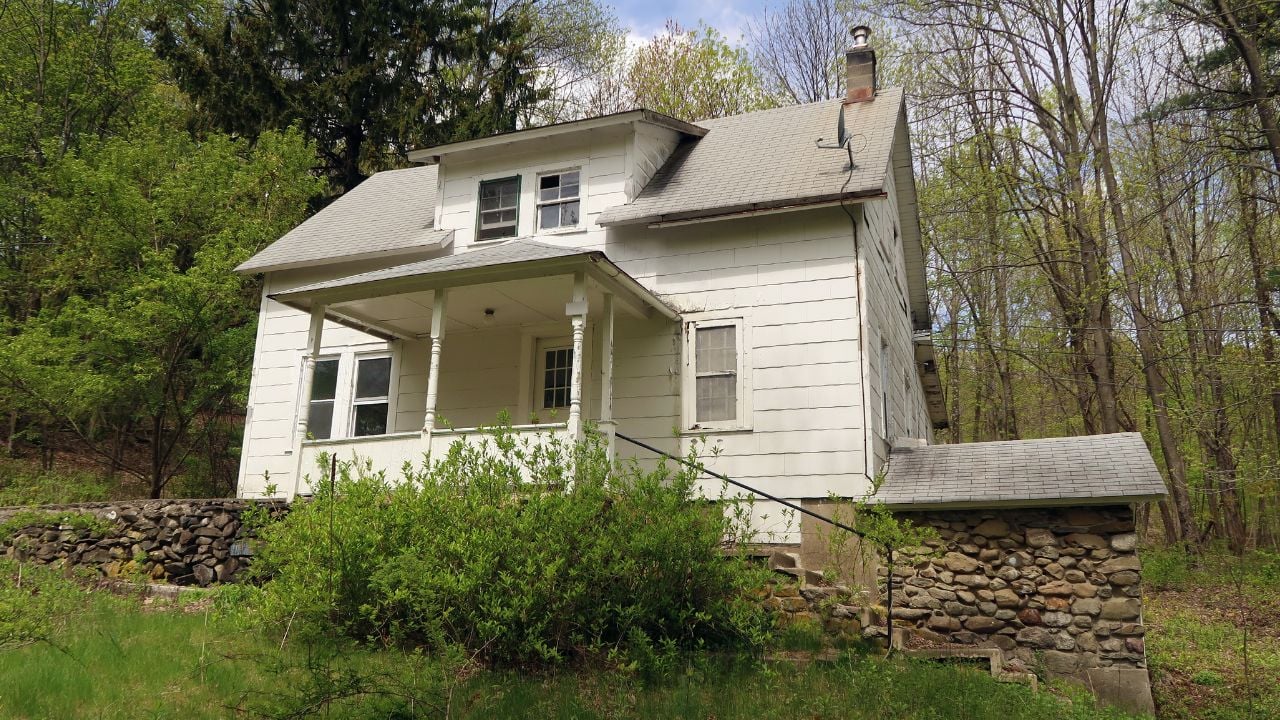
5 West Virginia Rules That Decide Who Owns the Minerals Under Your House

Most of us picture property as the ground we can walk on.
But for West Virginia homeowners, the bigger question is who owns what lies below what you walk on.
Here are the state rules that help settle who owns the minerals beneath your home.
Note: This is general information, not legal or tax advice. Mineral-ownership rules and filing deadlines are subject to change.
1. Missing-Owner Deeds
A missing mineral owner can lose the oil, gas or coal under your house to a court order, and you can be the one who asks for it.
If you own the surface, you can petition the circuit court to appoint a special commissioner, a court officer who leases the missing owner’s minerals so someone can develop them.
The court first has to find that development would benefit a prudent owner, meaning a careful owner in the missing owner’s position.
Then comes the wait.
If the owner stays missing for seven years after the commissioner’s lease, the court can order a deed.
That deed transfers the minerals to you as the proven surface owner.
After that, the missing owner’s heirs can’t sue to get the minerals or the lease money back.
2. Deed Reservation Wording
A deed’s wording decides who owns the minerals when a past owner kept some of them back.
A reservation is the clause where a seller keeps part of the oil and gas while selling the land.
A 1902 deed in Doddridge County reserved “one-sixteenth of all the oil and gas in and under said land.”
The seller’s descendants argued that one-sixteenth meant one-half under the customs of 1902.
The circuit court agreed with them.
In November 2023, the Intermediate Court of Appeals reversed.
The deed never says one-half, so the court enforced one-sixteenth as written.
That left the other fifteen-sixteenths of the oil and gas with the Nicholsons, the buyers’ successors.
The seller’s group appealed to the state Supreme Court of Appeals (No. 23-752).
If you’re reading an old deed to your lot, look for a reservation clause.
Check the exact fraction and the exact minerals it names.
Fractions mean what they say.
3. Title Suits Against Unlocatable Owners
Oil and gas owners nobody can find can lose their share of the minerals under your house in a lawsuit that you file.
A state law lets owners of three-fourths of a tract’s drilling rights approve a well without the rest.
Under the Cotenancy Modernization and Majority Protection Act, that driller has to set aside money for owners it can’t locate.
The driller reports that money to the State Treasurer.
The first report to the treasurer starts a seven-year clock.
After it runs, you can sue as a bona fide surface owner to clear title to those owners’ oil and gas interests under your lot.
If you win, a special commissioner’s deed transfers those interests to you.
There’s a catch.
The act gives you your proportionate share of future proceeds.
Under 37B-1-4(g), you get none of the accrued money the driller already remitted to the treasurer.
A 2026 coal law in Chapter 37B lets a surface owner file a similar seven-year suit against unlocatable coal owners.
The coal law took effect on June 12, 2026.
Psst! How much do you know about West Virginia’s coal and gas history? Take our quiz and see if you can ace it.
Quiz
Coal and Gas Pop Quiz
Answer these questions on West Virginia’s coal, gas and mining history. We bet you can’t get them all right. Prove us wrong?
The 1907 Monongah mine disaster is the worst mine disaster in U.S. history. At least how many men did it kill?
4. Tax Sale Titles
A tax sale can move the minerals under your house to a new owner when the old one stops paying taxes on them.
When the surface and the minerals have different owners, the state tax code has the county assessor assess each estate to its owner.
If you hold the minerals, the assessor assesses that estate to you, and if you never pay, you can lose them at a tax sale.
In a June 2023 ruling, the state Supreme Court of Appeals let buyers keep a 50 percent interest in a Wetzel County tract's oil and gas.
The buyers' tax deeds dated to 1991 and 1995.
The court held the buyers bought valid tax deeds because the former owners paid no taxes on those interests.
The sales stood.
A mistake in the steps leading up to a tax deed doesn't void the buyer's title.
The exception is a mistake that sections 11A-3-49 or 11A-4-2, 11A-4-3, 11A-4-4 or 11A-4-6 expressly make grounds for a suit to set aside the sale or the deed.
5. Recording Your Deed
Mineral ownership can turn on a filing at the county courthouse because a deed that nobody records can lose to a later buyer.
Under state law, a deed to real estate is void against creditors and against later buyers who paid value and had no notice of it.
That lasts until someone records the deed in the county where the property sits.
In October 2024, the Intermediate Court of Appeals held in a Wetzel County case that a non-participating royalty interest, one type of oil and gas royalty, counts as real estate.
That matters to you because the recording rule covers real estate, so recording a deed to that kind of royalty is the safe move.
If you buy mineral rights, you protect them by recording your deed with the county clerk.
Record it first.
Three-Fourths Votes
Mineral owners who hold three-fourths of the right to develop a tract can approve drilling for the whole tract, even if you're one who didn't agree.
The Cotenancy Modernization and Majority Protection Act, a 2018 law, sets that rule.
Once owners holding three-fourths of the right to develop a tract approve drilling, the operator isn't trespassing on the rest.
The operator has to make reasonable efforts to negotiate with every owner first.
The act covers oil and natural gas.
A 2026 coal law in Chapter 37B sets a similar three-fourths test.
The act also limits drilling to the targeted formation plus 100 feet above and below it.
Owners who don't consent get 45 days after the operator's best and final lease offer to pick one of two options.
One is a production royalty at the highest rate paid to the consenting owners.
That royalty comes free of post-production costs, the costs that come after the well produces.
The other is a revenue share.
You collect it only after your share of production, at market value, equals double your share of the costs.
That's the trade-off.
If you don't choose, you get the royalty.
Horizontal Unit Orders
A horizontal well unit can pull the minerals under your house into one drilling area with those of many neighboring tracts.
The state's Oil and Gas Conservation Commission decides whether that happens under West Virginia Code 22C-9-7a.
Senate Bill 694 amended that section in 2022.
Even if you don't consent and your tract is leased, the order still pays you.
Your payment has two parts, a bonus and a royalty.
A bonus is the up-front payment a driller makes to lease your minerals.
A royalty is your share of what the well produces.
Say leases in the unit paid an average bonus of $2,000 an acre and an average royalty of 16 percent.
The order sets your bonus at 25 percent of the unit's weighted average bonus, an average that weighs each tract by its net mineral acres.
That's $500 an acre.
Your royalty is 80 percent of the unit's weighted average royalty, or 12.8 percent here.
The royalty can't fall below the rate in your existing lease, or 12.5 percent on a flat-rate lease.
The floor protects you.
To pool tracts into a unit, the applicant first needs consent from royalty owners who hold the right to lease their minerals.
Those owners have to hold 75 percent of the net acreage in the target formation, the rock layer the well is drilled to reach.
Net Acreage and Owner Consent
A horizontal well unit order measures mineral owner consent in acres, not owners.
Net acreage measures your share of a tract's minerals in acres.
If a unit holds 100 net acres of minerals, owners of 75 of those acres clear the line, whether that's one person or twenty.
The cotenancy act uses the same yardstick for money.
It defines a pro rata share as the proportion your net acreage bears to the total net acreage.
That share sets your slice of revenue and costs.
Delay Rental Demands
An oil and gas lease on your minerals can end if the driller stops paying delay rental, which is the fee for putting off drilling.
Under state law, an undeveloped lease becomes null and void as to the oil and gas when a delay rental isn't paid on time.
The driller can save the lease by paying within 60 days of your written demand.
You send that demand by registered mail, return receipt requested, to the driller's last known address.
You also file a copy and the receipt with the county clerk.
Now the 60 days run.
A bona fide dispute over what's owed stops the cancellation.
A separate rule covers a lease signed before the law took effect.
If a driller ignores your demand for 60 days, it can't go to court to enforce that older lease.
A second rule concerns the well, not the lease.
After more than 24 months without producing and selling or using oil or gas, the law presumes the driller intended to abandon the well and its equipment.
That presumption doesn't arise if the driller has paid a shut-in royalty, delay rental or similar payment.
Only the oil and gas owner, or the owner's lessee or assignee, can use that presumption, and only in a circuit court suit.
7 Ground Movement Problems That Blindside West Virginia Buyers
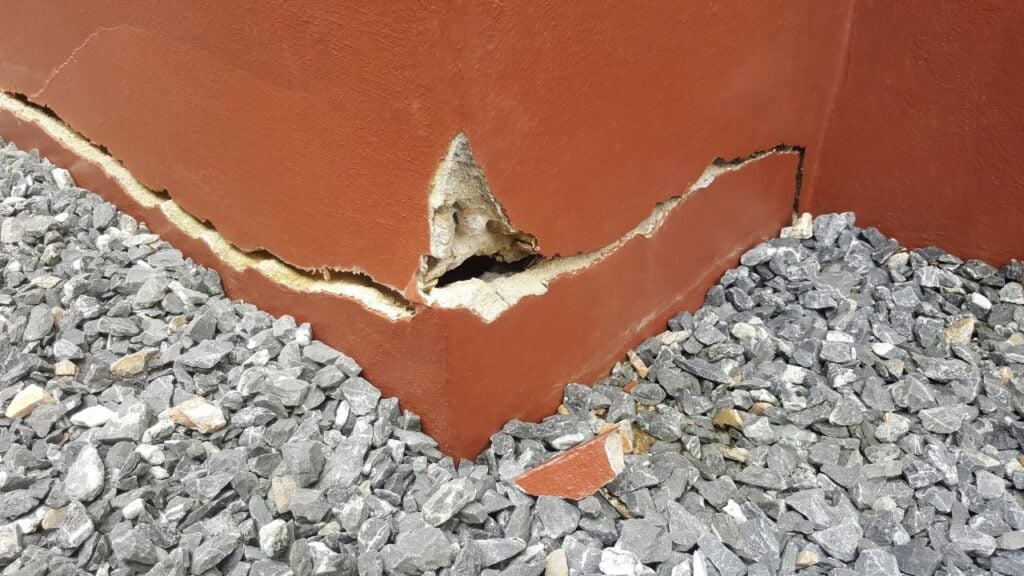
A landslide is only one of several ways the ground under a house can move.
These are the ground movement problems that blindside buyers.
7 Ground Movement Problems That Blindside West Virginia Buyers
6 West Virginia Back Roads Locals Don't Want Put on a Map

West Virginia's Division of Highways maintains more than 34,000 miles of road.
These are the West Virginia back roads locals don't want put on a map.
