
9 Florida Citrus Facts Most Floridians Never Learned in School

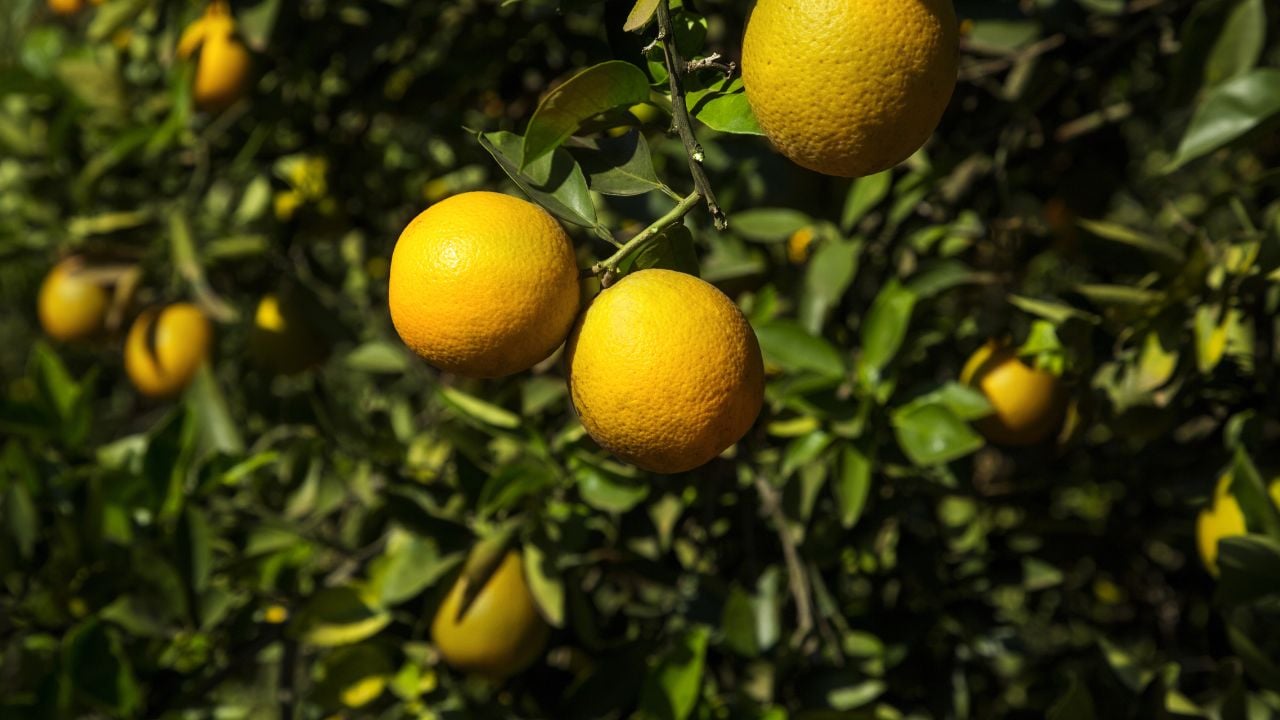
An orange doesn’t have to look orange to be ready to eat.
That’s one of the details Floridians may have missed in school, even in a state that’s so closely tied to the fruit.
Here are the citrus facts that change how you look at the produce aisle.
1. Freezes and the I-4 Line
Interstate 4 runs from Daytona Beach to Tampa, and the bulk of Florida’s commercial citrus production is south of it, according to a state agriculture department write-up.
Back-to-back freezes in 1894 and 1895 wiped out the majority of groves.
Freezes in 1983, 1985 and 1989 pushed much of the industry farther south.
In 2013, Orange County and Citrus County had little production of the fruit they’re named for.
Both counties kept names that no longer describe what grows there.
If you’re hunting for groves, you’ll want to head south of that highway.
2. Ripe but Green
Green citrus can mean ready.
Many citrus fruits in Florida are still green on the tree when they’re ripe and ready to eat, according to a 2021 University of Florida extension post.
Citrus fruit changes color in response to cool temperatures, and those sometimes don’t occur in Florida.
The bright orange you see in the produce aisle may have another explanation.
To meet consumer expectations, many citrus fruits are treated with ethylene gas or dyed to color their peels.
3. Frozen Concentrate
The National Agricultural Statistics Service says the Florida Department of Citrus invented frozen concentrated orange juice in 1945.
The patent record adds detail.
A Google Patents record for U.S. patent 2,453,109 lists three researchers, Louis G. MacDowell, Edwin L. Moore and Cedric D. Atkins.
They filed the application in August 1945.
The patent was granted in November 1948, and it lists the United States as the assignee.
A 2017 Citrus Industry magazine history says the project was carried out in Lakeland by employees of the U.S. Department of Agriculture and the Florida Citrus Commission.
The technology was provided free of charge to producers.
Giving the patent to the government helped make the frozen food industry commercially viable, the service adds.
4. Spanish Seeds
Citrus isn’t native to the Americas, so the fruit behind your breakfast juice came from somewhere else.
The Florida Department of Citrus says Columbus brought oranges to the New World in 1493.
A Florida Citrus Mutual passage appears on the University of Florida’s digital newspaper project page.
The passage says it’s believed Ponce de León planted the first orange trees in Florida sometime between 1513 and 1565.
The department says Jesse Fish of St. Augustine established a commercial grove in 1763.
By 1774, the naturalist William Bartram reported wild orange groves in the higher regions along the St. Johns River.
The groves had gone wild.
5. Shrinking Crop
Florida growers picked 244 million boxes of oranges in the 1997-98 season.
That’s the biggest orange crop in the National Agricultural Statistics Service’s annual Florida citrus tables, which run from the 1923-24 season through 2002-03.
The service’s final forecast for the 2025-26 season, released in July 2026, was 12.92 million boxes.
That works out to roughly one box in 2025-26 for every 19 picked in 1997-98.
What a Box of Oranges Weighs
A box of Florida oranges weighs 90 net pounds in the service’s federal crop counts.
At that weight, 244 million boxes comes to roughly 22 billion pounds of oranges.
The 12.92 million boxes forecast for 2025-26 comes to about 1.2 billion pounds.
6. Grapefruit Beginnings
Grapefruit reached Florida through Odet Philippe, according to the Florida Department of Citrus.
Philippe brought shaddock seeds and set up groves on Florida’s west coast in 1809.
Florida Agriculture in the Classroom’s citrus lesson calls him a French count who planted a grove near Tampa in 1823.
The two sources give different dates for the first grove.
The department places Philippe’s groves in Pinellas County.
7. State Beverage
The legislature designated orange juice the official state beverage in 1967, according to the Florida Department of State.
Visit Florida says free orange juice has been a tradition at Official Florida Welcome Centers since 1949.
By those dates, the welcome-center cup started 18 years before the legislature’s designation.
8. Oranges for Juice
Do you eat your citrus or drink it?
About 91 percent of Florida oranges are processed into juice, according to a May 2026 University of Florida economics post.
In California, 71 percent of oranges are used fresh.
Florida accounts for 54 percent of the orange juice made in the country.
A Florida orange you peel at your kitchen counter belongs to the other 9 percent or so, the share that isn’t processed into juice.
Psst! How much do you know about farm country? Take our quiz and see if you can ace it.
Quiz
Farm Country IQ
Answer these questions on the crops, fields, and farms behind the state’s food. We bet you can’t get them all right. Prove us wrong?
According to the Florida Department of State, in what year did the legislature select the orange blossom as Florida’s state flower?
9. Citrus Greening
Citrus greening's first case in Florida was reported in Miami-Dade County in 2005, according to a 2014 University of Florida agricultural sciences post.
The insect that spreads the disease, the Asian citrus psyllid, was found on backyard citrus in Florida in 1998.
The pest arrived seven years before the disease.
By 2014, greening had spread to every citrus-producing county in the state.
The toll since 2005 is $3.63 billion in lost revenue and more than 6,600 jobs.
If you grow citrus in your yard, the Osceola County extension office said in 2021 that several greening-resistant citrus were available to backyard growers.
Its list included Sugar Belle and UF 13-51 mandarins, key lime and Australian finger lime.
8 Things Floridians Do in the Weeks Before Snowbirds Arrive
The busy season starts early.
Here's what gets done before the crowds arrive.
8 Things Floridians Do in the Weeks Before Snowbirds Arrive
11 Things Every Older Floridian Living Alone Should Have Ready for an Emergency

Many older Floridians who live alone face storm season by themselves.
A little preparation makes a storm easier to get through.
11 Things Every Older Floridian Living Alone Should Have Ready for an Emergency
