
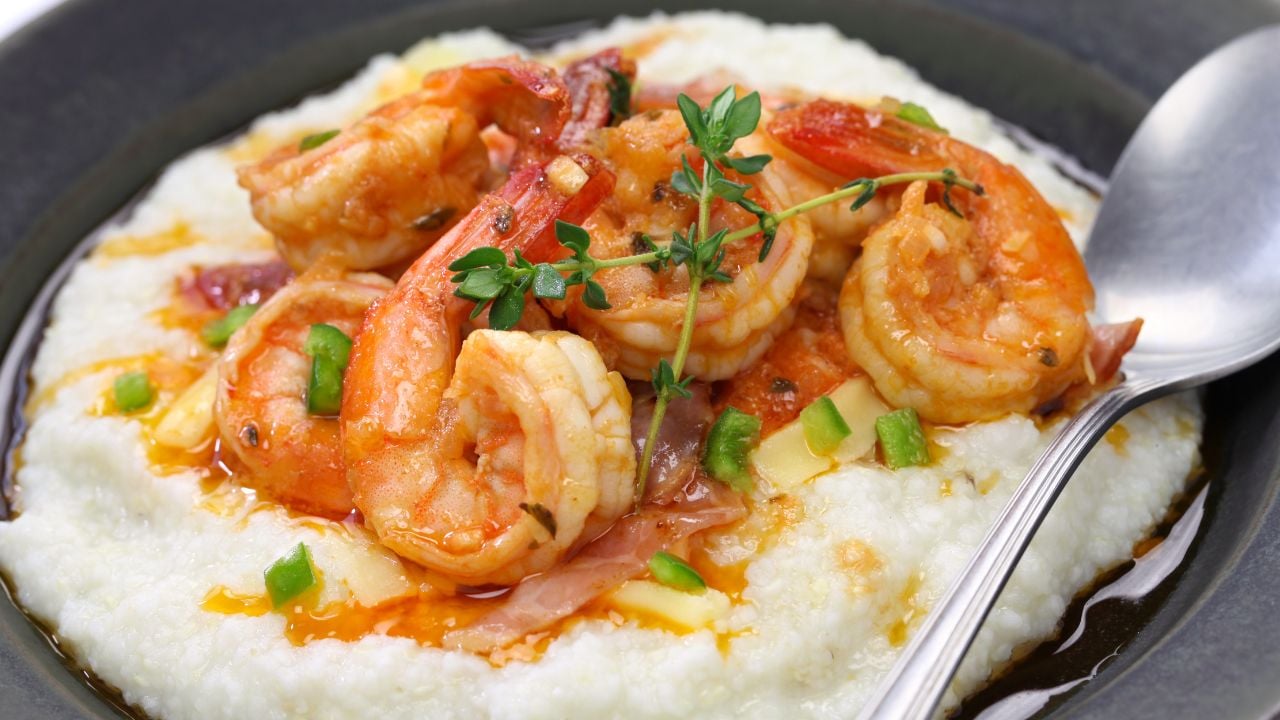
9 Shrimp and Grits Choices That Start Arguments Among South Carolinians

Cheese or no cheese?
At some tables, that’s a loaded question.
Ask South Carolinians how they like their shrimp and grits, and you may not hear the same answer twice.
These are the shrimp and grits preferences that start arguments among locals.
1. Stone-Ground Grits
Shrimp and grits begins with the grits, and the mill that made them matters.
Mass-produced grits come off steel roller mills, according to the South Carolina Encyclopedia.
Those grits are de-germinated, so the mill strips out the germ, and they’re processed for a long shelf life.
Stone-ground grits come from grooved millstones that grind the corn into coarse, medium or fine grits.
Some old-timers claim the heat from roller mills partly parches the grits.
Lowcountry cooks often prefer stone-ground.
Check the menu description before you order.
2. Cheese in the Grits
Whether shrimp and grits gets cheese depends on the kitchen.
The Discover South Carolina tourism site describes fried cheddar grits at Page’s Okra Grill and smoked Gouda grits at Grace & Grit.
A grits method on that site finishes with salt, butter, cheese or whatever else you like.
Many Charleston diners say cheese belongs in the pot, and some say it hides the grits.
Psst! How much do you know about Lowcountry food? Take our quiz and see how many you can get right.
Quiz
South Carolina Table Trivia
Answer these questions on South Carolina grits, seafood, and Lowcountry cooking. We bet you can’t get them all right. Prove us wrong?
According to the Martha White grits company, which South Carolina county sells more grits per person than anywhere else in the world?
3. Shell-On Shrimp
Before shrimp and grits reaches your table, the cook decides whether the shells stay on.
The South Carolina Encyclopedia says it's preferable to cook shrimp with the shell on, for the fullest flavor and a more tender texture.
You can remove the shell before or after cooking, so the choice is yours.
Some Lowcountry cooks go further and leave the head on, then suck the juices out of it.
Order extra napkins.
4. Tomato Gravy or Cream
Shrimp and grits can come with tomato gravy, cream sauce or brown gravy, depending on the kitchen you walk into.
Discover South Carolina's roundup of Charleston-area versions describes a saffron-tomato gravy at Edison and a brown gravy at Nigel's Good Food.
If you'd rather have cream, there's an andouille sausage cream sauce at Page's Okra Grill.
Many cooks defend the tomato version, and others stand up for cream.
The dish's predecessor was shrimp and rice covered in shrimp gravy, according to the Levine Museum of the New South.
5. Bacon or Ham
Bacon, ham hock and country ham all show up in shrimp and grits.
Menus differ.
Discover South Carolina describes a bit of bacon or ham hock on the grits at Husk.
Smoked ham hock gravy shows up at Circa 1886 and country ham at The Darling.
Many diners in the Lowcountry side with bacon, and some won't order a plate without ham.
If pork is a dealbreaker for you, ask what's in the pot first.
6. Water, Milk or Half-and-Half
Marsh Hen Mill's method for the grits in shrimp and grits calls for low, slow cooking.
Then you add a bit of milk or, for more richness, half-and-half once the grits soak up much of the water.
A microwave method on the same page uses one part grits to four parts water.
7. Andouille or Tasso
Shrimp and grits can be built around andouille sausage or tasso ham, so both show up on menus.
Discover South Carolina describes a New Orleans-inspired version at Tubb's Shrimp & Fish Company in Florence, made with andouille sausage and house-cured lardons.
If you're on Hilton Head Island, Skull Creek Boathouse's version is stone ground grits with sauteed shrimp, smoked sausage and tasso ham gravy.
8. Creek Shrimp or Jumbo
Size is another choice in shrimp and grits, from small creek shrimp to jumbo.
The South Carolina Encyclopedia says small creek shrimp from shallow, brackish water are thought to be sweeter than shrimp caught farther out in the rivers and ocean.
If you want jumbo, Page's Okra Grill serves pan-seared jumbo shrimp.
What Shrimp Counts Mean
Shrimp sizes for shrimp and grits come down to count, which is how many tails it takes to make a pound.
A lower count means bigger shrimp.
The encyclopedia gives a rule of thumb of 21 to 25 tails per pound for jumbo shrimp.
Large runs 31 to 35 and medium 36 to 40, though counts vary by seller.
9. Breakfast or Dinner
Your shrimp and grits has a timing choice built in because the dish was once a humble Lowcountry breakfast, according to Discover South Carolina.
Your breakfast order isn't new.
The first book-printed version, called shrimps and hominy, appeared in Two Hundred Years of Charleston Cooking in 1930.
That recipe is credited to William Deas, who had been eating the dish every morning during shrimp season.
The dish has since spread to brunch, lunch, dinner and late-night tables.
How the Dish Went National
If you've ever seen shrimp and grits listed as a dinner entrée, chef Bill Neal, a North Carolina native, helped make that happen in the 1980s.
Neal ran Crook's Corner in Chapel Hill, North Carolina.
A profile in The New York Times gave shrimp and grits a national platform.
8 South Carolina Towns Worth the Drive Once the Beach Crowds Leave

Once the summer beach crowds thin out, an older South Carolina is easier to see.
It comes one small town at a time.
8 South Carolina Towns Worth the Drive Once the Beach Crowds Leave
8 Boundary Disputes That Cost South Carolinians Land They Paid For

Where your yard ends isn't always where you think.
Neighbors can end up with part of your yard.
8 Boundary Disputes That Cost South Carolinians Land They Paid For
