
12 Things Every Tennessee Kid Grew Up With That Nobody Else Had

The Peabody Memphis has kept live ducks in its lobby fountain since the 1930s.
Tennesseans grew up with things like that and never thought anything about it.
Here’s what every Tennessee kid grew up with that nobody else had.
1. Dolly Parton’s Imagination Library
Dolly Parton’s Imagination Library began in 1995 in Sevier County.
At first, the books went only to children living in that county.
If you grew up there in those years, you were among the first children the program reached.
Tennessee pledged to pursue statewide coverage in 2004.
If your child is between birth and age five, the program says it mails free books no matter your family’s income.
2. Goo Goo Clusters
Nashville’s Standard Candy Company says it invented Goo Goo Clusters in 1912, in a copper kettle at Clark and First Avenue.
You probably remember the first Goo Goo Cluster you saw as a kid.
A cluster is a roundish mound of caramel, marshmallow nougat and roasted peanuts covered in milk chocolate, so you won’t mistake it for another candy bar.
Its slogan is that people ask for it from birth.
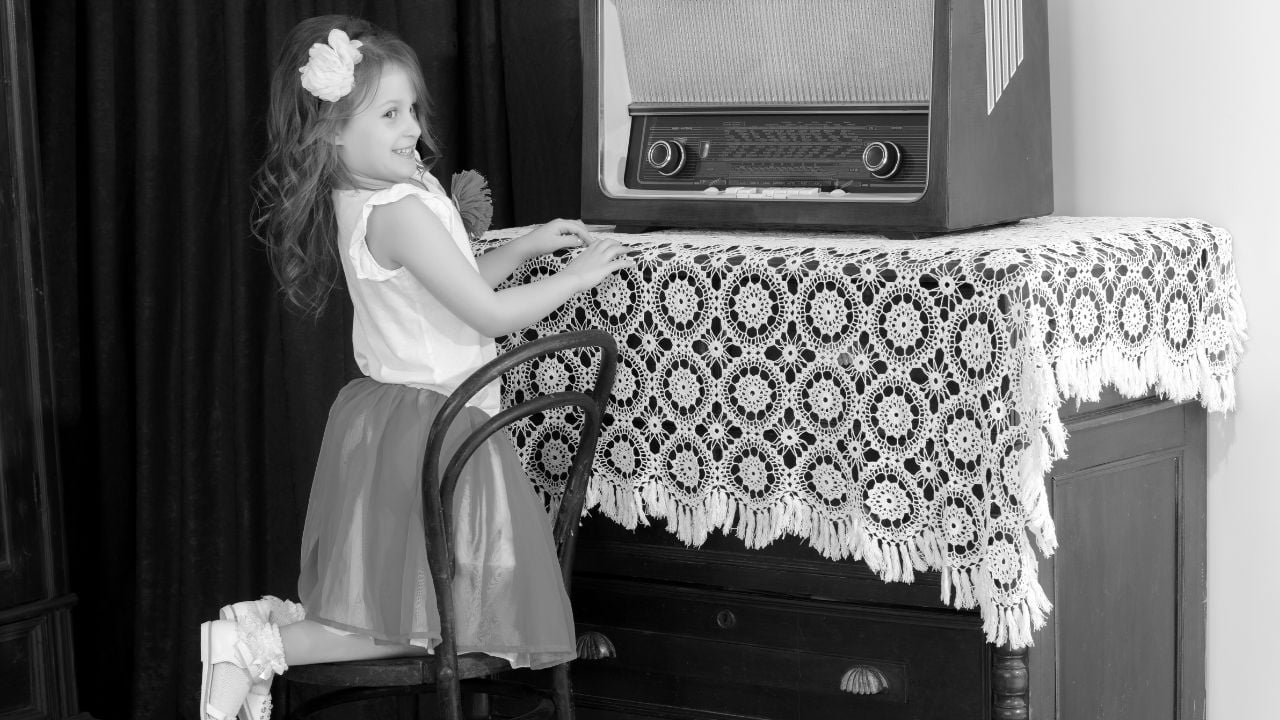
3. Grand Ole Opry on the Radio
The Grand Ole Opry traces its start to November 28, 1925, when Nashville radio station WSM launched its Barn Dance.
George D. Hay gave the show its new name on the air in December 1927, after an NBC broadcast of the Music Appreciation Hour.
Many kids across the state grew up with the Opry playing on somebody’s radio, perhaps even your family’s.
You can still hear it live, since the Opry’s website lists WSM at 650 AM and a WSM mobile app.
4. Dollywood
You may know Dollywood in Pigeon Forge as Dolly Parton’s park, but it took her name only in 1986.
That was the year she joined the Herschend family in the theme park business.
The park itself is older, and it went by other names first.
If you grew up near the Smoky Mountains, you may have spent a summer day or two there.
Dollywood’s Name History
Dollywood’s history page traces the park to 1961, when the Robbins brothers from North Carolina ran a small attraction called Rebel Railroad.
Art Modell, then owner of the NFL’s Cleveland Browns, bought the attraction in 1970 and renamed it Goldrush Junction.
Goldrush Junction became Silver Dollar City, Tennessee, in 1977, after Jack and Pete Herschend bought it.
If you’ve visited Silver Dollar City in Branson, Missouri, you’ve been to the park that opened on May 1, 1960.
5. MoonPies
MoonPies come from Chattanooga Bakery, which introduced them in 1917.
Chattanooga Bakery produced over 100 items, but it knew it had something special in MoonPie.
In the company’s telling, a Kentucky coal miner asked its traveling salesman for a snack as big as the moon.
It’s a childhood favorite that families pass down.
You may have gotten your first MoonPie from a parent or grandparent.
If you have kids, you may have handed them their first MoonPie too.
MoonPie says it currently makes about a million of them a day.
6. Peabody Hotel Ducks
The Peabody Memphis hotel’s duck tradition began in the 1930s, when the general manager and a friend put live ducks in the lobby fountain.
It started as a practical joke, according to Tennessee Magazine.
In 1940, a bellman who used to train circus animals taught the ducks to march.
Did your family ever make the trip to Memphis to see them?
You may remember watching them march.
The ducks still visit the lobby fountain from 11 a.m. to 5 p.m. each day.
7. Nashville’s Parthenon
Nashville’s Parthenon was originally built for the state’s 1897 Centennial Exposition, according to Metro Nashville Parks.
It’s a full-scale replica of the Parthenon in Athens, Greece.
Inside, you’ll find a full-scale re-creation of the 42-foot statue of Athena, the focus of the building just as in ancient Greece.
If you grew up in Nashville, you’ve probably walked up to the Parthenon in Centennial Park.
The building also serves as Nashville’s art museum, with a permanent collection built around 63 paintings by 19th and 20th century American artists.
8. Rocky Top
The song “Rocky Top” dates to 1967, when Boudleaux and Felice Bryant wrote the tune as a break from another writing job.
Middle Tennessee State University’s Center for Popular Music says the Bryants needed only ten minutes to write the song.
In 1982, Tennessee lawmakers made the song one of the state’s official songs.
The University of Tennessee’s bands play the song at Volunteers sporting events.
You can probably hum the chorus already.
If you went to a Volunteers game as a kid, you’ve likely heard the song live.
9. Free State Parks
Tennessee State Parks charge no access fee at any of the state’s 56 parks.
Hiking is always free.
That means your family can take the kids out for a hike without paying an entry fee.
The parks are open to the public seven days a week, 365 days a year.
Hours at most parks run from a half-hour before sunrise to a half-hour after sunset, so an evening hike has a cutoff you should plan around.
10. TVA Dams and Lakes
The Tennessee Valley Authority (TVA) built Norris Dam on the Clinch River in East Tennessee.
Norris was the first dam it built, with construction running from 1933 to 1936.
It’s one of 29 power-generating dams TVA operates across the Tennessee River system.
You can reach the dam off Highway 441 in the town of Norris.
If you swam or boated on Norris Reservoir as a kid, you were on water behind a TVA dam.
TVA lists boating, water skiing, swimming and fishing there.
The reservoir extends 73 miles up the Clinch River and 56 miles up the Powell River from the dam, with 809 miles of shoreline.
11. Oak Ridge
Oak Ridge began in 1942, when the U.S. Army Corps of Engineers bought an estimated 60,000 acres of rural farmland.
The federal government built the city in secret.
Within about two and a half years, Oak Ridge had grown to 75,000 people.
If you grew up in Oak Ridge, your hometown was the headquarters site for the Manhattan Project during World War II, according to the National Park Service.
The city’s tourism office calls Oak Ridge the “Secret City,” a nickname you’ve probably heard before.
Psst! How much do you know about the state’s past? Take our quiz and see how many you can get right.
Quiz
State History IQ
Answer these questions on the state’s history and culture. We bet you can’t get them all right. Prove us wrong?
Tennessee became the 36th state to ratify the 19th Amendment in August 1920. Which day of that month did it happen?
12. Ruby Falls
Ruby Falls is deep inside Lookout Mountain in Chattanooga.
Work on an elevator shaft through the mountain began in 1928.
Several weeks into the project, a crew hit an opening in the rock 260 feet down.
Leo Lambert crawled through and found the waterfall.
If you toured Ruby Falls as a kid, you saw a waterfall that was discovered in 1928.
Have you ever wondered who Ruby was?
Lambert named the waterfall Ruby Falls for his wife, Ruby Losey, his high school sweetheart.
Ruby Falls says the cave welcomed its first visitors in June 1930.
Ruby Falls Castle was built with limestone removed for the elevator shaft and housed a tearoom, a restaurant and a ballroom.
5 Everyday Costs That Jump the Moment Tennesseans Cross Into Kentucky
Ever noticed how a trip across the Kentucky line changes what you pay for everyday things?
Some of those price gaps might surprise you.
5 Everyday Costs That Jump the Moment Tennesseans Cross Into Kentucky
9 Air Purifier Claims Tennesseans Should Treat With Skepticism

How many air purifier claims have you taken at face value?
Some of the marketing language deserves a closer look before you spend the money.
9 Air Purifier Claims Tennesseans Should Treat With Skepticism
