
11 Things Floridians Don’t Own Until They Move North

If you grew up in Florida, your warmest jacket might be a hoodie.
That won’t cut it once you move somewhere with real winter.
Here’s the cold-weather gear many Floridians end up buying after they head north.
Note: This is general information, not legal advice. Driving, snow-removal and fine rules are subject to change.
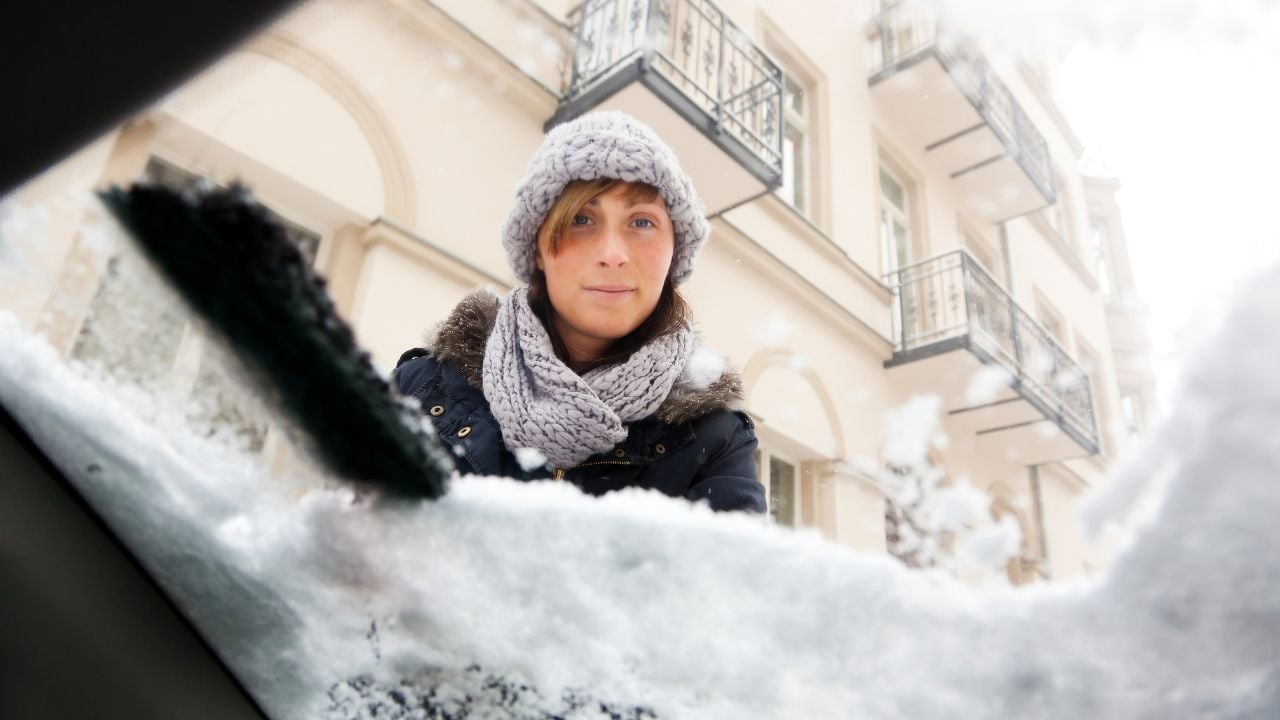
1. Ice Scraper
An ice scraper is how you follow New Jersey’s ice and snow law.
The state attorney general’s office says to remove all ice and snow from your vehicle before you drive, especially from the hood, windows and roof.
If you skip that step, you face a fine of $25 to $75 for each offense, whether or not the ice and snow come loose.
If loose ice or snow causes damage or injury, the fine rises to $200 to $1,000 for each offense.
An ice scraper or brush also belongs on a winter driving kit list.
2. Winter Coat
A winter coat has to handle a January normal low of 8.8 degrees at Minneapolis-St. Paul International Airport, according to NOAA’s 1991 to 2020 normals.
That’s 40.7 degrees below the 49.5 normal low at Orlando International Airport.
Then comes the wind.
At 0 degrees with a 15 mph wind, the National Weather Service puts the wind chill at -19 degrees.
At that wind chill, exposed skin can freeze in 30 minutes.
If you’re out in that wind, any skin your coat leaves bare is at risk.
3. Snow Shovel
If you own property in Boston, a snow shovel is how you meet the city’s sidewalk rule.
The city’s snow clearing rules page gives you three hours after the snow stops to clear the sidewalks and curb ramps.
An overnight snowfall gives you until three hours after sunrise, so you can sleep first.
Boston’s fine for a residential building with 16 or fewer units is $50.
Minneapolis gives you more time, according to its sidewalk clearing page: 24 hours after the snow stops for single-family homes and duplexes.
Crews will remove the snow and ice and bill you if you haven’t cleared the sidewalk by the city’s follow-up inspection.
If you don’t pay that bill, the fee is added to your property taxes.
What Boston’s Rules Say About Your Shoveling
Boston’s snow rules set a minimum width for the path you shovel.
Clear at least a 42-inch-wide path for people using wheelchairs and pushing strollers.
Also don’t shovel or push snow into the street, or the city may fine you.
4. Snow Boots
Snow boots matter if you move to Buffalo, New York, where NOAA’s 1991 to 2020 normals put a year’s snowfall at 95.4 inches.
In a normal year, Chicago’s O’Hare Airport records 38.4 inches and Boston’s Logan Airport records 49.2.
If you’re coming from Orlando or Miami, you’re used to a normal of 0.0 inches at each city’s international airport.
The American Red Cross puts water-resistant boots on its winter storm clothing list, next to a coat, a hat and mittens.
5. Ice Melt
Ice melt comes with a recommended amount, according to the Minnesota Pollution Control Agency (MPCA).
About 12 ounces, enough to fill a coffee mug, treats a 20-foot driveway or 10 sidewalk squares.
Temperatures below 15 degrees are too cold for salt, and most salts stop working at that temperature.
Check your thermometer first.
6. Engine Block Heater
An engine block heater pre-heats your engine so it reaches operating temperature sooner, according to the Municipality of Anchorage.
The city’s air quality program runs a “Plug @ 20” campaign, a reminder to plug in even when your car starts with relative ease.
You can text your zip code to get a free alert when the temperature there dips below 20 degrees.
A Sierra Research study in Anchorage and Fairbanks found that engine heaters substantially reduced start-up emissions and fuel consumption.
Psst! How much do you know about winter weather? Take our quiz and see how many you can get right.
Quiz
Winter Weather IQ
Answer these questions on snow, ice and winter safety. We bet you can’t get them all right. Prove us wrong?
Between Fairbanks, Alaska, and Rochester, New York, which gets more snow in a normal year?
7. Mittens
Mittens are part of the City of Minneapolis's extreme cold advice.
Dress in layers, wear mittens, scarves and hats, and keep your clothes and shoes dry.
The National Weather Service says the areas most prone to frostbite are uncovered skin and the extremities, such as hands and feet.
If you're walking anywhere in that cold, your hands and feet are two of the first places to cover.
8. Roof Rake
A roof rake, which Maine's emergency management agency calls a snow rake for pitched roofs, is available at most hardware stores.
Shave the snow down to 2 or 3 inches instead of scraping the roof clean, which risks damaging your shingles.
Don't climb a ladder, since ice and snow tend to build up on the rungs and on the soles of your boots.
Maine's guidance calls roof snow removal one of the more dangerous house chores and advises you to consider hiring a professional.
Warning signs of a roof under stress include sagging sections, severe leaks, doors that pop open and creaking or popping sounds.
If you notice them, evacuate the building immediately and have it inspected.
9. Snow Blower
A snow blower has 51.2 inches of snow a year to clear in Minneapolis, according to NOAA's 1991 to 2020 normals.
A December 2023 release from the U.S. Consumer Product Safety Commission (CPSC) said emergency rooms treated over 4,700 snow blower injuries the year before.
Of those, 36 percent were to the wrist, hand or finger.
CPSC says not to try to clear snow from the discharge chute with your hands.
If your snow blower runs on gas, never leave it running in an enclosed area.
10. Pipe Insulation
Pipe insulation goes on the pipes most likely to freeze, according to Maine's emergency management agency.
Those are typically the pipes near outer walls, in crawl spaces or in the attic.
Pipes in your walls can freeze and rupture if they aren't properly insulated.
A 1/8-inch crack in a pipe can release up to 250 gallons of water a day.
The agency tells you to use insulation made for the purpose and to wrap pipes with heat tape approved by Underwriters Laboratories.
Also disconnect garden hoses and shut off and drain the pipes that lead to outside faucets.
11. Winter Car Kit
New Jersey's attorney general's office lists a lock de-icer, extra windshield wiper fluid and safety flares in a winter driving kit.
The kit also includes jumper cables or a battery starter, a flashlight with new batteries, a blanket and a cell phone with a spare battery.
Add water and non-perishable food, such as granola or protein bars.
The American Red Cross's advice for driving in winter conditions adds extra sets of dry clothing, wool hats and warm broth in a thermos for each person.
If you're stranded, the attorney general's office says to pull off the road as far as possible and turn on your emergency flashers.
Stay with your vehicle until help arrives, but if you can't get it off the road and feel unsafe, don't stay in it or stand behind it.
15 Words Floridians Say That Stop Northerners Mid-Sentence

Florida has a vocabulary, and newcomers don't get a warning before they land.
These are the words that stop Northerners mid-sentence.
15 Words Floridians Say That Stop Northerners Mid-Sentence
8 Things Floridians Do in the Weeks Before Snowbirds Arrive

Snowbird season doesn't begin the day the first out-of-state license plate shows up.
For many Floridians, it begins weeks earlier.
