
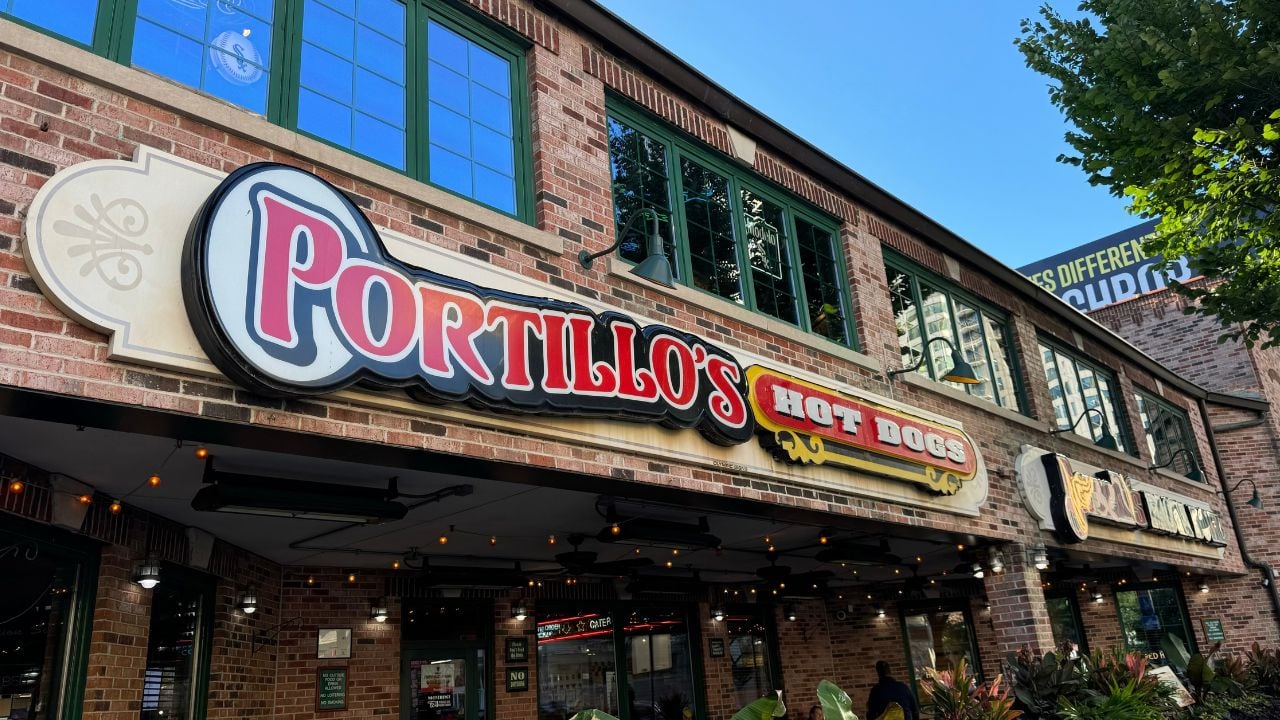
Portillo’s Prices Are Up and Orders Are Down. Illinoisans, Here’s What the Chain Says Changed

Has your Portillo’s run felt a little pricier lately?
You might be right, at least for some menu items.
Here’s what Illinoisans should know about the chain’s latest prices and what it says is behind the drop in orders.
Note: This is general information, not investment or financial advice. Company figures and menu prices are subject to change.
Menu Price Increase
Portillo’s second-quarter earnings release is its report to investors.
It says prices on “certain menu items” are higher than a year earlier.
So the 2.6% isn’t true for every item you order.
The chain tied the 2.6% increase to a higher average check, or average bill, in the quarter that ended June 28.
That quarter runs roughly April through June. It compares it with the same quarter a year earlier.
The company issued the release on August 5, 2026, when it had 109 restaurants.
The comparison group covers 85 of them.
The release gives the figure for that group, not for Illinois alone. So it can’t tell you what you pay at your neighborhood Portillo’s.
What Changed in April
In April 2026, the chain raised select menu prices by about 2.0%.
Pamela Smith, the interim finance chief, called it a 2% price hike on select menu categories.
She said so on the August 5 earnings call.
The release blames rising costs.
Commodity prices (the prices of raw goods) rose 7.0% year over year.
That raised food, drink and packaging costs.
Those costs took 35.0% of revenue, up from 33.8% a year earlier.
In other words, about 35 cents of every dollar customers spent went to food, drink and packaging.
The 2.0% is the size of April’s increase. The 2.6% compares the quarter’s menu prices with last year’s.
On the same call, CEO Brett Patterson said the chain is choosing to protect guest value.
That means pricing below inflation and skipping big low-margin promotions.
If you ordered after the April change, you paid the new prices on select items.
Fewer Orders
Transactions, or customer orders, fell 3.4% in the quarter, the release says. That’s in the group of restaurants open long enough to compare.
Same-restaurant sales fell 1.2%, or $2.2 million, in that group.
A 2.2% higher average check made up for part of that.
But the drop in orders was bigger than the rise in the average check.
Brett Patterson, the CEO, said on the call that the company didn’t repeat last year’s buy-one-get-one beef promotion.
That choice, a dropped breakfast effort and cannibalization cut sales by about 2.5 percentage points.
Total revenue still rose 5.6%.
It hit $199.0 million, up from $188.5 million a year earlier. It also opened three restaurants in the quarter.
How Portillo’s 2.6% Becomes 2.2%
The average check rose 2.2%, not 2.6%. Why? Customers ordered a different mix of items, and that mix fell 0.4%. That cut into the menu price increase.
Say a $100 tab is made up of items that rose 2.6%. The price increase alone adds $2.60.
A 2.2% rise in the average check adds $2.20 to a $100 check. So your bill grows a bit less than the menu prices do.
Restaurant Prices Nationwide
Restaurant prices overall rose 3.4% over the 12 months ending in August. That’s from the Bureau of Labor Statistics (BLS), the government’s price tracker.
A $100 restaurant bill from a year ago would cost about $103.40 now.
The chain’s 2.6% on certain menu prices is lower than that rate.
The index covers full-service and limited-service restaurant meals across the country. It runs through August, not June.
If you eat out often, that 3.4% is the national average for restaurant prices, not just this chain’s.
Chicagoland Restaurants
At the end of 2025, the chain had 102 restaurants in 11 states, its annual report says.
About 42% of them were in the Chicagoland area.
Chicagoland restaurants also made up about half of the comparison group at the end of 2025.
So restaurants near Chicago make up a big share of it.
BLS reported that prices for food away from home in the Chicago area rose 4.3% over the 12 months ending in August.
That’s faster than the 3.4% national rate.
If you live near Chicago, that is the local restaurant-price figure closest to your bills.
A $100 bill from a year ago would cost about $104.30 now.
Psst! How much do you know about Chicago food history? Take our quiz and see if you can ace it.
Quiz
Chicago Food IQ
Answer these questions on Chicago-area food history. We bet you can’t get them all right. Prove us wrong?
Ray Kroc opened his first McDonald’s franchise in Des Plaines on April 15, 1955. About how much did it ring up in sales that first day?
Third-Quarter Outlook
Smith said on the August 5 call that the chain expects about a 2% boost from menu prices in the third quarter.
That is a bit below the second quarter's 2.6%, and it assumes no more price increases.
If you stop in often, that suggests a smaller price effect than in the spring.
A new price increase would change that.
8 Places Illinoisans Grew Up Going That Closed for Good
Some of the places you grew up going to are gone for good.
A few still leave a trace if you know where to look.
8 Places Illinoisans Grew Up Going That Closed for Good
8 Jewel-Osco Systems Employees Wish Illinoisans Understood
Your loyalty points can't touch every charge on a grocery receipt.
A few of the rules behind the register work differently than you'd expect.
