
11 Things Arkansans Grew Up Doing That Kids Today Will Never Know

Ask an Arkansan who grew up a few decades ago about weekends, and you might hear about a ballgame or a Sunday when store shelves were covered.
Much of that world is gone now.
Here’s a look back at what growing up in Arkansas used to mean.
1. Dogpatch USA Day Trips
Dogpatch USA operated from 1968 to 1993 as an amusement park based on Al Capp’s Li’l Abner comic strip.
If you went in the early days, you could ride horseback, tour a trout farm or board a railroad called the West Po’k Chop Speshul.
In 1968, the park’s first year, its general manager reported 300,000 visitors, the Encyclopedia of Arkansas says.
Marble Falls in Newton County changed its name to Dogpatch.
It switched back in 1997.
2. Beaker Street Listening
Beaker Street started on the radio station KAAY in 1966 and brought a new musical format to mid-America, according to the Encyclopedia of Arkansas.
If you tuned in, you heard hard rock, blues, jazz and more.
The show settled into the 11 p.m. to 2 a.m. slot.
KAAY’s secondary signal pattern went well beyond the state’s borders, as far as Canada and the Bahamas.
You were listening to a 50,000-watt AM station, the Arkansas Times says.
The run ended in 1972.
In 2020, the show was back on the air.
3. Sundays With Covered Shelves
Arkansas’s Sunday-closing laws, also called blue laws, decided what you could buy on a Sunday after the General Assembly adopted Act 135 in 1965, the Encyclopedia of Arkansas says.
If you walked into a store that day, prohibited items were covered by cloth or restricted by signs.
The entry calls it arbitrary that you could buy fishing hooks but not light bulbs.
In some instances, you could buy film but not a camera.
The Arkansas Supreme Court struck down Act 135 in 1982, ruling it constitutionally vague.
If you shopped on a Sunday between 1965 and 1982, you did it under Act 135.
Where Arkansas’s Sunday-Closing Law Began
The state’s first blue laws date to 1837, only a year after statehood.
That 1837 law prohibited all sales on Sunday and all labor too, with minor exceptions for daily necessity and charity.
Revisions in the 1850s added bans on card games, hunting, horse racing and baseball on Sunday.
Much of the statewide framework stayed on the books until its repeal in 1957, and the General Assembly adopted Sunday-closing laws again in 1965.
4. Riding the Choctaw Rocket
The streamlined Choctaw Rocket was one of the passenger trains the Rock Island ran from Memphis by way of Little Rock.
The railroad also ran the Hot Springs Limited.
If you boarded either one in the 1940s, you rode during years when the entry says those trains helped maintain passenger traffic in Arkansas.
Rock Island passenger service in Arkansas ended in 1967.
If you remember a ride on one of those trains, you remember it from before that year.
The railroad’s last train ran in March 1980.
5. Hogs in the Southwest Conference
The Razorbacks joined the Southwest Conference in 1914, along with one of their major rivals, the University of Texas.
If you watched the Hogs before 1990, you saw them play Texas as a conference rival.
247Sports reports that the Southeastern Conference (SEC) invited Arkansas to join on Aug. 1, 1990.
The Hogs played their first SEC game in 1992.
The Southwest Conference folded less than five years after the Razorbacks played their final game as a member.
If you grew up on Southwest Conference Saturdays, you watched a league that no longer exists.
Texas has since joined the SEC, and the Daily Texan reported that the Longhorns and Razorbacks were set to meet in Fayetteville on Nov. 16, 2024.
6. Six-Ounce Grapette Bottles
Benjamin Tyndle Fooks developed Grapette soda in Camden in 1939.
He bought the copyrighted names for $500 that year, and Grapette entered the market the following year.
If you picked up an original Grapette, you held a clear six-ounce bottle.
The entry calls the bottle an innovation because it was lightweight and let the liquid show through the glass.
Retailers also got a thirty-bottle case instead of the conventional twenty-four.
Grapette’s company history says the original six-ounce bottle eventually gave way to the 7, 8, 10, 12 and 16-ounce returnable bottles.
In 2005, Grapette and Orangette became available exclusively in Walmart stores nationwide.
7. School Years Built Around Cotton
Cotton set the school calendar at Old Union School in Randolph County, so students could help their families pick it.
A former student recalled that the school year began on the first Monday of July and continued until the second week in September.
If you were a student there, you spent the stretch from the second week of September to mid-November out of class.
Classes ran until March, when you and the other children left to help plant crops.
Author Lois Lenski described a split school year in her 1949 novel Cotton in My Sack, based on a 1947 visit to Yarbro School near Blytheville.
8. Games at Ray Winder Field
Ray Winder Field was the home of the Arkansas Travelers from 1963 until 2006.
If you went to a game there, you sat in a stadium that opened on April 13, 1932, as Travelers Field.
The name changed in 1966 in honor of Ray Winder.
If you caught a game after 1974, you saw the Screen Monster, a fifty-five-foot right-field fence.
The fence went up to prevent balls from being hit out onto the highway.
Before the July 2012 demolition, fans got a chance to secure keepsakes.
9. Lum and Abner on the Radio
Chester Lauck and Findley Goff, two young comedians from Mena, created Lum and Abner.
The show ran for almost twenty-five years on the radio, with 5,800 daily live fifteen-minute programs.
Contracts put it on four networks: NBC, ABC, CBS and Mutual.
Many Arkansans grew up listening to it.
If you listened every day, you heard a live fifteen-minute program.
If you tuned in, you visited the Jot ‘Em Down Store in Pine Ridge.
The town of Waters renamed itself Pine Ridge for the show when its citizens made the change on April 26, 1936.
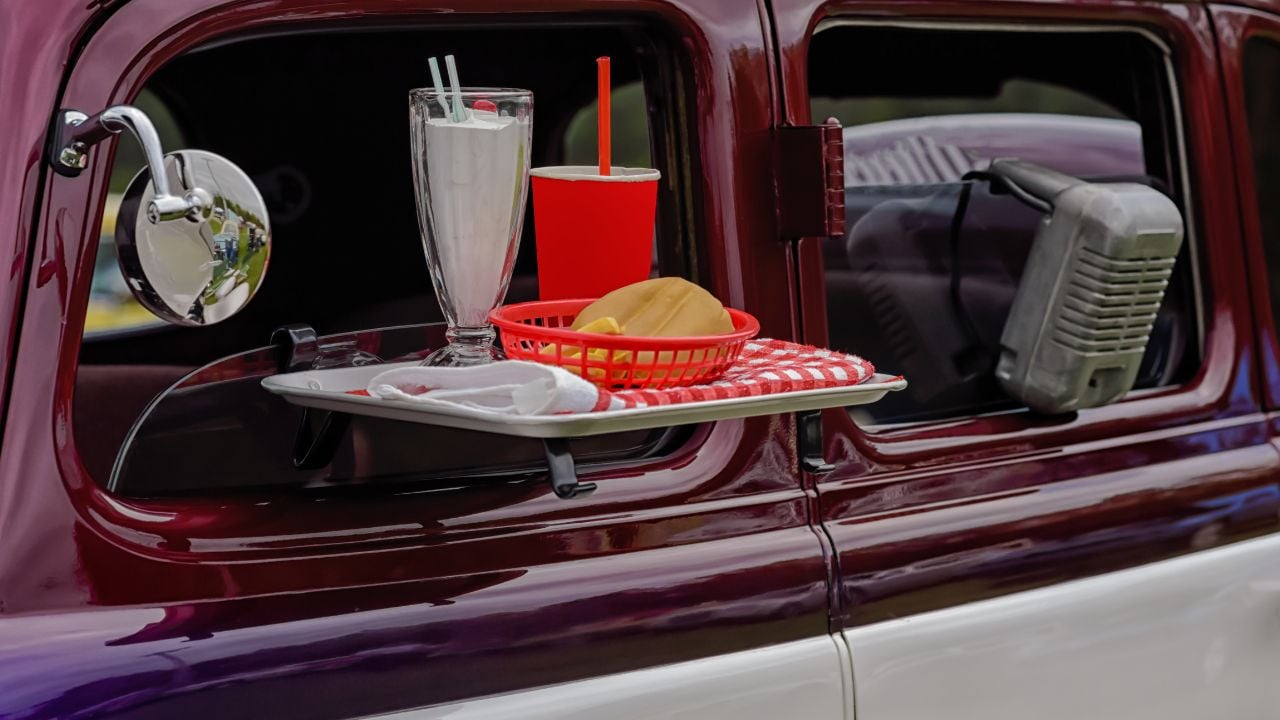
10. Movie Nights at the Drive-In
Kenneth and Marilyn Sanders opened the Kenda Drive-In in April 1966 in Marshall.
Cable TV and VHS recordings were cutting into the drive-in market, the Encyclopedia of Arkansas says.
If you grew up near a drive-in, you watched movies from your car.
The Kenda was one of only three drive-ins left in Arkansas when it began to gain popularity with people around the state.
11. Small Country Schools
Cedar Grove School No. 81 was five miles north of Pocahontas in Randolph County.
If you went there, your classes ran through the eighth grade.
A tornado destroyed the school on March 30, 1938.
The district merged with Pocahontas in 1949, when the school had twenty-two students.
If your district closed in 1948 or 1949, it was one of more than 1,100 school districts across the state that did.
Psst! How much do you know about Arkansas history? Take our quiz and see if you can ace it.
Quiz
Arkansas History Pop Quiz
Answer these questions about Arkansas firsts, places and people. We bet you can’t get them all right. Prove us wrong?
Which diamond holds the record as the largest found at the Pike County site, at 40.23 carats?
Waiting for the Power Lines
Arkansas farms waited a long time for the power lines, and in 1930 only 2.1 percent of them had electricity.
If your family farmed in 1930, yours was almost certainly one of the farms without it.
First Electric energized an initial fifty-eight miles of line on April 15, 1938.
If your family farmed in 1950, the odds were about two in three that your farm had electricity.
2 Arkansas Town Squares That Never Recovered From Their Biggest Closure
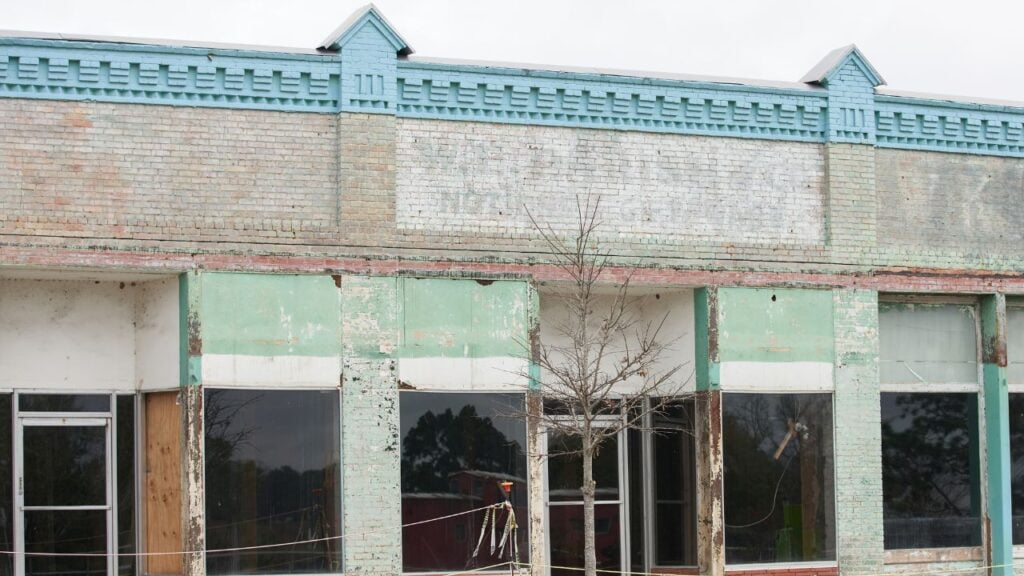
We think a big closure can change a town square for good.
These are the town squares that struggled after a big closure.
2 Arkansas Town Squares That Never Recovered From Their Biggest Closure
