
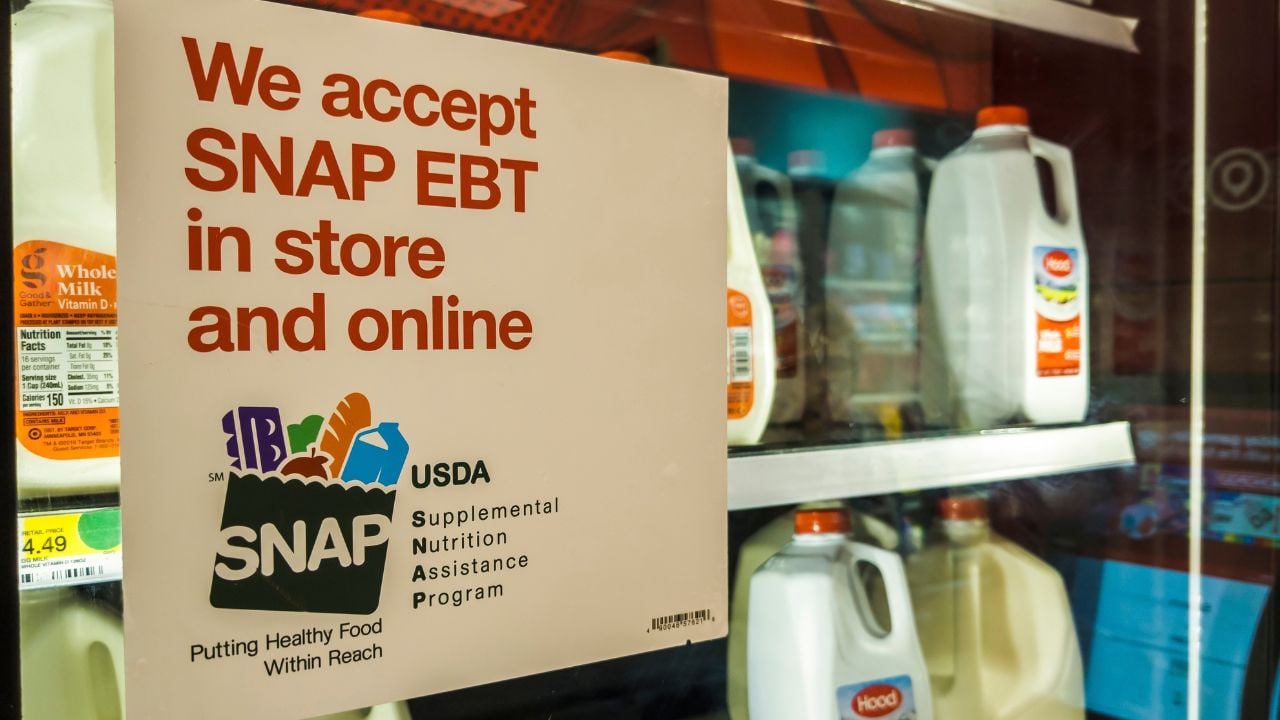
Rising Grocery Prices Are Stretching SNAP Thin in West Virginia’s Mingo and McDowell Counties

A grocery bill that goes up a little can be a big deal in a household that’s already stretched.
In West Virginia’s Mingo and McDowell counties, many families are watching every dollar, and food assistance plays a big part.
Here’s a look at what the local numbers say about food help and food costs.
Note: This is general information, not financial advice. Program rules and dollar amounts are subject to change, so confirm the current SNAP rules with the Agriculture Department.
WCHS’s County Rates
WCHS, a Charleston TV station, ran a story on July 15, 2026. It was about hunger across southern West Virginia.
The station listed food insecurity rates for five counties. Facing Hunger Foodbank serves all five.
Mingo County had the highest rate at 22.5%. McDowell County was at 22%.
Put plainly, that’s more than 1 in 5 people in Mingo County.
Logan County came in at 19.9% and Wyoming County at 17.9%. Lincoln County had the lowest rate at 16.4%.
That’s about six points under Mingo County.
The rates came from two sources. One is the Appalachian Regional Commission.
The other is Feeding America’s Map the Meal Gap estimates.
All five counties are economically distressed for fiscal year 2026.
That label comes from the commission.
Cyndi Kirkhart is the food bank’s CEO.
She said that dollars from the Supplemental Nutrition Assistance Program (SNAP) stretch less when grocery prices are high.
She also said Facing Hunger once bought ground beef for about $2 a pound.
Now it pays about $7.
So a 10-pound order that once cost about $20 now costs about $70.
2024 Feeding America Estimates
Feeding America’s July 2026 update lists how many people in each county are food insecure.
That’s 6,120 people, or 27.1%, in Mingo County. In McDowell County, it’s 4,880, or 27.2%.
West Virginia’s statewide rate is 17.7%, or 312,460 people.
That puts both counties about nine and a half points above the state.
Logan, Wyoming and Lincoln counties are at 22.2%, 22.4% and 23.6% in the same update.
So if you check all five counties on the WCHS list, every one is above 22%.
Now compare the two sets.
The five rates in the WCHS story match Feeding America’s 2020 estimates for the same counties exactly.
Lincoln County shows the widest gap between the two sources, at 16.4% in the WCHS story and 23.6% in the 2024 update.
In short, the 2024 numbers are higher than the ones in the TV story for all five counties.
What Counts as Food Insecurity
Food insecurity means a household has limited or uncertain access to enough food. That’s how the Economic Research Service describes it. It’s part of the Department of Agriculture (USDA).
A household has low food security if its diet gets worse in quality, variety or appeal. Its members eat about the same amount, or only a little less.
A household has very low food security if its eating is disrupted in several ways. Its members also eat less.
Hunger is a different term. USDA defines it as a condition in one person’s body. It can result from food insecurity.
What a Meal Costs
Feeding America starts from what food-secure people nationally spend on food in a week and divides it by 21 meals.
Then it adjusts for local prices to get each county’s average meal cost.
That comes to $3.64 in Mingo County and $3.56 in McDowell County. West Virginia’s statewide average is $3.31.
The national average in the 2026 study is $3.70.
If you live in Mingo County, a meal costs 6 cents less than the national average and 33 cents more than the state average.
In McDowell County, it costs 14 cents less than the national average and 25 cents more than the state average.
Feeding America puts the yearly food budget shortfall at $4,227,000 in Mingo County.
In McDowell County it’s $3,297,000.
It builds that number from survey answers.
Divide that by each county’s food-insecure headcount.
You get roughly $690 per person in Mingo County and $675 in McDowell County.
National Grocery Prices
Nationally, grocery prices rose 2.2% over the 12 months ending in August 2026.
That’s from the Bureau of Labor Statistics’ food at home index.
That index covers the groceries you buy for the kitchen. It was unchanged from July to August.
Restaurant and takeout prices rose faster.
The food away from home index was up 3.4% over the same 12 months.
If you spend $400 a month on groceries, a 2.2% increase adds about $9 a month.
That’s about $106 a year.
Psst! How much do you know about SNAP and food aid? Take our quiz and see if you can ace it.
Quiz
Food Aid IQ
Answer these questions on SNAP, food stamps and food aid. See how many you can get right.
Which of these can’t be bought with SNAP benefits?
SNAP in Both Counties
SNAP reaches many households in Mingo and McDowell counties.
The Census Bureau runs the American Community Survey.
Its 2020-2024 estimates say 3,397 of Mingo County's 9,317 households got SNAP in the past 12 months.
That's about 36%.
McDowell County has 2,360 of 6,467, which is also about 36%. Statewide, it's 125,727 of 728,655 households, about 17%.
So in each county, more than 1 in 3 households gets SNAP. That's about twice the state's share.
On Feeding America's map, 88% of food-insecure people in Mingo County are below the SNAP threshold of 200%.
In McDowell County it's 85%.
The statewide share on the map is 62%.
Kirkhart also said some of the people the food bank serves work or volunteer to keep their SNAP benefits.
If they can't get to a place to work or volunteer, they lose those benefits.
The food bank has already started to see that happen.
USDA's eligibility page says the One Big Beautiful Bill Act of 2025 changes certain eligibility factors.
The page is being updated.
Canceled Food Security Reports
Tracking of food insecurity changed on September 20, 2025. That's when USDA announced it was ending its Household Food Security Reports.
The department called the reports redundant and costly.
Feeding America's map page says USDA stopped collecting food security data. The estimates you can look up there use data through 2024.
It's working with its network and partners on other data sources. The goal is to keep local updates going in 2027 and beyond.
5 Redner's Habits That Cost Pennsylvanians Every Week
A grocery rewards app can sound like it saves you money the moment you download it.
It still needs one step from you before the savings start.
