
8 Second Line Traditions Every Louisianan Grew Up Watching

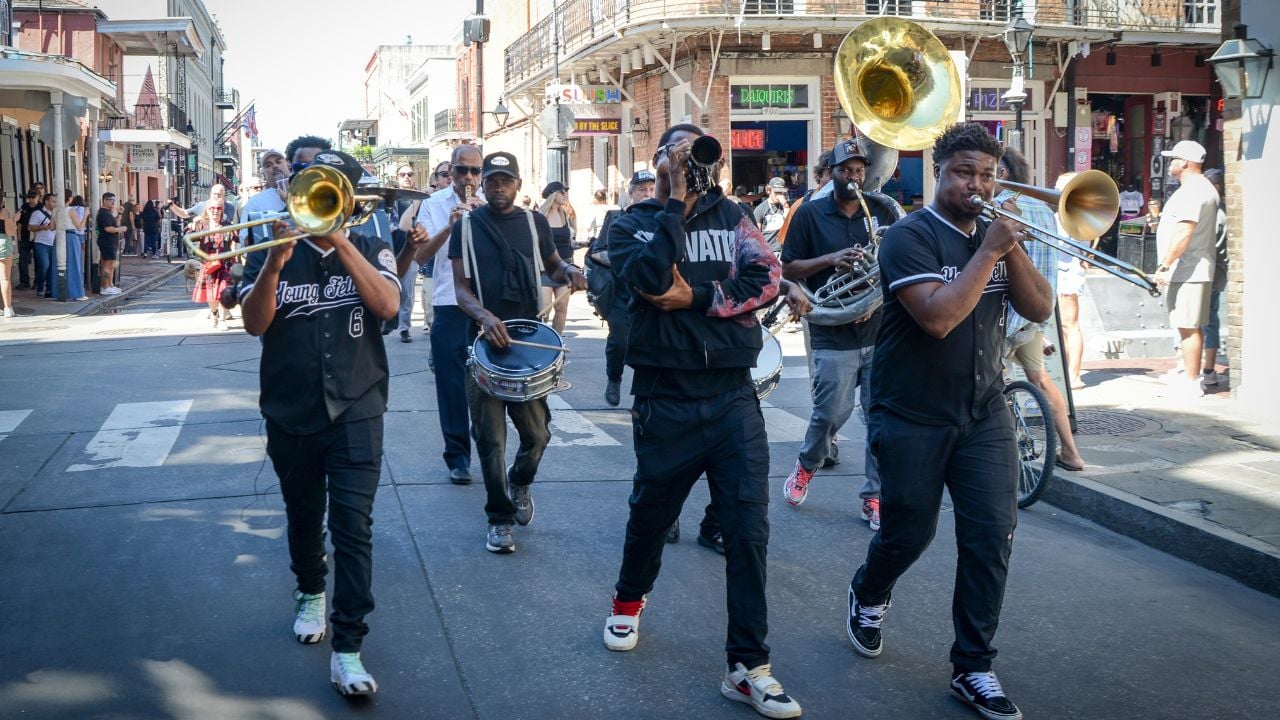
When a brass band comes down the street, a whole neighborhood can spill outside to follow it.
Louisianans who grew up near a second line know the rhythm long before anyone explains what’s going on.
Here’s a closer look at the traditions behind the parade.
1. Matching Parade Outfits
Second line club members dress alike, and Tulane’s Music Rising project says every member wears the same brightly hued suit for their parade.
Members decide the attire, accessories and color scheme each year.
A club can change everything.
If you watch the same club two years in a row, you may see a different outfit the second time.
Accessories include elaborately woven baskets, sashes and fans.
2. Umbrellas
At the head of a second line parade, club members wear sashes that display the club’s name, 64 Parishes says, and they often twirl matching umbrellas above their heads.
Look up.
If you watch from the curb, you may spot a club’s members by the umbrellas twirling over their heads.
Read the sash, and you’ll know which club’s parade you’re watching.
3. Hired Brass Bands
Second line clubs hire brass bands, and the parade winds for miles through their neighborhoods.
Many people grew up hearing a brass band come down their street.
A typical band has a tuba, trombones, trumpets, a snare drum and a bass drum, plus a clarinet, a saxophone or both.
That’s a lot of brass.
If you listen for the snare drum and the bass drum, you’re hearing the heavy percussive element that Tulane’s Music Rising project says the parade music features.
4. Sunday Parade Season
Tulane’s Music Rising project describes the second line season as opening around Labor Day with the Valley of the Silent Men and closing in June with the Uptown Swingers.
That’s a long season.
The two sources frame the season differently.
64 Parishes says there’s at least one parade every Sunday through May, while Tulane’s project carries the season into June.
Parades are often held on the anniversary of a club’s founding.
If you know when a club was founded, you have a starting point for finding its parade.
5. Stops at Houses and Barrooms
Where does a second line parade stop along its route?
A second line winds through the neighborhoods of club members, 64 Parishes says, making designated stops at their houses and other significant neighborhood sites, usually barrooms.
The stops are planned.
If you live near a member’s house or a neighborhood barroom, you may see the parade stop outside.
The Nine Times Social Aid and Pleasure Club has paraded through the 9th Ward on the Sunday before Thanksgiving since 1998.
Psst! How much do you know about second line parades? Take our quiz and see if you can ace it.
Quiz
Second Line IQ
Answer nine questions on New Orleans clubs, brass bands and parades. We bet you can’t get them all right. Prove us wrong?
Which club became the first to parade at Jazz Fest, in 1975?
6. Jazz Funeral Send-Off
At a jazz funeral, a second line follows the procession while the band plays dirges, somber Christian hymns performed at a slow walking tempo, according to 64 Parishes.
Then the music changes.
After the body is laid to rest, or "cut loose," the band starts playing up-tempo music and the second liners begin dancing.
Many people grew up watching a jazz funeral change from hymns to dancing.
If you're along the route when the music picks up, you're watching the funeral turn into a street celebration.
First Line and Second Line
The second line is the crowd marching behind a jazz funeral procession, 64 Parishes says.
The musicians, funeral directors, family and friends of the dead make up the first or main line.
If you march behind the procession, you're in the second line.
7. Parades at Jazz Fest
A May 2022 Historic New Orleans Collection article describes a second line club proceeding around the fairgrounds at the New Orleans Jazz and Heritage Festival twice each day.
If you catch a parade there, you may see dancers pause, throw their fans or hats on the ground and dance elaborate steps in a circle.
A club must have held a regular parade on the street for two years before being eligible to appear at the festival.
The street comes first.
8. Dancing Behind the Band
Second liners dance in a free-style form infused with African-derived movements for the length of the parade, Tulane's Music Rising project says.
Many second liners show off popular steps such as the high step and the buck jump.
When you fall in behind the band, you join the people that Folklife magazine describes as dancing and cheering all the way.
Club members strut their dance moves in front of the band for approximately four hours, 64 Parishes says, while the second liners fall in behind and along the side.
That's a long dance.
The Clubs Behind the Parades
Second line parades come from the Social, Aid & Pleasure Clubs of New Orleans, and Tulane's Music Rising project counts forty-five or so of them.
Many clubs are for one gender only, so if you see a club of only men or only women, that's common.
A number of clubs also have divisions for men, women and children.
If you watch an annual parade, you may see several divisions of members dressed in elaborately colored outfits.
Before the 1960s, Tulane's project says, Black women weren't permitted to dance in public, and certainly not in the streets in a parade.
That changed in the 1960s.
Female clubs began to proliferate then, and the Lady Jolly Bunch, formed in 1967, is considered the first all-female club.
8 Louisiana Dishes That Change Two Parishes Over
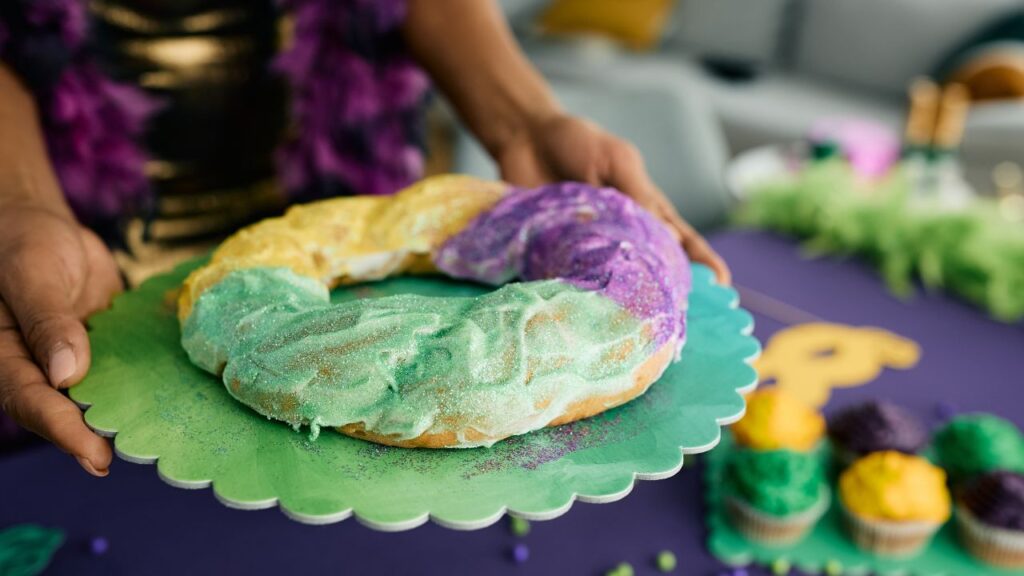
Think a bowl of gumbo tastes the same no matter which parish it's ladled in?
Cross a few parish lines, and the pot changes.
8 Louisiana Dishes That Change Two Parishes Over
9 Things Louisiana Boat Mechanics Know About an Owner in Ten Minutes
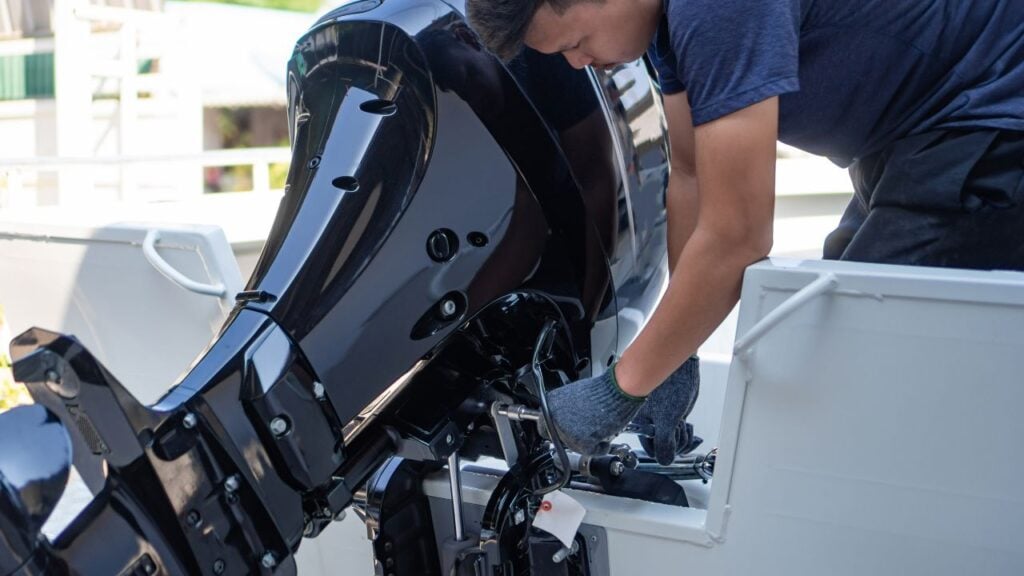
You can tell a boat mechanic you're careful with your boat.
But your boat gets a turn to tell its side, too.
9 Things Louisiana Boat Mechanics Know About an Owner in Ten Minutes
