
Milwaukee’s 2025 Flood May Be Only the Start for Wisconsinites, a Policy Forum Report Warns

A big storm can feel like someone else’s problem until the water’s in your basement.
A research group looked back at Milwaukee’s damaging flood and asked how ready Wisconsin communities are for more like it.
Here’s what the findings could mean around the state.
Note: This is general information, not insurance or legal advice. Coverage and aid rules are subject to change, so check the specifics with your insurer or agent.
Where the Warning Comes From
The report behind the warning comes from the Wisconsin Policy Forum, which calls itself a source of nonpartisan state and local government research.
If you want to check its work, you can read the August 2026 report, At the Ready, which looks at how Wisconsin prepares for extreme weather.
Researchers at the Forum reviewed hazard mitigation plans from the state and its counties.
They also analyzed Federal Emergency Management Agency (FEMA) data on how often weather hazards strike and what damage they cause.
Interviews with emergency management leaders and staff from across the state are part of the research too.
As case studies, the Forum investigated three counties with contrasting characteristics.
These are the report’s findings, beginning with the 2025 flood.
A Thousand-Year Flood
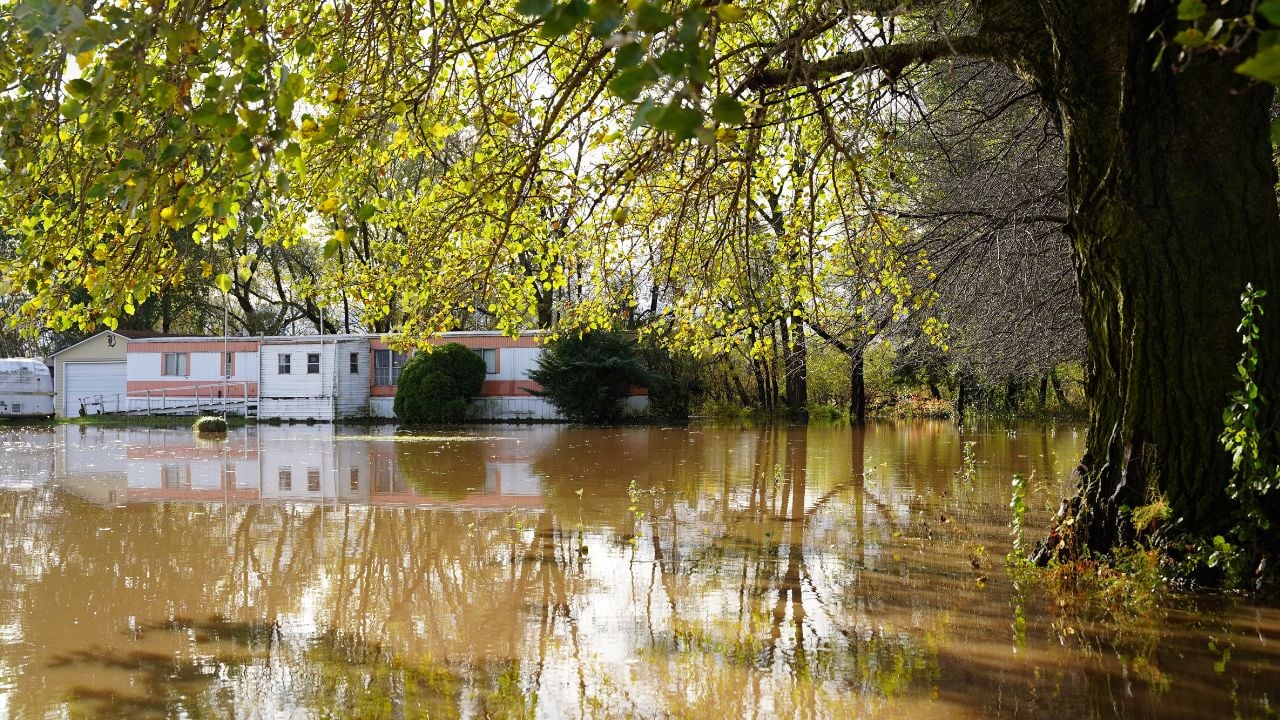
Milwaukee’s 2025 flood was a thousand-year flood and the country’s second-most expensive disaster of the year.
At least two people died.
Milwaukee and surrounding areas received up to 14.6 inches of rain on August 9 and 10, the Forum’s earlier report, After the Flood, found.
That rainfall set Wisconsin’s all-time record for most rain in a 24-hour period.
The damage came to more than $240 million.
Initial estimates in the report counted more than 1,800 damaged homes, 54 of them uninhabitable.
County officials suggest the final number is closer to 25,000 damaged homes.
You might think a flood only reaches homes inside a floodplain.
The flood affected buildings outside the floodplain and without flood insurance.
If you live outside one, that doesn’t settle your risk.
What a Thousand-Year Flood Means
A thousand-year flood has a 0.1% chance of happening in any given year, according to the U.S. Geological Survey (USGS).
A 100-year flood has a 1% chance each year.
Even so, a home with that 1% yearly risk has a 26% chance of flooding at least once during a 30-year mortgage.
A Public Assistance Denial
After Milwaukee’s 2025 flood, the federal government approved individual assistance, the help that goes to households.
It denied public assistance, the program that pays for infrastructure repairs.
None of the other 22 declared disasters Wisconsin has had since 2000 ended that way, the Forum’s news release says.
The damage threshold for Wisconsin to qualify for public assistance is over $11 million.
The Forum’s earlier report added up the local damage.
Milwaukee County, Milwaukee Public Schools, the Milwaukee Metropolitan Sewerage District (MMSD), the city of Milwaukee and 18 other municipal governments in the county sustained at least $34.7 million in damage to their buildings and infrastructure.
Public assistance was denied anyway.
Trying to fill in for federal resources would be difficult for the state, the report says, given the potential scope of the need and the state’s fiscal constraints.
Across the country, the combination is uncommon.
Of the 3,178 named disasters nationwide since 2000, not counting the pandemic, only 87, or 2.7%, had individual assistance approved while aid to governments was denied.
Households faced a gap too.
Milwaukee County residents submitted 27,134 flood-damage claims to FEMA.
Only 518 of them, or 1.9%, had flood insurance.
That’s roughly 1 claim in 50.
If you aren’t sure your policy covers flood damage, ask your insurer or agent.
Psst! Can you tell myth from fact on flood help and extreme weather? Tap each card to see how you do.
What the Report Expects
If you’re wondering what comes after 2025, the Forum expects Wisconsin to face more frequent and more severe weather events in the coming years.
Extreme heat and cold, floods and severe storms are on its list.
All of them affect human health, economic activity and infrastructure.
Communities face the greatest threats from severe storms, which can result in flooding, tornadoes or destructive winds.
No season gives you a break.
In winter, extreme cold and heavy snowfall pose dangers, while extreme heat and wildfire smoke have emerged as threats in summers.
Meanwhile, emergency preparedness activities face federal funding cuts and an uncertain future, the report says.
In April 2025, the federal government canceled the Building Resilient Infrastructure and Communities (BRIC) program.
The cancellation ended billions of dollars in promised grant funding and halted projects such as tornado safe rooms in Grant County and flood mitigation work along the Kickapoo River.
A court case has since restored the funds, though uncertainty remains.
How Ready Communities Are
Wisconsin requires every county, city, village and town to have a head of emergency management, the Forum’s report says.
County budgets for emergency management run from $1 million a year in Dane County to $300,000 in Bayfield County.
Bayfield County works with less than a third of what Dane County has to spend.
Updating a hazard mitigation plan costs about $40,000 and extensive staff time.
In Bayfield County, that one update would take more than a tenth of a year’s emergency management budget.
Fiscal constraints on local governments limit the resources available for emergency management.
Several emergency managers identified recovery as the weakest area in Wisconsin.
Preparedness work is largely invisible when it succeeds, according to the report, which makes it hard to argue for the work’s importance to the public.
If you own a home, some of the fixes are yours to make.
Keeping gutters clear, channeling water away from your house and investing in stronger roof trusses can reduce the severity of hazards such as flooding.
Psst! How much do you know about disaster declarations and flood insurance? Take our quiz and see if you can ace it.
Quiz
Flood Aid IQ
Answer these questions on disaster declarations, flood insurance and flood safety. We bet you can’t get them all right. Prove us wrong?
What is the least depth of fast-moving floodwater that can carry away most cars, according to the National Weather Service?
Three Contrasting Counties
Your county may not look like Milwaukee, Pepin or Richland, but those are the three counties with contrasting characteristics that the Forum's report studies.
In Milwaukee County, the Forum points to the Extreme Weather Task Force, a coalition that helps people with few options escape dangerous cold and heat.
The county's experience building a coalition to distribute information and resources may have potential elsewhere in the state.
The MMSD changed its approach in 1996 from trying to control floods to managing them.
If you're wondering what a change in approach costs, the district has invested $631 million in flood management projects over the past 30 years.
That works out to about $21 million a year.
In Richland County, a resilience group has seen residents join citizen science efforts to monitor water flow and quality.
Digital stream gauges can give early flood warnings.
In Richland County, there are no such gauges in place; the only one currently operating is above the water level.
If the river rises to meet that gauge, the report says, the situation is already dire.
Pepin County ran a household-level survey on hazards and preparedness.
The Forum says other communities may want to consider a similar survey.
9 Account Recovery Settings Wisconsinites Should Fix Before They Need Them

You set up a Gmail account or an Apple ID once, but the account recovery settings buried underneath it rarely get a second look.
They count the day you lose access.
9 Account Recovery Settings Wisconsinites Should Fix Before They Need Them
9 Vintage Kitchen Items Wisconsinites Should Inspect Before Buying

Would you trust a hand-me-down casserole dish from an estate sale with tonight's dinner, sight unseen?
Some pieces on a vintage kitchen table deserve a second look before you pay for them.
9 Vintage Kitchen Items Wisconsinites Should Inspect Before Buying
