
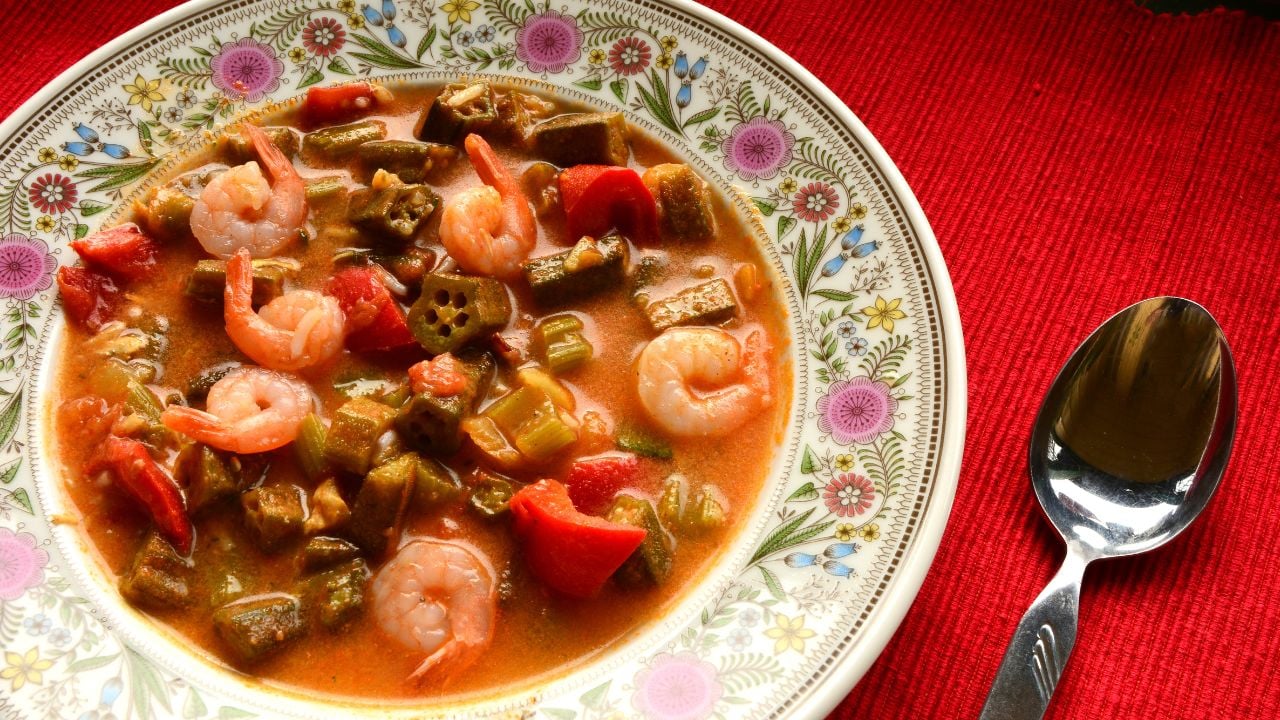
6 Gumbo Rules Louisianans Will Argue About Until the Pot Is Empty

Every Louisiana kitchen seems to make gumbo a little differently, and everyone has opinions about it.
Here are the gumbo debates that get the loudest.
1. Potato Salad in the Bowl
Some Acadiana cooks put potato salad in the gumbo, and others keep it on the side.
The Advocate reports that a front-of-house manager at Prejean’s in Lafayette puts the split at about 50-50.
That is the ratio of guests who stir it in to guests who keep it on the side.
It’s a standoff.
If you stir yours in or keep it on the side, you’re in good company either way.
In a 2021 poll of its readers, half of the 758 people who answered picked rice alone.
Another 37% wanted both, and 12% wanted potato salad alone.
Lafayette historian Michael Martin hypothesizes that German influence brought potato salad to the gumbo bowl.
2. Tomatoes
Tomatoes in gumbo are out of bounds for many cooks, according to a 64 Parishes road-trip story.
Yet seafood gumbo recipes often included okra and tomatoes.
Rules differ by kitchen.
Louisiana’s River Parishes tourism site draws the line by style: Creole gumbos may include tomatoes, and, by its account, Cajun gumbos don’t.
Before the tomatoes go in, ask which style your guests grew up on.
3. Roux Color
Cajun gumbos are made with a darker roux than Creole gumbos, the River Parishes site says, which describes Creole roux as lighter but still medium-brown.
National Geographic defines roux as flour cooked in hot fat until it reaches the chef’s preferred shade of brown.
The Louisiana Division of the Arts ties the color of a gumbo roux to where a family comes from.
An almost black roux points to a family with ties to the prairies west of the Atchafalaya Basin.
Families that stir a lighter roux are more likely to have ties to southeast Louisiana, east of the Atchafalaya.
If you’re stirring a roux for guests, you’re already picking a side.
Psst! How much do you know about gumbo? Flip these cards and see how many you can call right.
4. Okra or Filé
Many gumbo recipes divide into okra camps and filé camps, and the River Parishes site says gumbos can be broadly divided that way.
It is now quite common for the roux alone to do the thickening.
The word gumbo comes either from an Angolan word for okra or from the Choctaw word for filé, a 64 Parishes road-trip story says.
The Louisiana Division of the Arts says seafood gumbo thickened with okra is more common along the coast, where seafood is more plentiful.
Cooks who use filé typically stir it into the pot at the end of cooking, National Geographic reports, or let eaters sprinkle it over their bowls.
Either way, filé thickens gumbo to a stringy or ropy consistency.
If you leave filé to the eaters, each bowl gets only as thick as that eater wants.
What Gumbo’s Filé Powder Is
Gumbo’s filé powder is the cured, ground leaves of the sassafras tree, National Geographic says.
Some scholars believe Choctaw Indians were the first to cook with filé.
5. Seafood With Sausage
A 64 Parishes road-trip story says many Cajuns won’t go anywhere near a gumbo that mixes seafood with meat.
Seafood, sausage or both?
A typical gumbo has one or more kinds of poultry, shellfish and smoked pork.
National Geographic describes a Creole gumbo that puts shrimp, crab, ham and hot sausage in the same pot.
If you’re cooking for a mixed crowd, you can make a pot of each and let your guests choose.
6. Rice Ratio
Some Louisiana cooks like damp rice under their gumbo, and others add only a minimal amount of rice to the bowl.
The River Parishes site calls the ratio of gumbo to rice a point of contention.
Some Cajuns put potato salad in their gumbo and eat it with or without rice.
If you’re serving a crowd, set the rice out separately and let each person decide how much gumbo lands on top.
A Gumbo Without Meat
Gumbo has a meatless side that skips the seafood-and-sausage fight.
During lean times and Lent, gumbo z’herbes filled stockpots in Afro-Creole and German communities, according to 64 Parishes.
This vegetarian gumbo, sometimes called gumbo verde or gumbo maigre, often included mustard greens, collard greens, turnip tops, beet tops, spinach and parsley.
German communities in Louisiana traditionally prepared gumbo z’herbes on Holy Thursday.
If you’ve only ever ordered gumbo with meat or seafood, you haven’t met this one.
Try it once.
Psst! How much do you know about gumbo’s history? Take our quiz and see if you can ace it.
Quiz
Gumbo History Pop Quiz
Answer these questions on gumbo history and the dishes around it. We bet you can’t get them all right. Prove us wrong?
By the Civil War, gumbo was on the menu at H. LeBlanc’s Oyster Saloon in Plaquemine. What did the saloon call one of its gumbos?
How Creolization Shaped Gumbo
The Louisiana Division of the Arts calls gumbo an excellent example of cultural blending, or creolization.
National Geographic repeats the adage that one hundred Cajuns will give you 150 recipes for gumbo.
Gumbo melds African, European and Native American cultures.
Filé, the ground sassafras leaves, is the Native American contribution.
8 Louisiana Dishes That Change Two Parishes Over
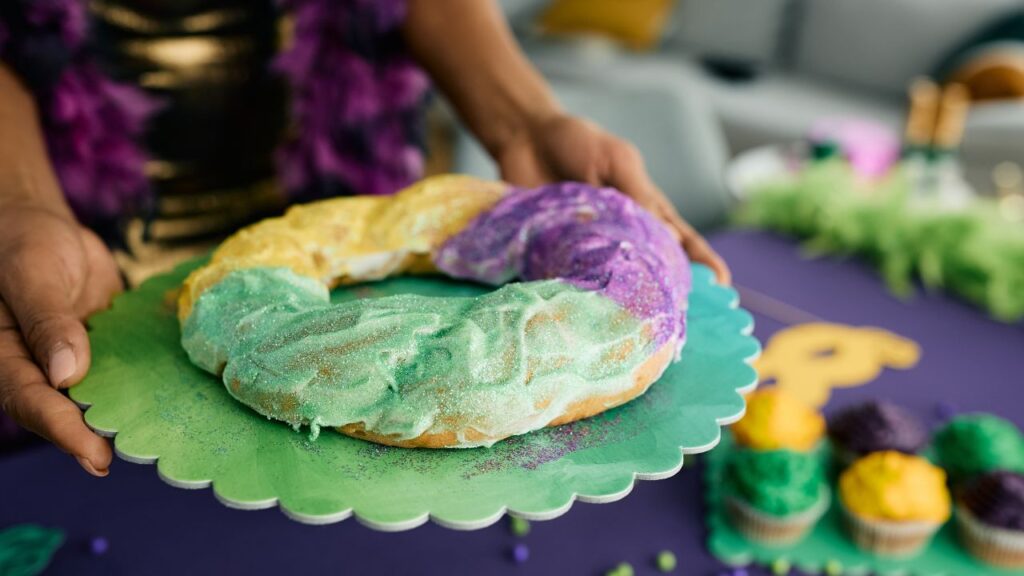
Think a bowl of gumbo tastes the same no matter which parish it's ladled in?
Some Lafayette Parish bakeries stuff king cakes with boudin and tasso instead of keeping them sweet.
8 Louisiana Dishes That Change Two Parishes Over
9 Things Louisiana Boat Mechanics Know About an Owner in Ten Minutes

You can tell a boat mechanic you take good care of your boat.
One look at the zinc anodes can tell a mechanic more than you meant to say.
9 Things Louisiana Boat Mechanics Know About an Owner in Ten Minutes
