
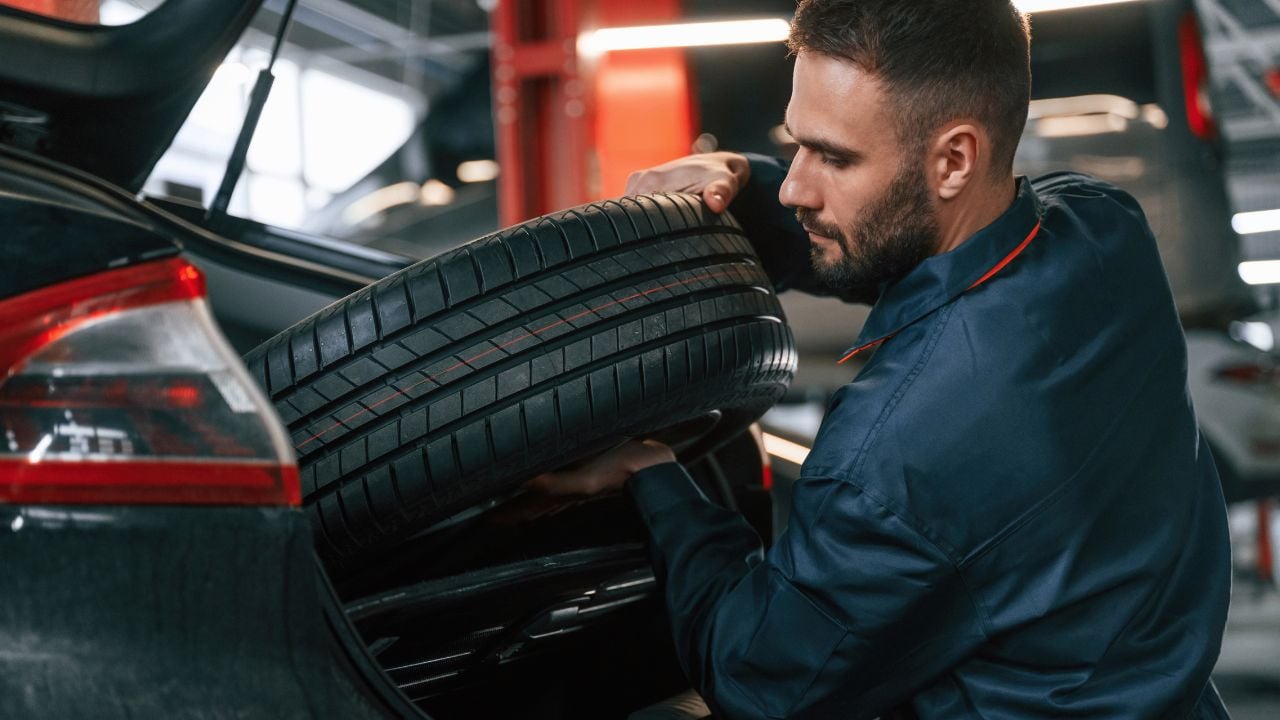
3 Washington Winter Tire Rules That Start November 1

Winter driving season is almost here, and your tires need preparation.
Washingtonians who switch to cold-weather tires should know the state has rules about what’s allowed, and when.
Here’s what to check before you put on your winter set.
Note: This is general information, not legal advice. Tire rules and fines are subject to change, so confirm the current requirements with the Washington State Department of Transportation.
1. Studded Tire Dates
Studded tires are legal in Washington only from Nov. 1 through March 31, according to WSDOT.
The state’s studded tire law, section 46.37.420 of the Revised Code of Washington (RCW), says it is unlawful to use metal studs between April 1st and November 1st.
Until then, studded tires are against the law for most drivers.
Stud-free winter tread tires carry no dates at all, so you can run them year-round.
With those, you never have to watch the calendar.
Which Tires Washington’s Studded Tire Law Covers
Washington’s studded tire law bars any block, flange, cleat, spike or other protuberance made of something other than rubber that projects beyond the tread.
The law makes an exception for chains, traction devices and studs of reasonable proportions when snow, ice or skidding conditions require them.
2. Retractable Studs
You can engage the studs on retractable-stud tires only between Nov. 1 and April 1, according to RCW 46.37.420.
You can leave retractable-stud tires on your car all year if the studs pull back below the wear bar when not in use.
So if your studs are engaged in October, you’re outside the dates the law allows.
3. Chain Rules for Heavy Vehicles
Washington’s tire chain rule for heavy vehicles starts Nov. 1, whether or not chain signs are posted.
On named routes, every vehicle over 10,000 pounds must carry enough tire chains from Nov. 1 to April 1 each year, according to the state’s administrative code.
Those routes include I-90 between North Bend and Ellensburg, State Route 2 between Dryden and Index, and I-82 between Ellensburg and Selah.
Clear skies don’t change that.
For a vehicle that heavy, you also need at least two extra chains, in case conditions worsen or the first set breaks.
On I-90 between North Bend and Ellensburg, you carry the chains in any vehicle over 10,000 pounds from Nov. 1.
Psst! How much do you know about Washington’s winter mountain passes? Take our quiz and see if you can ace it.
Quiz
Cascade Pass IQ
Answer nine questions on Washington’s winter mountain passes and tire rules. We bet you can’t get them all right. Prove us wrong?
Which of these Washington passes sits at the highest elevation?
School Bus and Fire Department Studs
School buses and fire department vehicles get a separate window.
State law says they may use metal studs between Nov. 1 and April 1, "any law or regulation to the contrary notwithstanding."
So the bus that picks up your kid in January may be running on studs.
That's legal.
The same goes for fire department vehicles on your street.
Chain Signs and the $500 Fine
Washington's tire chain requirements on mountain passes apply whenever signs are posted.
Read every sign.
WSDOT says you risk a $500 fine if you skip installing chains where signs are posted.
Studded tires don't count as chains when chains are required.
Approved traction tires are those with a mountain and snowflake symbol and at least an eighth of an inch of tread.
The Washington State Patrol keeps a list of approved alternatives to chains, and you can use those devices when chains are required.
Some vehicle makers advise against chains on certain models, but that doesn't excuse you from the state law.
For mountain passes, WSDOT recommends you carry chains even with traction tires, in case conditions change.
March 31 Cutoff
Your studded tires have to come off by the end of the day on March 31.
After that, you risk a $137 fine, according to WSDOT's March 2026 release.
The Washington State Patrol may issue tickets beginning April 1.
Studded tires are estimated to cause between $20 million and $29 million in pavement damage to state-owned roads each winter.
$5 Studded Tire Fee
Studded tires cost more at the register because state law adds a $5 fee to each new tire that contains studs.
The buyer pays the seller.
The fee has applied since July 1, 2016, under RCW 46.37.427.
If you buy four new studded tires, you pay $20 in fees on top of the price.
Where Pass Closures Come From
WSDOT's October 2025 release ties most winter pass closures to poor driving behavior.
That includes driving too fast for conditions, leaving too little space between vehicles, and failing to have proper equipment like tire chains.
If you cross I-90 over Snoqualmie Pass, you can sign up for text alerts about closures and delays by texting START to 85107.
Sign up before you drive.
No Waiver for Out-of-State Plates
The state's tire dates apply to all drivers, visitors included.
WSDOT says there are no individual exceptions or out-of-state waivers to the studded tire dates.
If you're expecting company from out of state this winter, they follow the same dates you do.
9 Things Washington Ferry Workers Notice About Drivers Every Day

Wait long enough in a ferry line, and you start noticing how people drive.
The crews who work it have noticed a few habits.
9 Things Washington Ferry Workers Notice About Drivers Every Day
7 Water Rights Mistakes Washington Buyers Find Out About Too Late
You close on the land and assume the water comes with it.
In Whatcom County, a letter in the mail can say otherwise.
7 Water Rights Mistakes Washington Buyers Find Out About Too Late
