
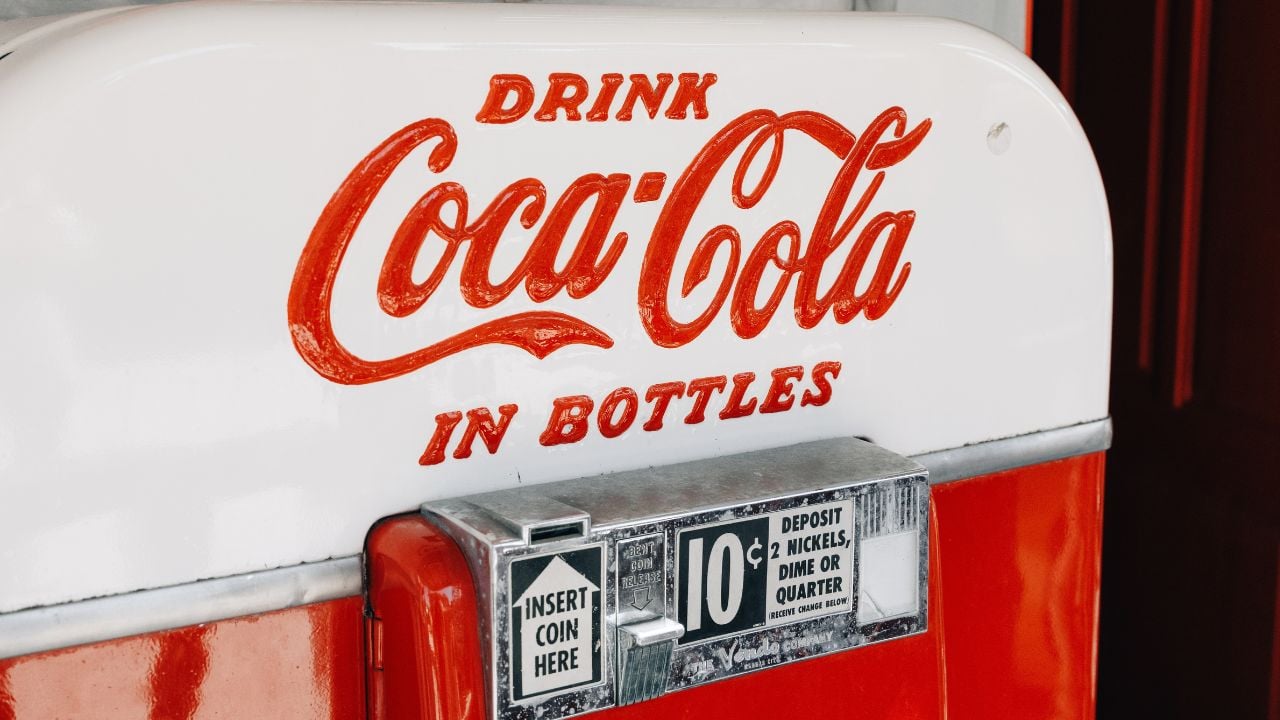
8 Coca-Cola Stories Georgians Grew Up Believing That Aren’t Quite True

Hometown stories tend to get a little upgrade every time they’re told.
Georgians have heard a lot of Coca-Cola tales over the years, and some don’t quite match the record.
Here’s what really happened behind the stories you grew up with.
1. Soda Fountain Birthplace
Coca-Cola is often described as something invented at the soda fountain in Jacobs’ Pharmacy.
Dr. John Stith Pemberton, a local pharmacist, already sold a popular drink called French Wine Coca, according to the New Georgia Encyclopedia.
When Atlanta banned wine sales, he swapped the wine for sugar syrup and renamed the drink Coca-Cola.
Lemelson-MIT says he mixed a version of the syrup in a brass kettle in his backyard.
He took it to Jacobs’ Pharmacy nearby, where it was mixed with carbonated water as a soda.
The Coca-Cola Company says he carried a jug of the new product down the street to the store.
The kettle came first.
If you’d stopped by Jacobs’ on May 8, 1886, you’d have paid five cents for a glass.
2. Overnight Hit
Coca-Cola is often pictured as an instant hit, with a line out the door for the first glass.
If you’d been counting that first year, Atlanta magazine puts sales at about nine glasses a day.
The Coca-Cola Company’s history page gives the same figure.
It was a slow start.
Pemberton sold part of his interest in Coca-Cola to Asa Candler shortly before he died in 1888.
By 1892, Candler’s merchandising had boosted syrup sales nearly tenfold.
The sales you’re picturing came later, under Candler.
3. Formula on Paper
Many people grew up hearing that Coca-Cola’s secret formula lives only in a few people’s memories.
If you’ve pictured a formula that was never written down, the company timeline says otherwise.
You can see the vault holding the formula at the World of Coca-Cola in Atlanta, where the company moved it in 2011.
In the early years, the formula was kept a close secret, shared with a small group and not written down.
That changed in 1919.
Ernest Woodruff and a group of investors bought the company from Candler and his family.
To finance the purchase, Woodruff arranged a loan and had Candler’s son put the formula on paper as collateral.
That paper sat in a vault at Guaranty Bank in New York until the loan was repaid in 1925, the company says.
American Banker reports the same dates.
In 1925, the formula moved to a bank vault in downtown Atlanta, where it stayed for 86 years.
4. New Coke Flop
Coca-Cola is often said to have launched New Coke on a hunch.
Coca-Cola ran 190,000 taste tests on U.S. and Canadian consumers before the launch, all of them blind.
In earlier testing, a sweeter version had beaten the classic formula, History.com reports.
New Coke arrived on April 23, 1985.
Within weeks, the company was fielding 5,000 angry phone calls a day.
You might remember how short the backlash was.
Seventy-nine days after the launch, on July 11, the company announced that the original formula was coming back as Coca-Cola Classic.
Some cynics have called the whole saga a stunt.
Coca-Cola’s Donald Keough later denied it was planned.
What Happened to New Coke Next
New Coke didn’t disappear when Coca-Cola Classic returned.
Classic quickly outsold the new formula, and within a few months it was back as the top-selling sugar cola, History.com reports.
The company renamed the new formula Coke II in 1990.
It abandoned that version in 2002.
5. Santa’s Red Suit
Coca-Cola didn’t create Santa, the company’s FAQ page says.
The company hired illustrator Haddon Sundblom in 1931 to paint Santa for its Christmas ads.
Before that, Santa showed up as everything from a tall, gaunt man to a spooky-looking elf.
Red was already around.
The Atlanta History Center says Santa appeared in a red coat well before Sundblom painted him, so the coat you picture wasn’t new in 1931.
Sundblom’s Santa was warm, friendly and plump.
Coca-Cola’s holiday ads featured that version from 1931 to 1964.
The company does say its ads played a big role in shaping the Santa we know today.
If you’ve told the red-suit story at a holiday party, you gave Coca-Cola credit for the character itself, which the company’s FAQ doesn’t claim.
Psst! How much do you know about Coca-Cola’s history? Take our quiz and see if you can ace it.
Quiz
Coke Myths Quiz
Answer eight questions on Coca-Cola’s history and lore. We bet you can’t get them all right. Prove us wrong?
In 1985, Coca-Cola’s chairman introduced New Coke to reporters in which city?
6. Contour Bottle
Many people say Coca-Cola's contour bottle copies the shape of a woman's dress.
You may have heard it called the "hobble skirt" bottle, a nickname Indiana Public Media mentions.
The Coca-Cola Company says the Root Glass Company of Terre Haute, Indiana, designed it.
Two Root Glass employees went to a Terre Haute library to look up the coca plant and the kola nut, according to a 1986 American Heritage account.
They found a cocoa pod in the 1910 Encyclopaedia Britannica instead.
Wrong plant, right bottle.
A patent issued on Nov. 16, 1915, for a design that took shape in Terre Haute, not Atlanta.
7. First Bottling
Coca-Cola's first bottles are often credited to Atlanta.
You can credit a Vicksburg, Mississippi, candy merchant named Joseph A. Biedenharn instead, according to 64 Parishes.
Demand at his soda fountain pushed him to install bottling machinery in the back of his store.
He sold cases to farms and lumber camps up and down the Mississippi River.
Biedenharn got there first.
Biedenharn's Vicksburg store became the first Coca-Cola bottler in 1894.
8. Candler Deal
Asa Candler is often pictured buying Coca-Cola in one quick, cheap deal.
Candler began buying rights to Coca-Cola from Pemberton in 1888, according to the New Georgia Encyclopedia.
In a full-page ad on May 1, 1889, he billed his drug business as the sole proprietor of Coca-Cola.
But Candler didn't reach sole ownership until 1891.
If you've heard the $2,300 figure, the company's history page says sole ownership cost that much in total.
The deal took years.
Soon after, Candler liquidated his pharmaceutical business to focus on the soft drink.
He formed a Georgia corporation named The Coca-Cola Company with his brother, Pemberton's former partner and two other associates.
7 Streaming Charges Georgians Keep Paying for Nothing

Streaming subscriptions are easy to start and easy to forget.
Many Georgians lose track of what they're still signed up for.
7 Streaming Charges Georgians Keep Paying for Nothing
7 Foundation Problems That Blindside Georgia Buyers

Georgia's red clay is part of the scenery from the foothills to Atlanta's suburbs.
A house can rest on that clay for decades before the trouble shows.
