
5 Disappearing Things Georgians Won’t Be Able to Enjoy Much Longer

Some of what Georgians grew up around is getting harder to find.
But not everything is on its way out.
A few species are making a comeback, while other pieces of the state’s past and landscape are shrinking fast.
Here’s what’s fading, where you can still catch a glimpse, and what’s bouncing back.
1. Hog Hammock on Sapelo Island
Hog Hammock is a Gullah Geechee community on Sapelo Island.
You can reach the island only by boat.
The Sapelo Island Visitors Center lists a four-hour guided tour, by water and bus, that includes a visit to Hog Hammock.
The tour requires reservations.
If you book it, the tour also stops at the Reynolds Mansion.
Reckon reported in March 2023 that the community’s population topped about 500 in the 1950s.
The community was down to 29 residents.
Newer owners were building pricier homes, which raised assessments.
In one year, some tax bills rose by as much as a thousand percent.
Homes and land have been sold in the past to settle property tax debt with the county.
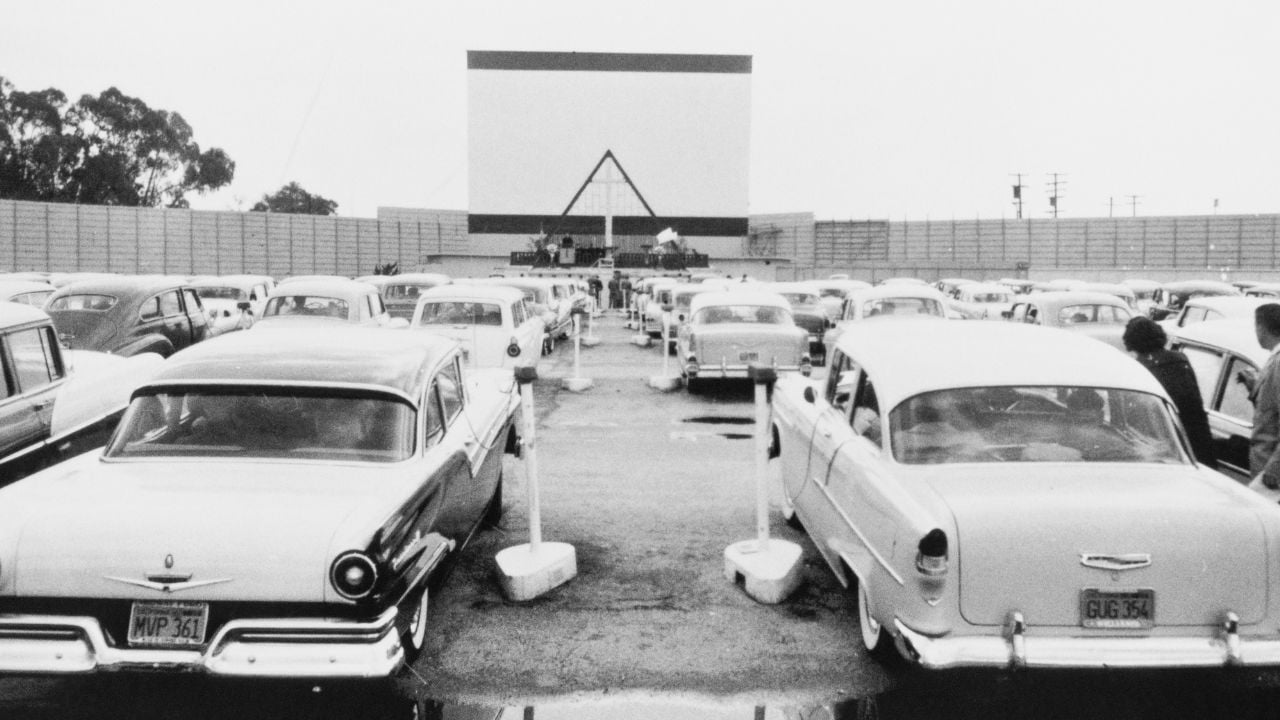
2. Drive-In Theaters
A 2018 story in the Atlanta Journal-Constitution (AJC) put the state’s drive-in count at over 130 in the middle 1950s, citing a website.
Only five remained in the state, in Atlanta, Blue Ridge, Jesup, Tiger, and Trenton.
That is a drop of more than 125 theaters.
The state’s tourism site lists a matching five: Jesup Drive-In, Starlight in Atlanta, Swan in Blue Ridge, Tiger, and Wilderness Outdoor Movie Theater in Trenton.
You can catch a double feature seven nights a week at Starlight in Atlanta.
At Swan, you can see movies year-round on Fridays, Saturdays, and Sundays.
Wilderness in Trenton plays weekends three seasons a year.
It closes for winter.
3. Bobwhite Quail
Georgia’s DNR says the state’s bobwhite quail population has declined by more than 85 percent since the 1960s.
The state’s 2024 quail plan says the number of Georgia bobwhite hunters has fallen by over 75 percent since 1964.
The drop is due primarily to the loss of quality early successional habitat.
Native grasses, legumes, weeds, briars, bugs, and shrubs are examples of that habitat.
You can still visit quail habitat at Di-Lane Wildlife Management Area, which has a Waynesboro address.
DNR says the area is managed for early successional habitat with an emphasis on bobwhite quail.
There’s no fee to access the land, and a license is required to hunt there.
Wildlife viewing is listed too.
Wild Versus Pen-Raised Quail
Georgia hunters harvested an estimated 373,193 bobwhites in the 2021-2022 hunting season, according to the state’s 2024 quail plan. About 80 percent of those birds were reported as pen-raised.
Because about 80 percent of the birds taken were pen-raised, the harvest isn’t a count of wild bobwhites.
4. Hemlock Trees
The Lula Lake Land Trust’s Core Preserve in Lookout Mountain is open to the public on the first and last weekends of each month.
If you want to walk under hemlocks, you can book a spot online.
Reservations are required.
The trust describes its 1.5-mile gravel road as paralleling the Rock Creek watershed, enveloped by hemlocks and rhododendrons.
The trust began treating over 12,000 hemlocks along Rock Creek and Bear Creek in 2014.
The threat is a tiny insect called the hemlock woolly adelgid, first found in Georgia in 2003.
The insect had spread throughout the state’s hemlock range by 2012.
Hemlocks can go from healthy to dead within four years of an infestation.
In 2010, the University of Georgia reported thousands of broken trees along the Chattooga River.
A U.S. Forest Service entomologist estimated then that probably 70 or 80 percent of the trees there were dead.
5. Shrimp Boats
You can still buy Georgia shrimp in the fall, since the season usually runs from mid-June through December, according to the Georgia Department of Agriculture’s Georgia Grown program.
The shrimp page links to a locator for finding Georgia Grown sellers near you.
In DNR’s count for the 2023 season, resident owners had 117 licensed trawlers, a total the department called the lowest in more than 20 years.
Boats licensed to nonresidents bring the 2023 total to 184 licensed trawlers.
University of Georgia researcher Marc Frischer told Grist in May 2025 that fewer than 200 shrimp boats work Georgia’s coast.
He put the number at around 1,500 in the early 2000s.
Imported farm-raised shrimp from Asia and South America have entered the market in huge quantities.
Charlie Phillips, who runs a seafood packing business in Townsend, said packing houses are closing and many shrimpers have no place to unload.
Georgia Wildlife on the Rebound
Not every species is fading.
The state’s 2024 quail plan reports a 78 percent increase in Georgia’s bobwhite population since 2007.
The population is still down by 75 percent from where the survey began in 1966.
In the Breeding Bird Survey data, the decline was 5.76 percent a year from 1966 through 2007, which works out to over 85 percent.
The gopher tortoise, Georgia’s state reptile, is also gaining ground.
DNR announced on September 24, 2025, that it had reached its goal of permanently protecting 65 viable populations of the tortoise.
When the initiative began about 10 years earlier, only 36 of the 125 viable populations known in Georgia were protected.
In 2022, the U.S. Fish and Wildlife Service found that listing the eastern population, which includes Georgia, was not warranted.
Extinction risk for the eastern population is projected to be low in the future.
You’ll find the Ceylon and Alapaha River wildlife management areas named in the release as examples of lands acquired for the effort.
Psst! How much do you know about Georgia’s history and landmarks? Take our quiz and see if you can ace it.
Quiz
Georgia Pride Quiz
Answer these questions on Georgia’s history and landmarks. We bet you can’t get them all right. Prove us wrong?
Dahlonega, Georgia, was the site of America’s first major what?
Right Whale Numbers
North Atlantic right whales run against the list above, with a population that the National Oceanic and Atmospheric Administration (NOAA) says has shown signs of increasing.
Each fall, some of the whales travel to calving grounds off Georgia, the Carolinas, and Florida.
The population stood at about 380 whales at the start of 2024, an increase of roughly 20 since 2020.
If you boat the coast, federal rules prohibit approaching or remaining within 500 yards of a right whale.
If you spot one between North Carolina and Florida, you're asked to report it at (877) 942-5343.
The population fell through a severe decline up to 2019, and the species has been listed as endangered under the Endangered Species Act since 1970.
As of NOAA's July 2026 update, an unusual mortality event declared in 2017 is ongoing.
5 Georgia Boiled Peanut Rules Nobody Explains
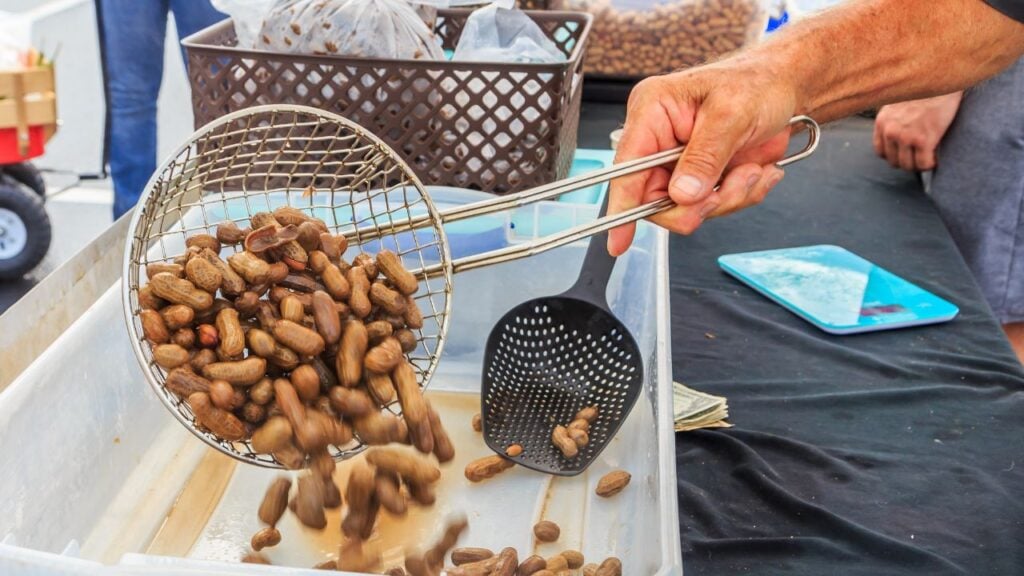
Boiled peanuts come with an unwritten etiquette.
A few of its customs might surprise you, even if you grew up near a roadside stand.
5 Georgia Boiled Peanut Rules Nobody Explains
8 Georgia Coastal Stops That Are Harder to Reach Than Visitors Expect
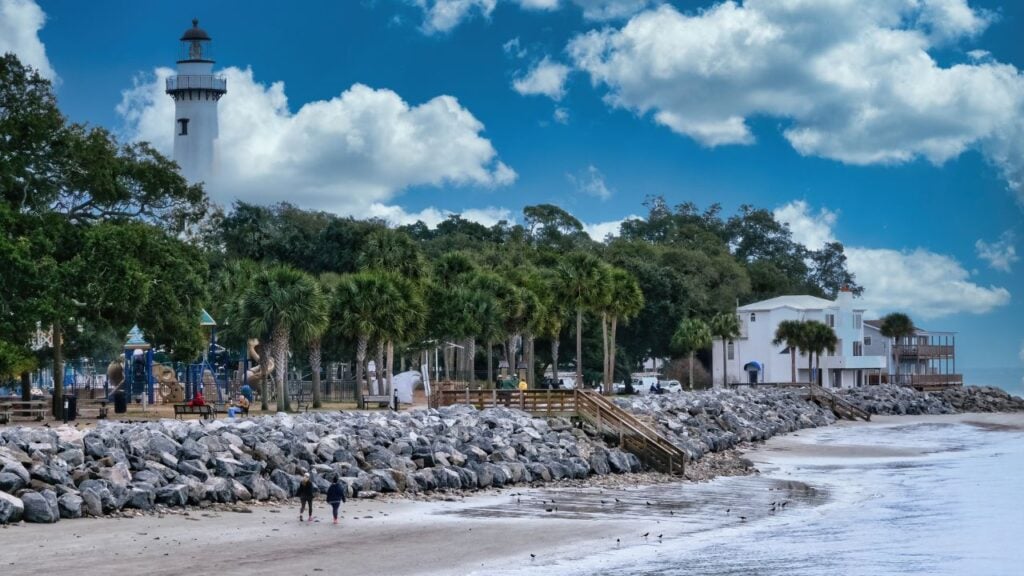
Some Georgia coastal stops take more planning than a simple drive.
One island is only the beginning of the planning.
8 Georgia Coastal Stops That Are Harder to Reach Than Visitors Expect
