
7 Things Colorado Veterinarians Wish Dog Owners Knew Before Winter Hikes

Your dog can come home from a snowy hike looking fine and still have frostbite you won’t see for days.
Here’s what Colorado veterinarians want you to know before your next snowy hike, plus some leash rules.
Note: This is general information, not veterinary advice. Cold-weather guidance is subject to change, so talk to your veterinarian about your dog.
1. De-Icers and Antifreeze on Paws
During walks, the American Veterinary Medical Association (AVMA) says, a dog’s feet, legs and belly may pick up de-icing products, antifreeze or other chemicals that could be toxic.
A dog that licks chemicals off its legs or body can end up with stomach upset or more serious problems.
The Colorado State University (CSU) Veterinary Health System says salt and de-icers can damage a dog’s feet.
Wipe or wash your dog’s feet after it has been outside where those products are used.
Then there’s antifreeze.
Coolants that contain ethylene glycol can be fatal to pets in even small quantities when swallowed.
The CSU Veterinary Health System says even small amounts licked off a dog’s paws or lapped off the sidewalk could be life-threatening.
Antifreeze is tasty but fatal to pets unless emergency care is started within a few hours.
Antifreeze Poisoning Signs
The CSU Veterinary Health System lists drunken-like behavior, vomiting, excessive urination and drinking, and acting depressed among the signs of winter antifreeze poisoning in dogs.
Pet Poison Helpline says the drunken signs can seem to improve while severe internal damage is still happening.
If you think your dog swallowed antifreeze, call your veterinarian right away.
2. Ice Between the Toes
Utah State University veterinarian Dr. Allison Willoughby writes that most injuries on winter hikes are to the paws.
Paws take the hit.
Falling and slipping injuries often occur when the dog first exits the car.
Ice balls are more likely to form in fur when snow is wet and heavy than when it is powdery and dry.
The CSU Veterinary Health System says snow between a dog’s toes causes hard, sometimes sharp ice balls that can be painful.
If your dog suddenly limps on a walk, the AVMA says, it may be an injury or ice building up between the toes.
Clipping the hair between a dog’s toes may reduce the chance of ice balls, and booties, if you use them, need to fit properly.
Check your dog’s paws often for cracked or bleeding pads.
3. Drinking Enough on the Trail
On a cold hike, both dogs and humans often don’t drink enough, Willoughby writes.
Eating snow won’t keep a dog hydrated.
The signs of fatigue aren’t always obvious in an energetic dog.
The CSU Veterinary Health System says staying warm is hard work on the body, so be sure to help your pet stay fueled.
4. Frozen Lakes
Stay away from frozen ponds, lakes and other water when you walk your dog, the AVMA says, since you don’t know if the ice will support its weight.
If your dog breaks through the ice, it could be deadly, and if you instinctively try to save it, both of your lives could be in jeopardy.
Streams can be completely iced over but flowing underneath, and you shouldn’t expect your dog to know if the ice is thin or dangerous.
Colorado Parks and Wildlife (CPW) says people have fallen through the ice attempting to rescue a dog that wandered into open water.
The Colorado Springs Fire Department says to keep pets on a leash around any frozen body of water.
If a pet falls in, call for help instead of attempting a rescue.
Cracks, seams, pressure ridges, slushy areas and darker ice are signs of thinner ice.
Psst! How ready is your dog for a winter hike? Run through this checklist and see where you stand.
5. Coats and Cold Tolerance
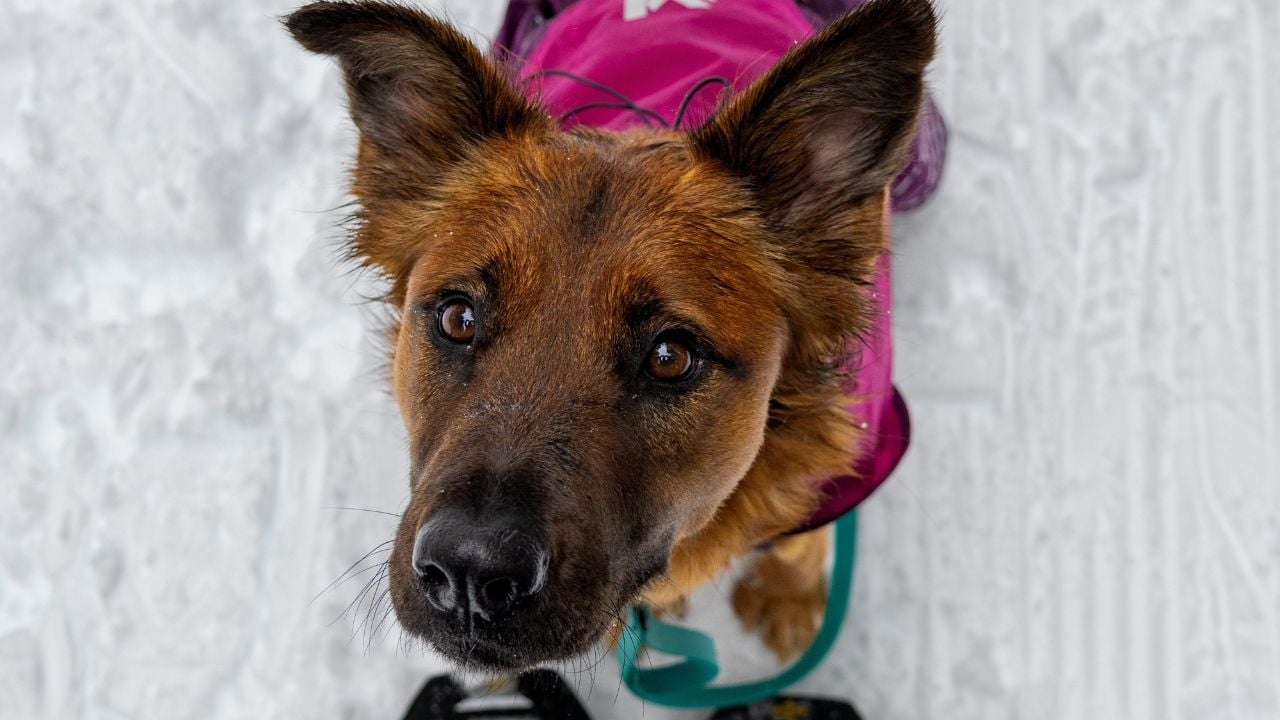
Not every dog handles a snowy trail the same way, since dogs have varying degrees of cold tolerance depending on breed, age and coat length, among other things, Willoughby writes.
The AVMA says short-haired dogs feel the cold faster because they have less protection, while long-haired or thick-coated dogs tend to be more cold-tolerant but are still at risk.
The CSU Veterinary Health System says sight hounds like greyhounds and Italian greyhounds chill quickly, while northern breeds like Alaskan malamutes have thick coats.
A dog that’s normally housed in a warm environment might find cold temperatures a shock to its system.
Wet sweaters and coats can make a dog colder.
Keep several on hand and use a dry one each time your dog goes outside.
A sweater helps, but a water-resistant outdoor coat can help keep a dog warm and dry.
6. Delayed Frostbite
Frostbite can hide.
The AVMA says frostbite is harder to detect in dogs and may not be fully recognized until a few days after the damage is done.
The CSU Veterinary Health System says to watch for skin that turns bright red, pale or black.
Skin at the tips of the ears and on extremities is particularly at risk.
So check your dog’s ears and paws when you get home, and check again over the next few days.
7. Hypothermia Signs
Like people, dogs are susceptible to hypothermia.
The AVMA lists whining, shivering, anxiety, slowing down or stopping, weakness and looking for warm places to burrow as signs that a dog should be brought inside quickly.
Willoughby adds that a dog standing hunched with its tail down and ears back is no longer enjoying the hike.
Don’t be afraid to turn back if your dog starts to look uncomfortable.
The CSU Veterinary Health System says a dog that is shivering, acting disoriented and lethargic, or has hair puffed out and standing on end needs immediate veterinary attention.
The AVMA also says you’ll probably need to shorten your dog’s walks in very cold weather.
Leash and Trail Rules
You can bring a leashed dog into Rocky Mountain National Park only along established roads and in parking areas, campgrounds and picnic areas, with a six-foot leash at most.
Meadows and tundra are off-limits too.
A violation can bring a citation, a fine or a mandatory appearance before the United States Magistrate Court in Denver.
The park’s page lists trails in Arapaho and Roosevelt National Forest, multi-use trails around Estes Park and Larimer County Open Space areas as places to take a dog.
For winter, it lists the Grand Lake Recreation District’s Winter’s Way dog trails and says dogs must stay on designated dog trails there.
In the Rawah, Comanche Peak, Neota and Cache la Poudre wildernesses, a Forest Service order generally requires a hand-held leash.
It took effect in May 2022 and stays in effect until rescinded.
CPW says to keep a dog on a leash of six feet or less in state parks, and some parks limit dogs to certain areas or trails.
Dogs may not be able to resist chasing deer, squirrels, other dogs or even children.
9 Things That Confuse Everyone Who Moves to Colorado

Whether you land in Denver for a job or a mountain town for the snow, you run into the same surprises.
These are the things that confuse newcomers once they arrive.
9 Things That Confuse Everyone Who Moves to Colorado
9 Things That Shut Down in a Colorado Mountain Town Between Seasons
Colorado’s mountain towns close for business between summer and ski season.
These are the things that shut down in a mountain town between seasons.
9 Things That Shut Down in a Colorado Mountain Town Between Seasons
