
7 Things Kansans and Missourians Still Argue About

Kansas and Missouri have been picking fights since the 1800s, and the arguments are still going.
Some are about sports. Others are about history that nobody’s agreed on yet.
Here are the debates that still come up whenever Kansans and Missourians get together.
1. Chiefs’ Stadium Move
The Chiefs are leaving Missouri for a new stadium in Wyandotte County, Kansas, and Missouri leaders have said they’re disappointed.
In December 2025, Kansas lawmakers approved a tax package to help the team build a $3 billion domed stadium in Wyandotte County.
If you’ve shopped at The Legends in the Village West development, you’ve been near the expected site.
State officials said public money would cover about 60% of the project, which also adds a new headquarters and training complex in Olathe.
The stadium is set to open at the start of the 2031 season.
Jackson County Executive Phil LeVota called the move deeply disappointing to the taxpayers of Missouri and Jackson County.
Missouri Gov. Mike Kehoe criticized the team’s decision to leave Arrowhead Stadium and said the state had offered a competitive package to keep the Chiefs.
Kansas City, Missouri, Mayor Quinton Lucas said the city, county and state offered more than $1.5 billion to keep the team.
The team’s lease at the Truman Sports Complex, home of Arrowhead, expires in 2031.
Many fans on both sides still argue over whether a Chiefs game in another state will feel like home.
2. Royals’ Ballpark
When Kansas approved the Chiefs’ package, the Royals were still weighing sites on both sides of the state line.
Jackson County voters had turned down a stadium sales tax extension in April 2024, a result that opened the door for other regions to pursue the teams.
On Jan. 27, 2026, the Royals dropped the Overland Park stadium idea.
Kansas City, Missouri, unveiled a plan on April 14 for up to $600 million in city funding toward a $1.9 billion stadium and district.
On April 22, the Royals announced a stadium and ballpark district near Crown Center and Washington Square Park in Kansas City, Missouri.
That keeps the Royals in Kansas City, Missouri, rather than Overland Park.
3. 1960 Football Game
On Nov. 19, 1960, Kansas beat top-ranked Missouri 23-7.
On Dec. 8, the Big Eight voted 5-3 to strip Kansas of its conference title and its wins over Colorado and Missouri.
The Big Eight required Kansas to forfeit because it had fielded an ineligible player.
The forfeit angered many fans.
Because Kansas forfeited, Missouri’s 2004 media guide listed the game as a Missouri victory, scored 7-23, with an asterisk.
Kansas’s guide listed it as a 23-7 win, also with an asterisk.
Mizzou lists its record that season as 11-0 counting the forfeit, though on the field it was 10-1, and the team won the Orange Bowl over Navy.
In August 2026, the U.S. Senate passed a resolution recognizing the 1960 Missouri team’s claim to the national title.
Senate resolutions don’t carry the force of law, and the university had not claimed the title itself at that point.
On Aug. 28, Mizzou Athletics announced it would recognize the 1960 team as national champions.
The team was honored at a halftime ceremony on Sept. 19, during Missouri’s game against Troy.
4. Border War Name
On Oct. 4, 2004, university officials renamed the series the Border Showdown, covering volleyball, soccer, football, basketball, baseball and softball.
The University of Kansas (KU) athletic director said using the word war for college games was inappropriate after September 11, 2001.
Student senators at both schools planned a joint push to restore Border War later that month.
The football series was on hold for over a decade before the 2025 game in Columbia, which Missouri won 42-31.
Missouri beat Kansas 38-21 in Lawrence on Sept. 11, 2026, its second straight football win over the Jayhawks.
Many fans kept saying Border War anyway.
Psst! How much do you know about Kansas and Missouri history? Take our quiz and see if you can ace it.
Quiz
Kansas and Missouri IQ
Answer nine questions on the people, places and firsts on both sides of the state line. We bet you can’t get them all right. Prove us wrong?
Dwight Eisenhower is remembered as a Kansan. In which state was he born?
5. Basketball Rivalry Pause
The last regular-season game between Kansas and Missouri was played on Feb. 25, 2012.
The schools had met 267 times by 2019, with Kansas leading 172-95.
When Missouri left the Big 12 Conference for the Southeastern Conference, Kansas opted to end the series.
The teams met once in an exhibition before the 2017 season, which raised more than $2 million for hurricane relief.
In October 2019, they agreed to a six-game series.
The series start was pushed back by one season, to a Dec. 11, 2021, game at Allen Fieldhouse in Lawrence.
The final scheduled game of the six-game series is set for Dec. 6, 2026, at T-Mobile Center in Kansas City, Missouri.
Missouri is the designated home team for that game.
6. General Order No. 11
On Aug. 21, 1863, Quantrill's guerrillas rode into Lawrence and killed between 160 and 190 men and boys.
Four days later, Union General Thomas Ewing issued General Order No. 11.
It required residents of Jackson, Cass, Bates and northern Vernon counties in western Missouri to leave within fifteen days, except in certain areas near Union posts.
Several thousand people were exiled from their homes.
The resulting desolation led observers to call Cass and Bates counties the Burnt District.
Many defenders noted that guerrilla violence dropped in the affected counties.
Critics said the policy caused undue hardship for women, children and several Unionist households.
The painter George Caleb Bingham put the policy on canvas in Martial Law (or Order No. 11).
7. Jayhawker Label
The Jayhawk carried a double meaning from the beginning, according to KU's history site.
The Jayhawk stood for the fight against slavery, but for many it meant grabbing the property of proslavery enemies.
Before the Civil War, jayhawkers were bands tied to the Kansas Free-State cause who rustled livestock and stole property on both sides of the state line.
When the war began, those units joined the federal army as Union regiments calling themselves Jayhawkers.
Many self-professed jayhawkers considered all Missourians, civilians included, to be the enemy.
In September 1861, James Lane led Kansas troops on a raid of Osceola, Missouri.
The raiders left a $1 million swath of damaged and stolen property, then burned the town.
Quantrill's guerrillas likely sought retribution for attacks like that when they raided Lawrence in 1863, a raid that killed men and boys.
KU students adopted the Jayhawk image in the 1880s and paired it with a rock chalk chant.
The KU campus still has Lane's stable, its oldest building and the only Lane building that survived Quantrill's raid.
5 Things Kansans Do Every Year Once Wheat Harvest Starts
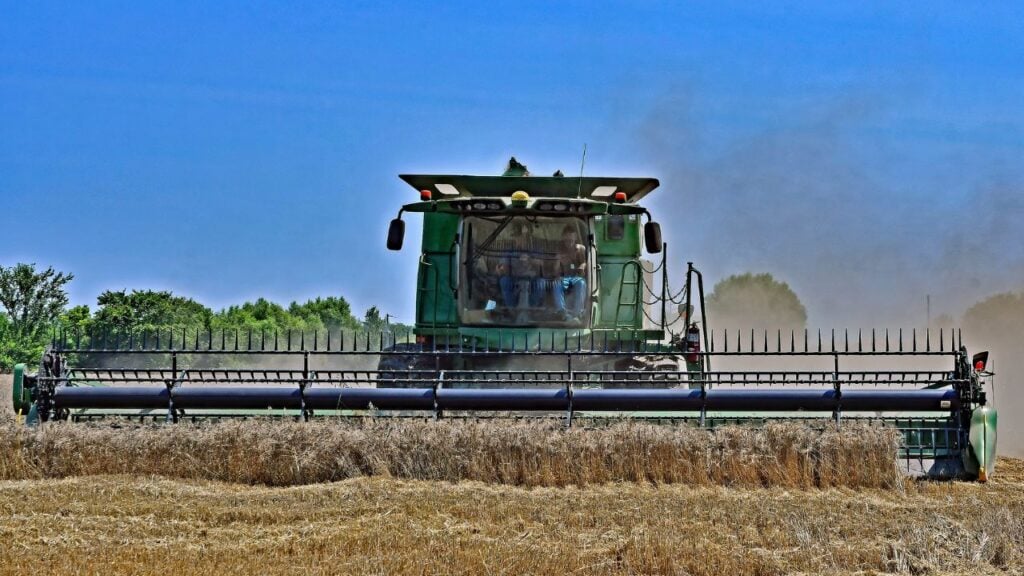
Wheat harvest is a big deal in Kansas.
These are the things Kansans do every year once wheat harvest starts.
5 Things Kansans Do Every Year Once Wheat Harvest Starts
5 Reasons a Kansan Won't Buy a Bierock Out of State
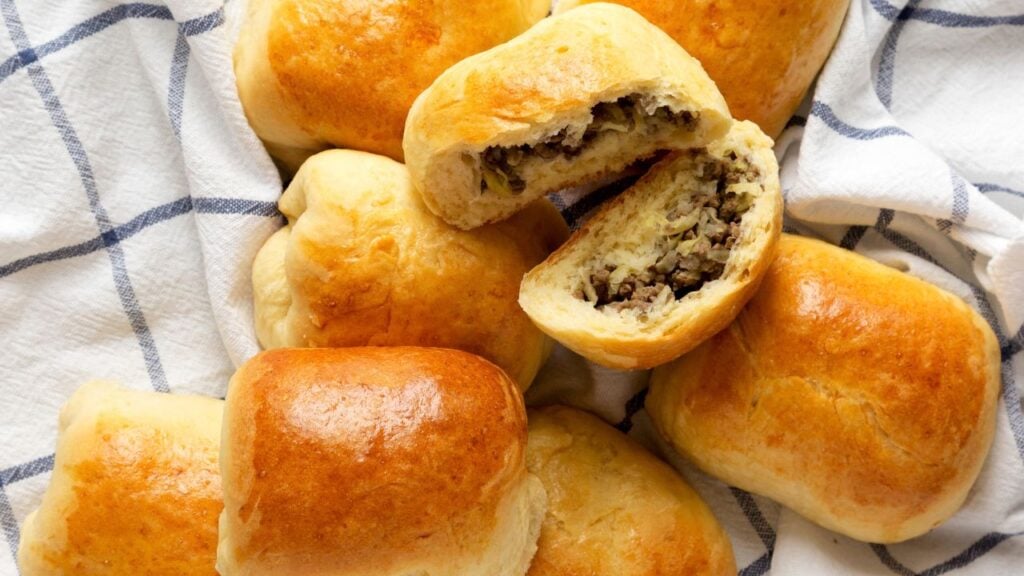
Spotting something that reminds you of home on a menu should be good news.
These are the reasons a Kansan won't buy a bierock out of state.
