

6 Sounds Many Tennessee Kids Grew Up Hearing

Hear “Rocky Top” from the stands, and if you’re from Tennessee, you’re probably singing along.
Sounds like that stay with you long after you’re grown.
Here are the sounds many Tennessee kids grew up hearing.
1. Mockingbirds All Day
The mockingbird has been Tennessee’s state bird since 1933, and its song is a hard one to tune out.
Mockingbirds sing all day, and often into the night.
Nighttime singing is more common during a full moon.
A mockingbird usually imitates several other birds in a single song, so one bird in your yard can sound like a small flock.
Mockingbirds sing from the tops of shrubs, trees, fences and utility lines.
Suburban areas and parkland are common places to find one.
The singing season typically runs from February through August, then starts up again from September to early November.
Your window screen didn’t help.
Many kids fell asleep to it anyway.
2. Saturday Night on WSM
The Saturday-night show on Nashville radio station WSM dates to 1925, when the station began airing a regular barn dance of old-time tunes.
In 1927, the show took the name Grand Ole Opry.
Country music’s recording roots run to Bristol, where recordings made in August 1927 launched the careers of the Carter Family and Jimmie Rodgers, according to a 1998 congressional resolution.
Bristol, Tennessee, and Bristol, Virginia, were recognized as the birthplace of country music.
Two cities share the title.
Those two acts were the first widely known country music artists in the nation.
Then came the network.
By 1939, the Opry had a slot on the nationwide National Broadcasting Company (NBC) network.
If a radio was on in your house on weekend nights, you might have heard it long before you knew who was playing, and many kids did.
3. “Rocky Top” in the Stands
“Rocky Top” has been an official Tennessee state song since 1982.
The University of Tennessee’s bands play it at every Volunteers sporting event.
It’s hard to miss.
Boudleaux and Felice Bryant wrote the song in 1967, and it has also become a popular university fight song.
If you’ve sat through a Volunteers game, you’ve heard it, and many kids learned the words right there in the stands.
Psst! How much do you know about Tennessee? Take our quiz and see if you can ace it.
Quiz
Tennessee Sound Check
Answer nine questions on Tennessee’s symbols, songs and sounds. We bet you can’t get them all right. Prove us wrong?
Tennessee named an official state gem in 1979. Which one is it?
4. Spring Peepers
Spring peepers make a high-pitched whistle that sounds like peep, peep, peep.
The frogs live statewide, near water that's either temporary or semi-permanent.
Peepers are tiny.
The upland chorus frog is the earliest breeding frog in Tennessee.
Its call sounds like someone dragging a thumbnail over the teeth of a comb.
Spring peepers aren't far behind.
On an occasional warm January day, a couple of frog species can start calling.
If you live near a pond or a ditch, you might hear frogs calling on a warm January evening.
Many kids heard peepers from a creek bank long before they knew the frogs' name.
5. Train Horns at the Crossing
Federal rules have railroads sound the horn 15 to 20 seconds before a train reaches a highway-rail crossing.
The standard pattern is two long blasts, one short and one long.
The locomotive repeats that pattern until it occupies the crossing.
The Federal Railroad Administration's current horn rule took effect on June 24, 2005.
Local authorities can set up zones where horns aren't routinely sounded.
It's hard to mistake.
If tracks ran near your house, you might have heard that pattern at night, and many kids did.
6. Horns at the Dam
Tennessee Valley Authority (TVA) says its dam horns sound before water is released.
The Tennessee River system has 29 power-generating dams run by TVA.
A dam can release a large amount of water with little warning at any time.
The horn tells you, and anyone else upstream or downstream, to leave the area immediately.
Separate advice covers boaters, paddlers and swimmers.
You don't wait around.
Many kids who grew up boating or swimming near a dam learned what that horn means.
TVA's Other Dam Warnings
TVA uses five-layered warning systems at its dams, and the horn sound is only one layer.
Strobe lights flash before and during a water release from a hydroelectric plant.
Electronic spillway signs combine strobes and horns, and they activate before and during a spillway water release.
Buoys warn approaching boats that a dam is ahead.
Also stay alert for sirens or lights that warn of a water release.
Tennessee's 11 State Songs, Including a Rap
Tennessee's state songs page lists 11 titles, and "Rocky Top" is only one of them.
Tennessee adopted "My Tennessee" as its official public school song in 1955.
If you went to a public school in Tennessee, you had an official school song whether or not your class ever sang it.
The "Tennessee Waltz" joined the list in 1965, written by Redd Stewart and composed by Pee Wee King.
The state adopted "A Tennessee Bicentennial Rap: 1796-1996" in 1996.
It's a rap.
"Smoky Mountain Rain" joined in 2010, and "Under A Tennessee Moon" joined in 2024.
9 Everyday Words That Mean Something Else Once You Cross Into Tennessee

You know what a bag, a shopping cart and a winter hat are called.
In Tennessee, those familiar words can come with a different vocabulary.
9 Everyday Words That Mean Something Else Once You Cross Into Tennessee
4 Tennessee Dishes Younger Tennesseans Rarely Learn to Make
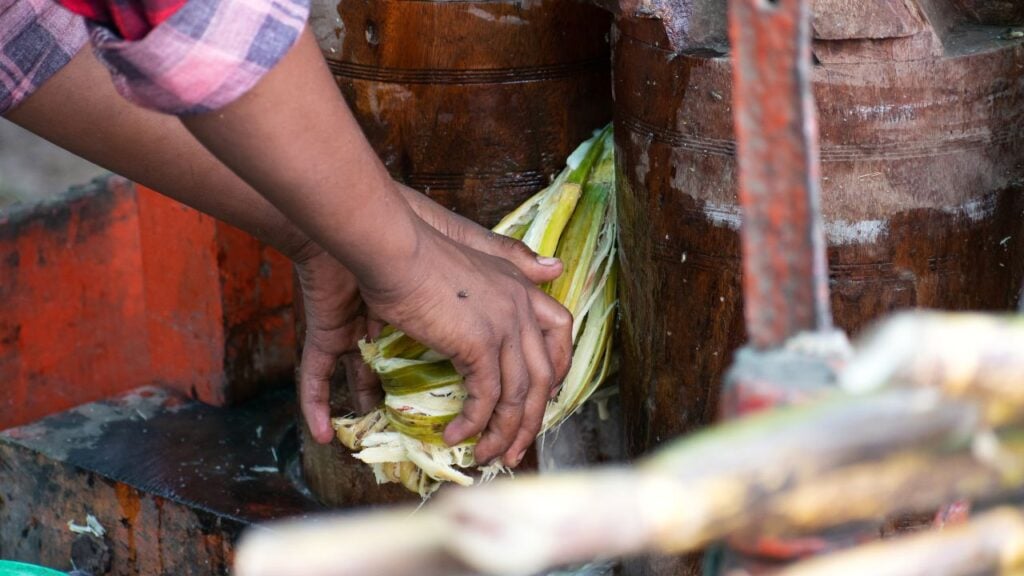
Do you know how to turn raw sorghum cane into molasses?
These are the Tennessee dishes younger Tennesseans rarely learn to make.
