

11 Things Snowbirds Say in Their First Week Back That Floridians Are Tired of Hearing

Somewhere in Florida this week, a snowbird is pointing at a pond and asking, “Is that an alligator?”
Here’s what snowbirds say in their first week back that Floridians get tired of hearing.
Note: This is general information, not legal or insurance advice. Rules, fees and plan terms are subject to change.
1. Hurricane Season’s End
Snowbirds often open their first week back by asking whether hurricane season is over.
Officially, not until November 30.
The National Hurricane Center lists the Atlantic season as June 1 to November 30, and storms sometimes form outside those dates.
2. Left-Lane Law
Some snowbirds wonder why the drivers behind them are in such a hurry.
The lane may matter.
On a road with two or more lanes going the same direction, Florida law bars you from staying in the far left lane.
That applies once you know, or reasonably should know, that a faster vehicle is coming up behind you.
Passing another car and preparing for a left turn at an intersection are the exceptions.
A violation is a noncriminal traffic infraction, punishable as a moving violation.
3. E-ZPass on the Turnpike
Driving down from up north, many snowbirds ask whether their E-ZPass works on Florida’s Turnpike.
In 2021, Florida’s Turnpike Enterprise began accepting E-ZPass on its toll roads.
The change reached E-ZPass customers from the East Coast to as far west as Illinois.
That’s a yes.
4. Menu Price Hikes
The first restaurant check back often leaves snowbirds asking whether prices went up.
Nationally, they did.
The food away from home index rose 3.4% over the 12 months through August 2026, according to the Bureau of Labor Statistics.
Florida’s minimum wage rose to $15 an hour on September 30, 2026.
It’s the last of the fixed yearly $1 steps that a state constitutional amendment set.
The tipped minimum cash wage rose to $11.98 an hour.
5. Beach Parking Costs
At the beach, some snowbirds go looking for the pay station.
It depends on the beach.
At Siesta Beach in Sarasota County, parking is free in the main lot, which is open from 6 a.m. to 10 p.m.
In Clearwater, standard beach lots run $3.50 an hour.
Visit Sarasota says the Siesta Key lots fill fast in peak season, January through April, and advises arriving as early as possible.
6. Higher Condo Fees
Snowbirds who own a condo often start the season by asking why the monthly bill looks bigger.
Reserves are worth a look.
Florida law requires condo associations in buildings three habitable stories or higher to keep reserves for major building items.
For budgets adopted on or after December 31, 2024, owners in those buildings can no longer vote to provide no reserves or less for those items.
What a Condo Reserve Study Covers
A Florida condo’s structural integrity reserve study covers the roof, structure, fireproofing, plumbing and electrical systems.
It also covers waterproofing and exterior painting, plus windows and exterior doors.
Any other item that affects those systems and has a deferred maintenance expense or replacement cost above $25,000 (or the inflation-adjusted amount) is included too.
7. Medicare Plan Coverage
Lots of snowbirds on Medicare ask whether their plan still covers them once they’re back in Florida.
That depends on the plan.
Original Medicare covers care anywhere in the U.S.
A Medicare Advantage plan works from a service area, so it may not cover care outside that area.
Emergency and urgent care are the exception, since Advantage plans must cover both anywhere in the U.S.
After more than six months in a row outside a plan’s service area, many plans disenroll you.
8. Swapping for a Florida License
Some snowbirds ask in their first week back whether it’s time to swap a home-state license for a Florida one.
Florida law lets a nonresident who’s at least 18 drive here on a valid noncommercial license from their home state.
Residency changes that.
The Pinellas County Tax Collector says new residents must get a Florida license within 30 days of establishing residency.
When you make the switch, you surrender your old license at your appointment and bring two proofs of address.
9. Short-Term Fishing Licenses
Snowbirds who fish often ask whether they can buy a short-term license online.
Nonresidents can again.
The Florida Fish and Wildlife Conservation Commission (FWC) stopped selling three-day and seven-day fishing licenses online or by phone on November 7, 2025.
Since May 21, 2026, nonresidents have been able to buy three-day and seven-day saltwater and freshwater licenses at GoOutdoorsFlorida.com again.
More than 700 locations statewide, including Walmart, also sell licenses in person.
10. Red Tide Season
Snowbirds scanning the Gulf shoreline often ask whether the red tide is gone.
It could be just arriving.
The National Oceanic and Atmospheric Administration says red tide blooms typically start in late summer or early fall.
They occur almost annually along portions of Florida’s Gulf Coast.
FWC updates its red tide sample map every day at 5 p.m., so you can check before you go.
Psst! How much do you know about snowbird season? Take our quiz and see if you can ace it.
Quiz
Snowbird Season Trivia
Answer these questions on storms, tolls, licenses and crowds. We bet you can’t get them all right. Prove us wrong?
The National Hurricane Center lists which date as the climatological peak of the Atlantic hurricane season?
11. Alligator Sightings
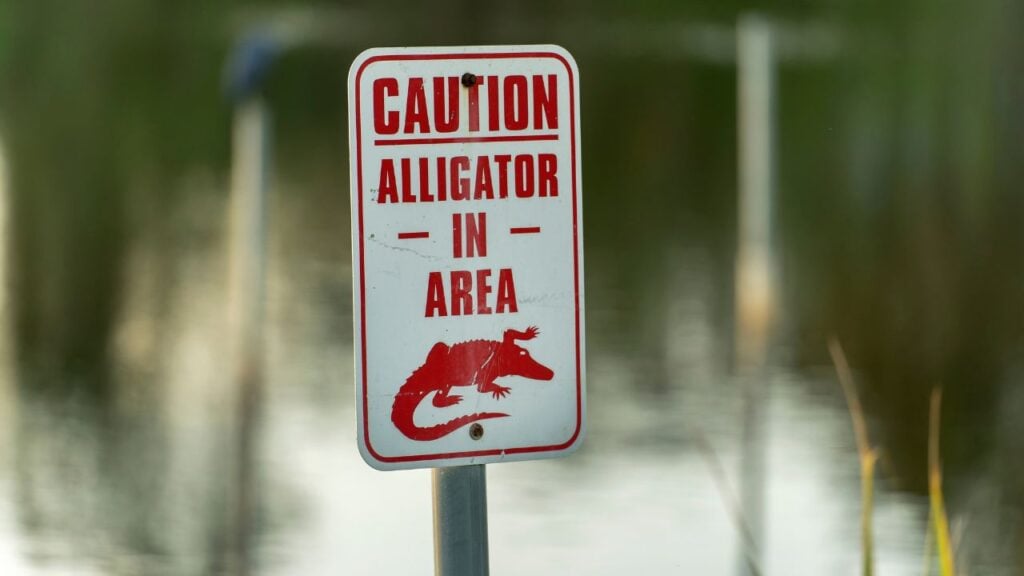
Snowbirds who spot a long, dark shape at the edge of a pond often ask whether it's an alligator.
Probably, yes.
FWC estimates about 1.3 million alligators of every size live in the state.
Alligators live in all 67 Florida counties.
If a pond sits behind your house, you've probably met a few.
Never feed an alligator because it's illegal and dangerous.
13 Things Floridians Never Have to Explain to Each Other
Floridians check the sky on summer afternoons without a second thought.
Out-of-staters need the whole story.
13 Things Floridians Never Have to Explain to Each Other
12 Words Floridians Used in the 1970s That Make No Sense Today
Long before texting shrank slang into acronyms, Floridians spent a whole decade talking in words nobody had to define.
Many of them didn't last.
12 Words Floridians Used in the 1970s That Make No Sense Today
