
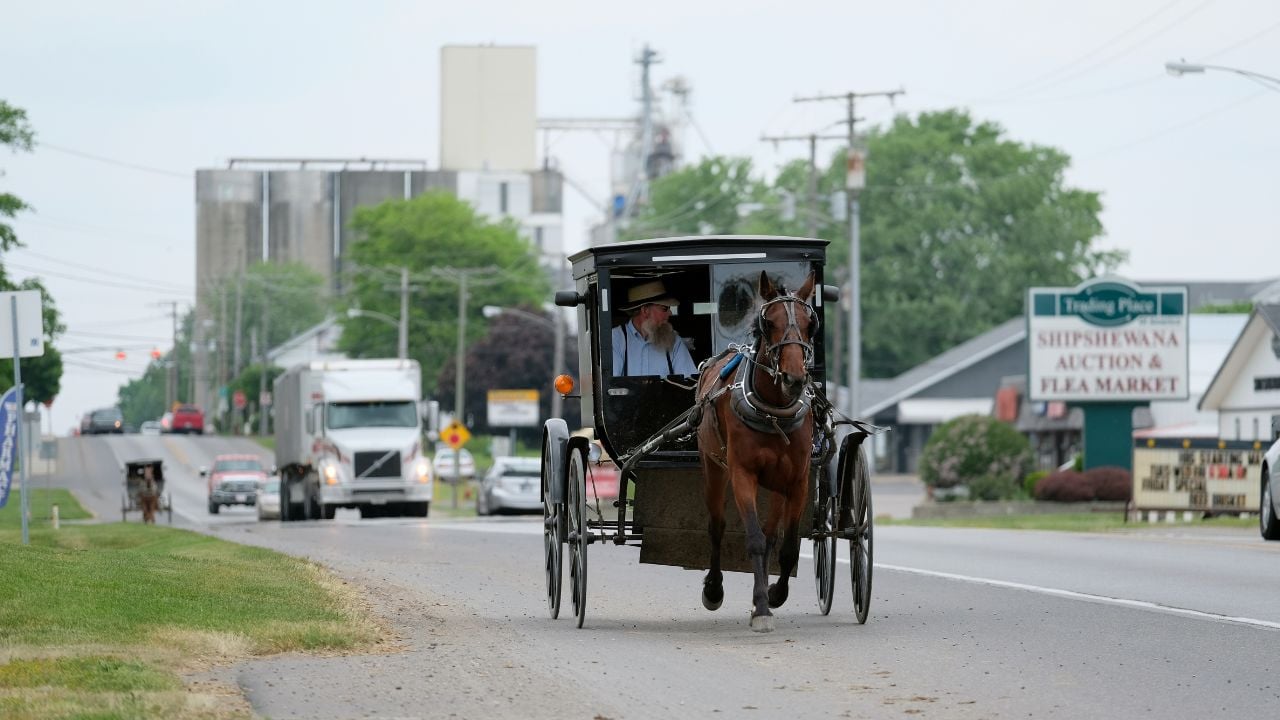
5 Indiana Buggy Laws Drivers Don’t Learn Until They Meet One on the Road

After dark, a buggy on an Indiana road has to show a flashing lamp along with its triangle.
Hoosiers in buggy country know to watch for it.
Drivers from elsewhere might not.
Here are the Indiana buggy laws drivers don’t learn until they meet one on the road.
Note: This is general information, not legal advice. Traffic and equipment rules are subject to change, so confirm the current requirements with the Indiana Bureau of Motor Vehicles.
1. Equal Rights and Duties
A buggy driver has the same legal standing you do behind the wheel.
The Bureau of Motor Vehicles’ driver’s manual says anyone driving a horse-drawn vehicle has the same rights and responsibilities a motor vehicle driver does.
Indiana’s traffic code treats a person driving an animal that pulls a vehicle on a roadway as a vehicle driver.
The code skips any rule that can’t apply to a driver on a buggy.
The code’s term is “animal-drawn vehicle,” which covers a buggy.
If you’re behind a buggy, you’re following a driver, not an obstacle.
2. Emblem Placement
A buggy falls under Indiana’s slow-moving vehicle chapter, which lists animal-drawn vehicles alongside pulled, towed and self-propelled ones.
That chapter calls for a triangular emblem mounted between two and ten feet above the ground or pavement.
It has to sit near the vehicle’s center of mass wherever that’s practical.
And it has to be visible in full from the rear, day or night.
When you see the triangle, you’re closing on a vehicle that isn’t ordinarily driven faster than 25 miles per hour.
Design Behind a Buggy’s Triangle
The emblem on a buggy is a triangle with a fluorescent orange center and three reflective borders.
Ohio State University’s agricultural safety program describes a 12-inch center and three borders, each 1¾ inches wide.
Indiana’s code ties the emblem and its mounting to the recommendations of three national groups.
Those groups are the American Society of Agricultural and Biological Engineers, the American National Standards Institute, and the Society of Automotive Engineers.
3. Flashing Lamp Rule
Once lighted lamps are required, a buggy has to show a red or amber flashing lamp in addition to its triangle.
The lamp has to be mounted as low on the vehicle as is practical and visible from at least 500 feet to the rear.
Lighting hours run from sunset to sunrise, and they also begin whenever poor light or bad weather keeps you from clearly seeing people and vehicles 500 feet ahead.
So if a storm has you reaching for your headlights at midday, a buggy’s flashing lamp may be required too.
4. Red Rear Reflectors
A buggy needs at least two red reflectors on the rear because Indiana’s equipment rules name the animal-drawn vehicle.
Those reflectors have to be visible from 100 to 600 feet back in a car’s upper beams, at the same times the flashing lamp is required.
A reflector only shines when your headlights reach it, so keep your eyes up on dark county roads.
Psst! How much do you know about Amish country and sharing rural roads? Take our quiz and see if you can ace it.
Quiz
Country Road Know-How
Answer these questions on Amish settlements and rural-road safety. We bet you can’t get them all right. Prove us wrong?
Of the twelve largest Amish settlements in the United States, how many are in Indiana?
5. County Buggy Plates
Some Indiana counties require a plate on a buggy.
In January 2023, LaGrange County commissioners raised the yearly buggy plate fee from $100 to $200.
The report says the fee was set to rise another $10 a year for ten years, with the money going to road repairs. If the schedule holds, the yearly fee reaches $300.
DeKalb County's ordinance, which took effect in 2023, called for a $200 plate fee on horse-drawn vehicles and excluded horse-drawn farm implements.
Commissioners in each county set these terms, so the plate rules you see in one county can change in the next.
Misuse of the Emblem
A buggy's triangle isn't for other uses. The chapter bans the emblem on any other type of vehicle, or on a stationary object on or along a highway.
If you break the chapter, it's a Class C infraction.
Red flags are the exception the chapter spells out: it says it can't be read to prohibit them.
The chapter also leaves out several other slow vehicles, including golf carts, off-road vehicles, motor-driven cycles and electric foot scooters.
Your city, county or town can still require golf carts and off-road vehicles to show the emblem or a red or amber flashing lamp.
When You Meet a Buggy
Approach a buggy with caution and watch its driver for hand signals.
The traffic code spells out three arm signals.
An arm held out horizontally means a left turn.
A raised arm means a right turn, and a lowered arm means the driver is stopping or slowing down.
If you pass, Indiana's overtaking rule has you go around on the left at a safe distance and wait to move back right until you're safely clear.
The driver you're passing can't speed up until you're completely past.
The three-foot gap in that rule names only bicycles and electric bicycles.
The code also bars passing on the left within 100 feet of an intersection or railroad crossing.
When you pass on the left, be back on the right before you come within 100 feet of an oncoming vehicle.
8 Legal Steps Hoosiers Have to Take Before Claiming an Abandoned Vehicle
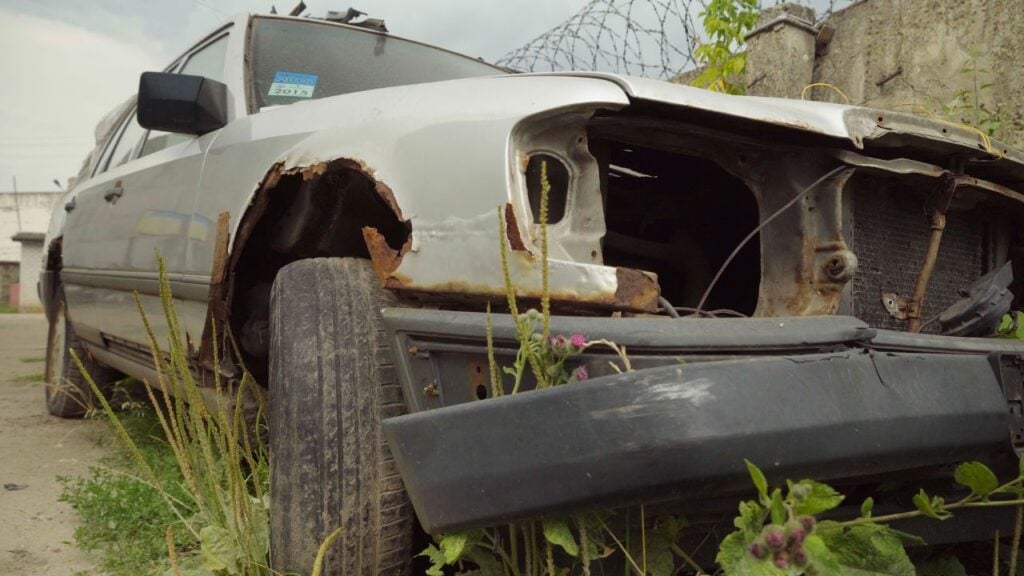
A car that sits on your property for weeks isn't always abandoned.
That post walks through the legal steps Indiana expects first.
8 Legal Steps Hoosiers Have to Take Before Claiming an Abandoned Vehicle
9 Things That Change the Second You Cross From Indiana Into Illinois
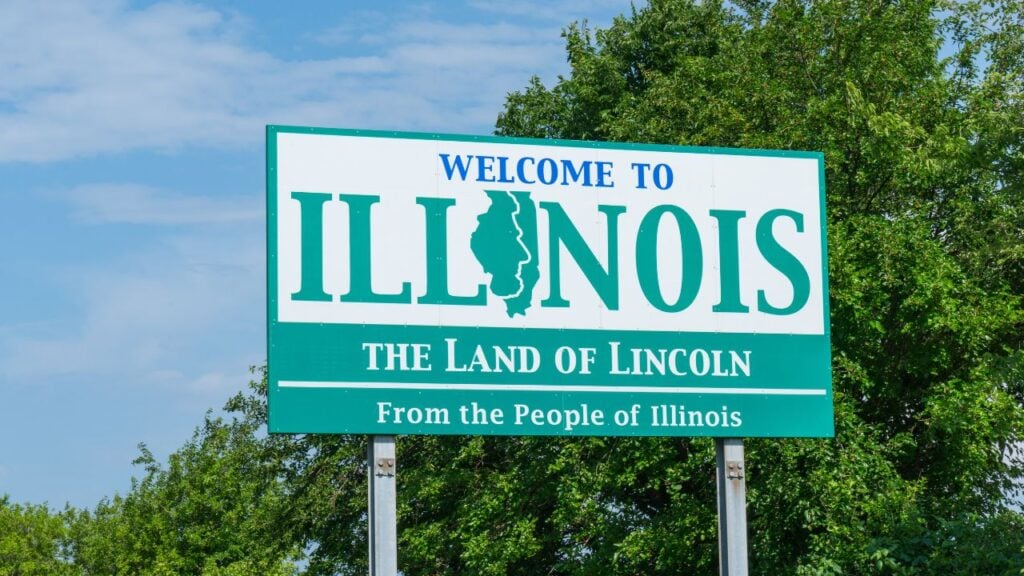
Cross the state line into Illinois, and a few everyday errands start working differently.
Some of the changes may catch you off guard.
9 Things That Change the Second You Cross From Indiana Into Illinois
