
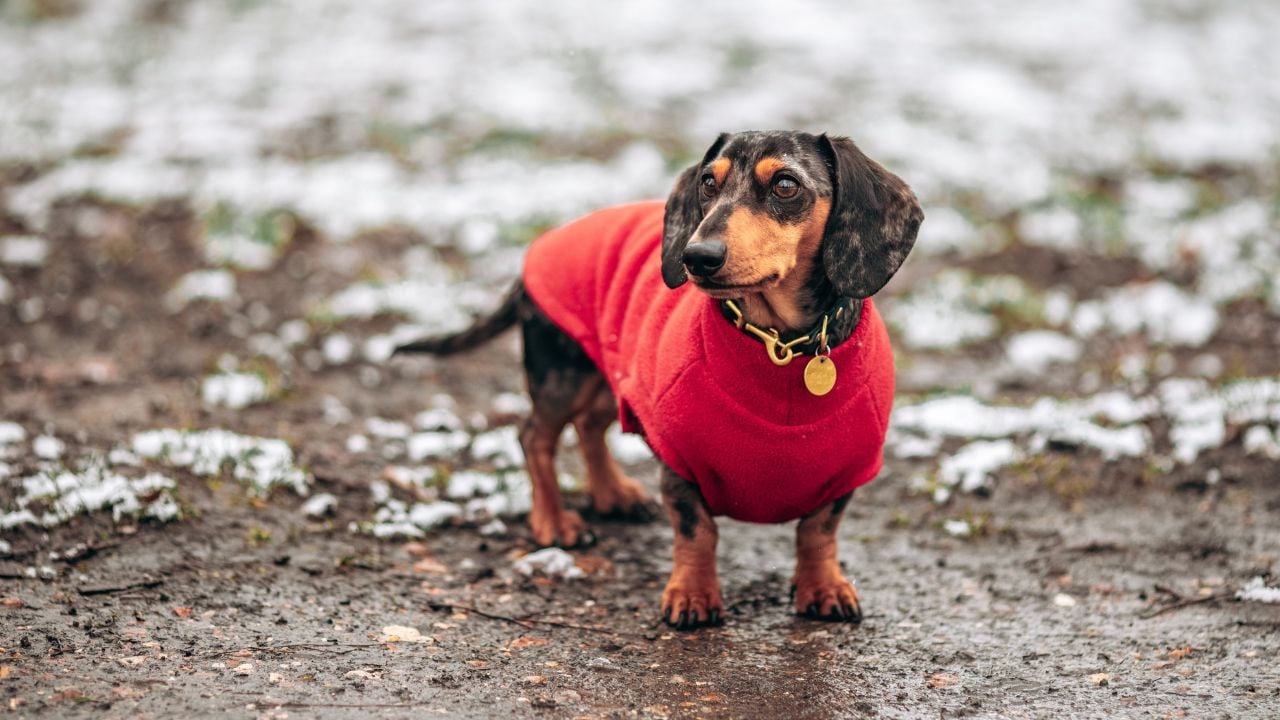
3 Cold-Weather Dog Rules That Can Get Pennsylvanians Cited

A frozen water bowl doesn’t count as giving your dog water, even if it was in liquid form that morning when you refilled it.
That’s one of the cold-weather rules that can lead to a citation once temperatures drop.
Here are the cold-weather dog rules that can get Pennsylvanians cited.
Note: This is general information, not legal advice. Animal cruelty laws are subject to change.
1. 30-Minute Freeze Limit
Once the temperature falls below 32 degrees Fahrenheit, a tethered dog left outside without you has a 30-minute limit.
Go past it, and the law no longer presumes you haven’t neglected the dog.
That presumption comes from Pennsylvania’s tethering law, known as Libre’s Law.
The presumption is rebuttable, and it applies only when you meet every condition in the law.
One of those conditions holds in every season. The dog has to be tethered for less than nine hours within a 24-hour period.
A dog tied out through a long freezing night can fail both conditions at once.
Neglect with no injury or imminent risk to the dog is a summary offense.
A conviction can bring a fine of $50 to $750, up to 90 days of imprisonment, or both.
2. Shelter That Holds Body Heat
Pennsylvania’s neglect law says the shelter for a dog in your care has to let the animal retain body heat and stay dry.
The same section requires clean, sanitary shelter that protects the dog from the weather.
That duty covers a dog you’re caring for, even when it belongs to somebody else.
Failing to provide that shelter counts as neglect.
Psst! How much do you know about keeping dogs safe in winter? Take our quiz and see if you can ace it.
Quiz
Winter Dog IQ
Answer these questions on dogs, frost, and winter hazards. We bet you can’t get them all right. Prove us wrong?
What is the smallest amount of antifreeze that Washington State University’s veterinary hospital says can kill a medium-sized dog?
3. Potable Water
An officer with the Pennsylvania Society for the Prevention of Cruelty to Animals told FOX 29 that when a dog's water is frozen, the dog can't drink it.
The neglect law lists potable water and necessary sustenance among the things you have to provide to a dog in your care.
Potable means safe to drink.
The tethering conditions repeat the point, since a tethered dog needs access to potable water for the presumption of no neglect to apply.
The water duty applies in every season, not only in winter.
Who Enforces Dog Neglect Rules
Agents of humane societies can enforce Pennsylvania's dog neglect rules, and the law gives them the same powers as police officers to start criminal cases.
The Pennsylvania Department of Agriculture says its Bureau of Dog Law Enforcement has no jurisdiction over animal cruelty.
Dog wardens who suspect cruelty refer the case to a humane society police officer or a police officer.
Imminent Risk Without Injury
A dog doesn't have to be hurt before neglect becomes a misdemeanor.
Neglect moves from a summary offense to a third-degree misdemeanor when the violation puts the animal at imminent risk of serious bodily injury.
If a violation puts your dog at that risk, you can face the higher grade without any injury.
A violation that causes bodily injury to the animal carries the same grade.
The law counts bodily injury as any impairment of physical condition or substantial pain.
Intentional Neglect as a Felony
If you intentionally or knowingly neglect a dog and it suffers serious bodily injury or dies, the charge is a felony of the third degree.
That charge turns on what you knew and what happened to the dog, not on the weather.
Fenced Yards and Loose Dogs
The tethering window in Libre's Law covers a dog tied out, not a dog loose in your fenced yard.
That dog still falls under the neglect law's duties for necessary sustenance, potable water, shelter and veterinary care.
A fence doesn't change that.
If you keep your dog outside in the cold without a tether, you owe it the same dry, body-heat-holding shelter.
Other Tether Conditions
Time and temperature aren't the only conditions behind the presumption that you haven't neglected a tethered dog.
Your tether has to be of a type commonly used for the size and breed of dog.
It also has to be at least three times the dog's length from nose to base of tail, or 10 feet, whichever is longer.
The tether has to attach to a well-fitted collar or harness by a swivel or similar mechanism designed to prevent the dog from becoming entangled.
A tow or log chain, or a choke, pinch, prong or chain collar, creates a rebuttable presumption of neglect instead.
Excessive waste where the dog is tethered, or open sores or wounds on the dog, creates the same presumption.
Tethering Exceptions
The tethering rules come with four exceptions written into the law.
You aren't barred from tethering a dog during lawful hunting, exhibition, performance events or field training.
A hunting, sporting or sledding breed can also be tethered where tethering is integral to the dog's training, conditioning or purpose.
You can also tether your dog in compliance with the requirements of a camping or recreational area.
The fourth lets you tether a dog for up to one hour when it's reasonably necessary for the dog or the person to complete a temporary task.
Forfeiture and Ownership Bans
For a felony conviction, the sentencing court must order forfeiture or surrender of an abused or neglected animal, which can mean losing your dog.
If you're convicted, a court can also prohibit or limit your ownership, possession or custody of animals.
Humane society police officers, law enforcement officers and State dog wardens have the authority to ensure compliance with a court's ownership ban.
9 Pet-Related Disagreements That Turn Pennsylvania Neighbors Against Each Other
Pet disputes between neighbors can often get serious fast.
These are the pet-related disagreements that often turn Pennsylvania neighbors against each other.
9 Pet-Related Disagreements That Turn Pennsylvania Neighbors Against Each Other
9 Things Pennsylvanians Know About Winter That Transplants Learn the Hard Way
Pennsylvania's winters don't follow anyone else's calendar.
These are the things many Pennsylvanians know about winter that transplants learn the hard way.
9 Things Pennsylvanians Know About Winter That Transplants Learn the Hard Way
