
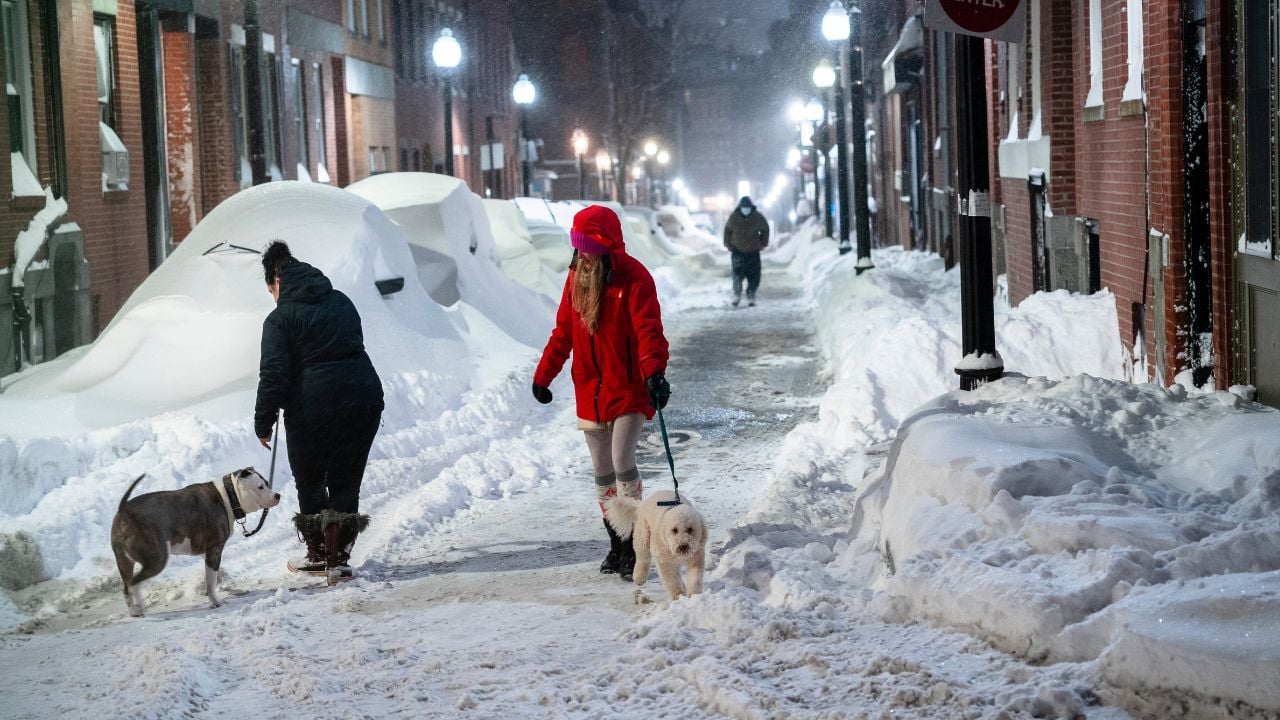
6 Things Bay Staters Know About Nor’easters That Out-of-Staters Don’t

If a municipal utility powers your home, the state’s outage map won’t show you.
Bay Staters who’ve ridden out a few nor’easters learn details like that the hard way.
Here’s what Bay Staters know about nor’easters that out-of-staters don’t.
Note: This is general information, not legal or insurance advice. Emergency orders and coverage terms are subject to change, so check the specifics with your insurer or agent.
1. Season Dates
Nor’easter season in Massachusetts starts in October, and it typically runs through April, according to the state’s coastal zone office.
The state emergency management agency puts the end in May.
Between them, the two agencies cover October through May.
By November, you’re inside both windows.
2. Blizzard of ’78
The Blizzard of ’78 was a nor’easter that dropped 27.1 inches of snow on Boston on February 6 and 7.
The National Weather Service says it stalled off southern New England for nearly 36 hours.
Picture yours among the 3,500 stranded cars along Route 128.
Many locals still measure big storms against it, and many longtime neighbors have a story about it.
The storm paralyzed Boston and its suburbs for a week. Gov. Michael Dukakis’s travel ban lasted about as long.
Mass.gov says snow was less of an issue along the immediate coast, where tides topped with crashing waves damaged homes, roads and infrastructure.
A rookie with the Division of Marine Fisheries made his first storm damage assessments on the coast from Gloucester to Saugus.
Thousands of houses and businesses were destroyed or severely damaged.
It was arguably the Commonwealth’s “Storm of the 20th Century.”
3. Travel Bans
Bay State governors have used the same tool since.
Gov. Deval Patrick signed an executive order banning motor vehicle travel from 4 p.m. on February 8, 2013, until further notice.
In February 2026, Gov. Maura Healey ordered a ban on non-essential travel in Bristol, Plymouth and Barnstable counties during a blizzard.
If a ban is in effect, check whether your commute counts as an exempt trip.
Who the 2013 Travel Ban Exempted
Massachusetts’ February 2013 travel ban exempted public safety workers, public works workers, utility workers and the news media.
It also exempted health care workers traveling to and from work to provide essential health services.
Travel needed to deliver critical private sector services made the list too.
4. Record Tide
A nor’easter pushed Boston’s tide to its highest level on record in January 2018.
The National Weather Service put it at 15.16 feet, above the old record of 15.1 feet from the Blizzard of 1978. Boston has recorded tide levels since 1921.
Mass.gov says major tidal flooding begins at 13.6 feet in Boston and along the east-facing coast.
If you park or commute near the waterfront, check the tide chart along with the forecast.
A nor’easter can often last several days and affect multiple tide cycles.
5. April Fool’s Day Storm
The March 31 to April 1 nor’easter of 1997 put 25.4 inches of snow on Boston, the city’s greatest April snowstorm on record.
Some out-of-staters assume snow is over by spring.
You may still need your shovel in April.
Nearly 700,000 homes and businesses lost power across the Northeast.
6. Municipal Outage Gap
The state’s power outage map covers four power companies and leaves out municipal utilities, so if one serves your home, look up its phone number and contact it directly.
Mass.gov lists National Grid at 1-800-465-1212 and Eversource at 1-800-592-2000.
Unitil is at 888-301-7700, and Eversource’s western Massachusetts line is at 877-659-6326.
The map’s data comes from the utilities every 15 to 30 minutes.
Call your utility company to report an outage and get restoration information.
Call 2-1-1 for shelter locations and other disaster information.
Mass.gov says that when a traffic light is out, you treat the intersection as a four-way stop.
Don’t call 9-1-1 to report an outage or ask when the power will return, but call 9-1-1 for downed power lines.
Call 9-1-1 too if you depend on electric equipment and need medical assistance.
Psst! How much do you know about New England weather? Take our quiz and see how many you can get right.
Quiz
New England Weather IQ
Answer eight questions on New England storms, records, and safety. We bet you can’t get them all right. Prove us wrong?
During the Blizzard of ’78, what was the strongest wind gust recorded at Chatham on Cape Cod?
Flood Coverage Gaps
The state emergency management agency says flood losses typically aren't covered by renters or homeowners insurance policies.
Consider flood insurance.
If you live or work in a flood zone, a hurricane evacuation zone or an area prone to flooding, look up the Federal Emergency Management Agency's flood maps.
If you live in a coastal community, read the Homeowners Handbook to Prepare for Coastal Hazards.
7 Signs a Massachusetts Employer Is Going to Cut Your Remote Days, Based on Companies That've Already Done It

Your remote days may not be as safe as they feel.
These are the signs a Massachusetts employer is going to cut them, based on companies that've already done it.
7 Stop & Shop Habits That Cost Massachusetts Shoppers More Than They Save

Groceries are expensive enough without innocent habits making your bill worse.
These are the habits that can add up at the register.
7 Stop & Shop Habits That Cost Massachusetts Shoppers More Than They Save
