
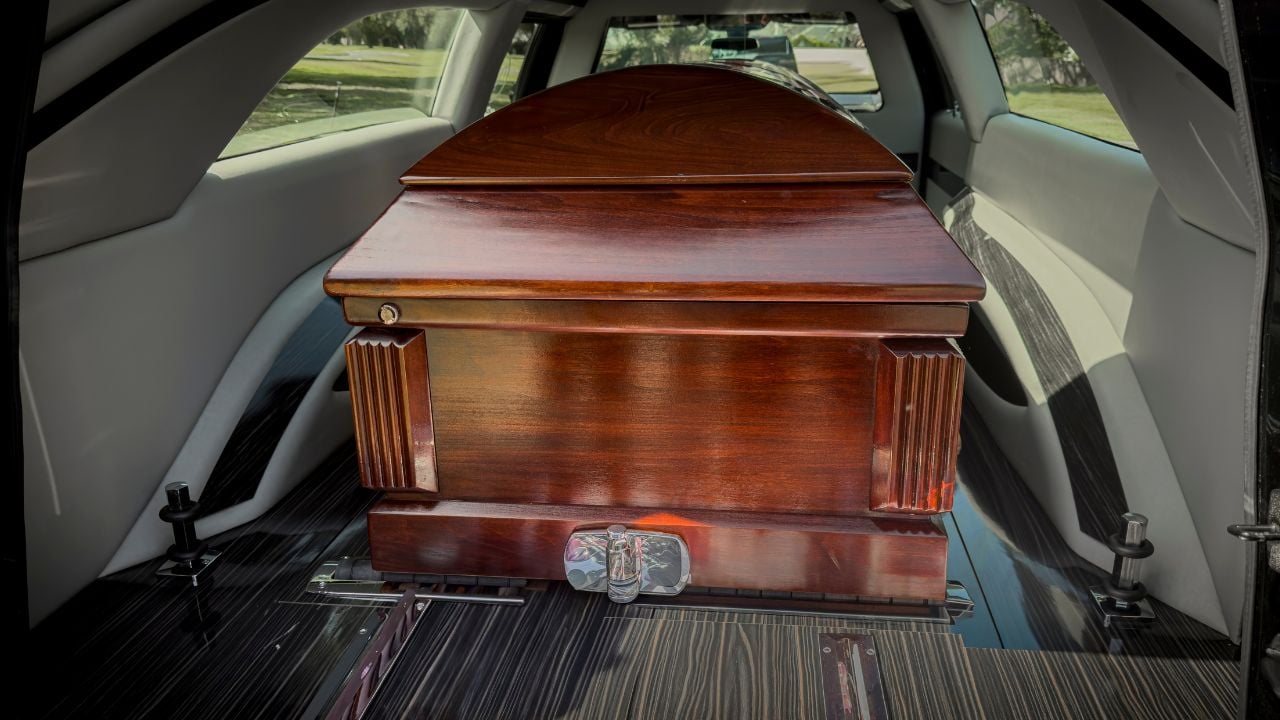
6 Alabama Funeral Procession Customs Drivers Get Wrong

Some funeral processions in Decatur have stretched as many as 40 cars.
Alabamians want to show respect, but the details of doing it right get fuzzy when you’re stuck at the light.
Here are the Alabama funeral procession customs drivers get wrong.
Note: This is general information, not legal advice. Traffic laws and city ordinances are subject to change and vary by city, so confirm the current rules with your local police department.
1. Pulling Over
Oncoming drivers often stop out of respect, but Alabama law doesn’t require it.
It’s a courtesy you extend.
Guidance from the National Funeral Directors Association (NFDA) asks other drivers to yield the right-of-way and pull over if possible.
An Alabama newspaper columnist described the Southern habit of pulling over to the shoulder, turning off the radio and sometimes stepping out of the car.
If you’re on a road with no shoulder, slowing down and letting the line pass is the next best move.
2. Cutting In
Cars in a procession stay close to the vehicle ahead and keep a safe following distance, according to NFDA guidance.
Other drivers shouldn’t pass the line, join it or merge into it.
A gap isn’t an opening.
The people in those cars are grieving, so show respect as the line passes.
A 2014 report said Birmingham has an ordinance against driving through a funeral procession.
Other cities may set different rules, so you can’t count on the next town to match Birmingham.
If you’re waiting at an intersection while the line passes, hold your spot until the last car clears.
3. Red Lights
Cars in a procession follow the lead car, which can mean driving slowly through red lights, though the rules vary by location.
Alabama has no state law governing funeral processions, according to a law firm’s survey last updated in 2022.
Decatur police said escort officers sometimes have to enter oncoming lanes and run red lights, which they called unsafe.
In 2019, manpower shortages in Scottsboro meant one patrol officer would help processions through the first major intersection.
Decatur sent three officers with each procession, one leading, one following and one moving from intersection to intersection.
If an officer is waving the line through, state law bars you from willfully ignoring that officer’s lawful traffic directions.
Without an officer, you follow the signal like any other driver.
Wait for the signal.
4. Headlights and Flashers
NFDA guidance tells drivers in a procession to turn on their headlights and hazard lights and drive slowly.
In 2010, an Alabama House bill, HB584, would have required headlights and emergency flashers in funeral processions, but it died in committee.
So the lights remain a custom, not a rule.
Alabama’s move-over law covers a different list of vehicles.
It names law enforcement vehicles, emergency vehicles, wreckers, utility vehicles and trash trucks.
Funeral processions aren’t on it.
The Decatur Daily reported that state law allows officers to run lights and sirens only for a true emergency, and that a funeral escort isn’t considered one.
So you don’t have to give a hearse the lane change you’d give a patrol car parked on the shoulder.
What a Funeral Flag Signals
Some funeral homes put a temporary funeral flag or magnet on each car in the line.
Its job is to create awareness for other drivers.
The funeral director collects them at the cemetery.
5. Honking and Impatience
Don’t honk or show frustration around a procession.
That same columnist wrote about a Facebook post from someone inconvenienced by a long procession through the town of Henagar.
She put the delay at about 90 seconds and called the custom a time-honored Southern tradition.
Patience matters.
Psst! How much do you know about Alabama’s emergency vehicle lights, move-over penalties and funeral rules? Take our quiz and see how many you can get right.
Quiz
Alabama Road Rules Quiz
Test what you know about Alabama’s emergency vehicle lights, move-over penalties and the federal Funeral Rule. Can you answer every question correctly?
Under Alabama’s emergency vehicle law, which vehicles may use a blue light?
6. Long Processions
Funeral processions in Decatur could run long, with some lines reaching as many as 40 vehicles.
Picture 40 cars crossing the intersection ahead of you.
One procession could occupy Decatur's Traffic Unit for two or three hours.
Authorities there called the largest lines large and dangerous, and a police captain said they were overwhelming the police department's ability to assist.
In 2019, Decatur police capped processions at 15 vehicles, not counting a hearse, a funeral home vehicle and a family vehicle.
Not everyone agreed.
A local funeral home director said 15 vehicles weren't enough.
One city council member wanted the tradition kept as it was and asked the mayor to reverse the cap, but the mayor declined to step in.
The captain said neighboring cities had banned processions outright.
6 Church Homecoming Traditions Alabamians Grew Up With That Are Fading
Homecoming season used to fill Alabama's country churches with the same handful of rituals, year after year.
These are the church homecoming traditions Alabamians grew up with that are fading.
6 Church Homecoming Traditions Alabamians Grew Up With That Are Fading
7 Foods Born From Hard Times That Alabamians Still Eat Today

Many Alabama families couldn't spare money for store-bought sugar.
These are the foods born from hard times that Alabamians still eat today.
7 Foods Born From Hard Times That Alabamians Still Eat Today
