
6 Things Alligators Do in Georgia in the Winter

Georgians who live near water might wonder what the gators are up to all winter.
Get ready for some surprising answers.
1. Skipping Meals
Alligators in Georgia stop feeding once temperatures drop below 70 degrees, according to University of Georgia (UGA) Extension.
That’s a mild afternoon for you.
Alligators are cold-blooded, which means they require little food to begin with.
2. Going Dormant
Once temperatures fall below 55 degrees, alligators in Georgia go dormant.
That’s 15 degrees under the point where they stop feeding.
Alligators spend most of the winter in a dormant state.
If you pass a pond in January and don’t see an alligator, that doesn’t mean the pond is empty.
Brumation, Not Hibernation
Alligators don’t hibernate, according to the National Park Service’s page on Cumberland Island National Seashore.
They go through something called brumation instead.
A true hibernator doesn’t wake at all during its deep sleep.
3. Staying in Burrows
UGA Extension says that during winter dormancy, alligators can often be found in burrows they’ve constructed.
If you walk past a burrow in winter, you may not know an alligator is inside it.
At Cumberland Island National Seashore on Georgia’s coast, the park says dormant alligators lie in dens and still drink water.
4. Basking on Warm Days
On warm winter days, alligators emerge occasionally to bask in the sun.
Basking is how an alligator heats up because cold-blooded animals can’t regulate their body temperature internally.
So if you spot an alligator stretched out on a sunny bank in January, you’re probably watching it warm up.
On Cumberland Island, it’s common to see large alligators basking in the winter.
Psst! How much do you know about Georgia’s wildlife and swamps? Take our quiz and see how many you can get right.
Quiz
Georgia Wildlife IQ
Answer these questions on Georgia’s state symbols, swamps, and wildlife. We bet you can’t get them all right. Prove us wrong?
Which sea giant is Georgia’s official state marine mammal?
5. Napping Underwater
Winter is when alligators in Georgia's blackwater swamps nap underwater, according to UGA's Coastal Ecology Lab.
The bottom of the swamp is where alligators sleep most often.
If you're looking over a swamp in winter, a dark shape just below the surface may be an alligator.
The lab photographed an alligator named Sally asleep underwater at Okefenokee Swamp Park.
A napping alligator can stay submerged as long as two hours before it surfaces for a short breath.
6. Keeping Snouts Above Water
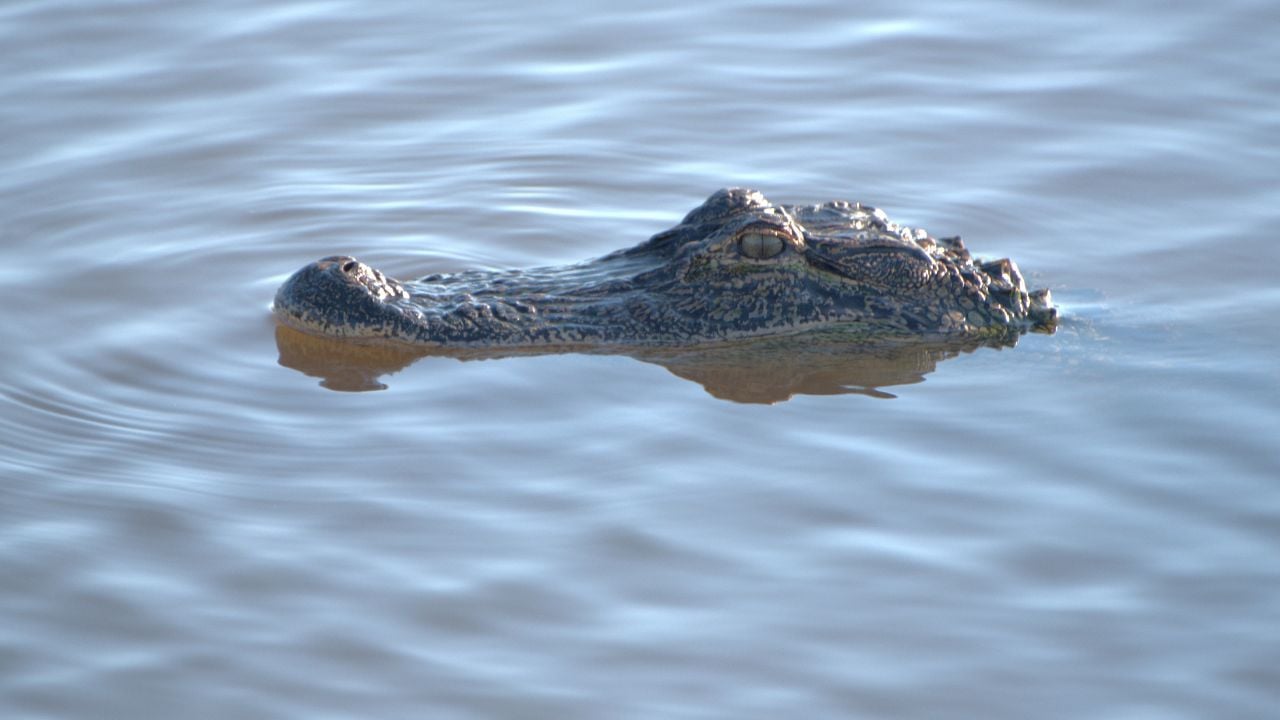
UGA Extension says alligators can keep their snouts above water when a pond begins to freeze.
That can leave the rest of the alligator frozen in place, a state known as "icing."
In that position, an alligator goes dormant underwater and breathes through its exposed snout.
If you ever see a snout poking out of a frozen pond, it may belong to an alligator in dormancy.
Peak Activity Range
In Georgia, alligators are most active when temperatures reach 82 to 92 degrees.
You'd call a 75-degree afternoon pleasant, but it's still 7 degrees under the bottom of that range.
The Savannah River Ecology Laboratory says alligators stay active year-round in Georgia and South Carolina, with activity peaking in the warmer months.
Winter is the slow season.
Hiding in Black Water
An alligator's dark hide blends in with the Okefenokee Swamp's black water, so you can look right at one and miss it.
UGA's Coastal Ecology Lab shared a photo of the swamp on Facebook.
The lab counted three juvenile alligators in it.
There were four.
A commenter spotted the fourth, and the lab confirmed it.
If researchers can miss an alligator in a photo, you can too.
The Fall Line
Alligators in Georgia typically live along and south of the fall line, which runs roughly through Columbus, Macon and Augusta.
Within that range, they live in swamps, rivers, streams, lakes, ponds and wetlands.
Northern sightings are rare.
Excessive rain or drought can push alligators north, and people sometimes place them in waterways.
So if you live north of that line, you're unlikely to spot an alligator at all.
Keeping Your Distance
Alligators can live in any water body in their range, and they're good at hiding.
That means they may be in places you haven't seen them before.
Keep your distance, keep pets on a leash away from the water's edge, and supervise small children near the water.
The Feeding Ban
Feeding a wild alligator is illegal in Georgia, winter included.
The Georgia Department of Natural Resources says that covers feeding an alligator by accident too.
A conviction is a misdemeanor, and you could face a fine of up to $200, up to 30 days in jail, or both.
Tossing food near a live alligator counts, as does leaving food in or near water where alligators are known to gather.
Alligators that humans feed learn to associate people with food and lose their natural fear of them.
16 Southern Sayings Georgians Have to Explain to Northerners
Some phrases are second nature at home and leave visitors from up north completely lost.
How many of them have you been saying without a second thought?
16 Southern Sayings Georgians Have to Explain to Northerners
7 Secrets Georgia County Clerks Wish Residents Knew Before Paying a Lawyer

Legal bills add up fast.
Some of the paperwork you'd hire out might start at a clerk's counter instead.
7 Secrets Georgia County Clerks Wish Residents Knew Before Paying a Lawyer
