
16 Southern Sayings Georgians Have to Explain to Northerners

A grandmother in Marietta tells her daughter’s fiance, freshly moved down from Michigan, to grab a toboggan before they head out to look at the lights.
He glances around the garage for a sled.
Meanwhile, she’s already got a knit cap pulled down over her ears.
These are the Southern sayings Georgians have to explain to Northerners.
1. I Don’t Care To
Locals answer favors with “I don’t care to,” and a visitor from up North hears a flat refusal.
It’s the opposite.
In Southern and Appalachian speech, “I don’t care to” means someone doesn’t mind at all.
The University of South Carolina’s Appalachian English project traces the usage back centuries, to a time when “not to care to” simply meant “not to mind.”
Ask a neighbor if they’d care to help you move a couch, and “I don’t care to” is a yes.
Anyone who takes it at face value walks off insulted over an offer nobody declined.
2. Yankee Dime
Older folks still promise kids a “Yankee dime” for finishing their chores, and the word doing the tripping is right there in the name.
A Yankee dime isn’t money.
It’s a kiss on the cheek.
The public radio show A Way with Words has documented the slang from listeners who grew up with it across Alabama, Tennessee, and Georgia.
A Northern kid holding out a hand for change learns fast that the payout is a peck, not a coin.
3. Toboggan
A cold morning means reaching for a toboggan, and, as locals have to explain, it has nothing to do with a sled.
It’s a knit hat.
The word once meant both the sled and the wool cap riders wore to stay warm on it.
Atlas Obscura traces how the sled sense faded in the South, where snow is rare, so the South kept the hat and let the sled go.
Tell a visitor from Minnesota to grab a toboggan before they walk to the car, and don’t be surprised when they head for the garage instead of the coat closet.
4. Dinner and Supper
Grandparents still call the noon meal “dinner” and save “supper” for what everyone else calls dinner.
It isn’t a mix-up.
Food historian Helen Zoe Veit has written about how American mealtimes shifted over the centuries.
She explains that “dinner” once named the day’s biggest meal, eaten around noon, back when families worked close to home and farm.
The word stuck to noon in parts of the South long after the rest of the country moved it to evening.
Invite a Northern coworker to “Sunday dinner” at 1 p.m., and they’ll show up wondering why nobody mentioned it’s just lunch.
5. Ink Pen
A Georgian asking to borrow “an ink pen” instead of just a pen has a good reason for the extra word.
It’s there to prevent a mixup.
Southern speech blends the vowel sounds in “pin” and “pen,” a documented feature University of Georgia (UGA) linguistics research calls one of the most famous markers of Southern speech.
So a Georgian tacks on “ink,” and nobody reaches for a sewing needle instead.
A visitor from Chicago hears the extra word and figures it’s just a quirky habit, never guessing it patches a sound merger their accent never made.
The Sound Shift Behind “Ink Pen”
The pin-pen merger behind this Southern saying doesn’t stop at one word pair.
The same vowel shift flattens “tin” and “ten,” “mint” and “meant,” and “bin” and “Ben” into near-identical sounds.
UGA’s research notes that increased education across the South has led to some decline in the pattern.
6. Liketa
Many people drop “liketa” into a sentence to mean something almost happened, and to an outside ear it sounds like a typo said out loud.
Nobody died.
“I liketa died laughing” never means anyone came close to dying.
Yale’s Grammatical Diversity Project documents “liketa” as a grammatical marker of Appalachian and Southern English.
The Dictionary of American Regional English places it mostly in the American South and South Midland, and it always signals an event that came close but never happened.
A coworker visiting from Ohio hears “I liketa died laughing” and spends a full minute making sure nobody needs an ambulance.
7. Tump
A kid who knocks a glass of sweet tea off the table has “tumped it over,” a verb that stops many out-of-staters mid-sentence.
It means tipped.
Merriam-Webster labels this sense of “tump” chiefly Southern and defines it as tipping or turning something over, especially by accident.
Tell a visitor from Pennsylvania that the canoe tumped on the Chattahoochee, and they’ll need a second to work out that everybody got wet.
8. Pocketbook
Grandmothers still carry a “pocketbook,” and it isn’t a book about finances.
A pocketbook is a purse, plain and simple.
Merriam-Webster dates the word to 1617, when it meant a small pocket-sized book, and its later senses run from a flat leather case for money to a purse.
Ask a Northern son-in-law to grab your pocketbook off the counter, and he’ll stand there hunting for a wallet or a checkbook instead.
9. A Poke
A trip to a roadside stand might end with “a poke” of boiled peanuts in the back seat, and the word alone stumps many out-of-staters.
A poke is just a bag, nothing more.
Merriam-Webster dates this sense of “poke” to the 13th century and labels it chiefly Southern and Midland.
Elsewhere, many people know the word only from the idiom “a pig in a poke,” meaning to buy something sight unseen.
Ask a shopper from Boston to hand over a poke of peanuts, and they’ll ask what a poke even is before reaching for anything.
10. Gully Washer
Folks call a sudden downpour a “gully washer,” a phrase built to describe exactly what the rain does to the ditch out front.
Think downpour, not drizzle.
The public radio show A Way with Words has collected more than a dozen similar terms for heavy rain, from “frog strangler” to “trash mover.”
The show’s hosts note that the South tends to have a lot of these.
A television meteorologist who transferred from up North has to ask what a “gully washer” means before translating it into the forecast.
11. That Dog Won’t Hunt
A boss shutting down a bad excuse with “that dog won’t hunt” isn’t talking about an actual dog.
The plan simply won’t work.
Word-history researchers trace the earliest known printed use to an 1843 letter in a Washington newspaper, where it waved off a presidential hopeful’s chances.
First-timers from up North usually just blink when they hear it in a business meeting.
12. No Count
A Georgian writes off a bad car or a lazy hire as “no count,” a phrase that confuses anyone expecting it to involve numbers.
It’s a flat verdict: Worthless.
Merriam-Webster treats “no-count” as a variant of “no-account,” a word it dates to 1845 and defines as not amounting to anything.
“That truck’s no count” sounds like a mileage complaint to a Northern ear, not a verdict on the whole vehicle.
13. Biggety
Locals call an arrogant coworker “biggety,” and the word draws blank stares north of the Mason-Dixon line.
It means stuck-up.
Merriam-Webster labels “biggety” a Southern US term dating to 1880, defining it as boldly confident or boastful and marking it as disparaging.
A Northerner who hears it assumes it’s a typo for “bigoted” or “biggish” before a Georgian sets them straight.
14. Airish
A cold, drafty morning is “airish” to a Georgian, a word that sounds invented to anyone who didn’t grow up hearing it.
Chilly, nothing more.
Linguist Michael Montgomery lists “airish,” meaning chilly, among the Scotch-Irish words that took root in Appalachian speech.
A relative visiting from Wisconsin hears “it’s airish out there” and has to ask whether that means grabbing a coat or leaving one behind.
15. Carry
Ask a neighbor to “carry” you to the doctor, and a Northerner pictures someone hauling you there in their arms.
It means a ride.
Merriam-Webster lists escorting someone as a chiefly dialectal sense of “carry.”
The University of South Carolina’s Southern Appalachian dictionary records the same use in an everyday request for a ride to work.
A new hire from New Jersey, asked to carry a coworker to the airport, briefly wonders how strong they’re supposed to be.
Psst! How much do you know about Southern words and Georgia history? Take our quiz and see how many you can get right.
Quiz
The Southern Words & Georgia History Quiz
See how many you can get right before you scroll past.
What job does “y’all” do in Southern English that standard English has no single word for?
16. The Creek Don't Rise
People end plans with "Lord willing and the creek don't rise," and a Northerner usually assumes it's just a folksy way of saying goodbye.
It's not just a phrase.
Before flood control and paved roads, an actual rising creek could wash out the low-water crossing between a farm and town.
The promise to show up always carried that one honest exception built in.
A Northerner repeats the phrase as a joke.
A Georgian who grew up on a dirt road isn't joking.
9 Things Georgia Peach Farm Stands Do That Tourists Never Expect
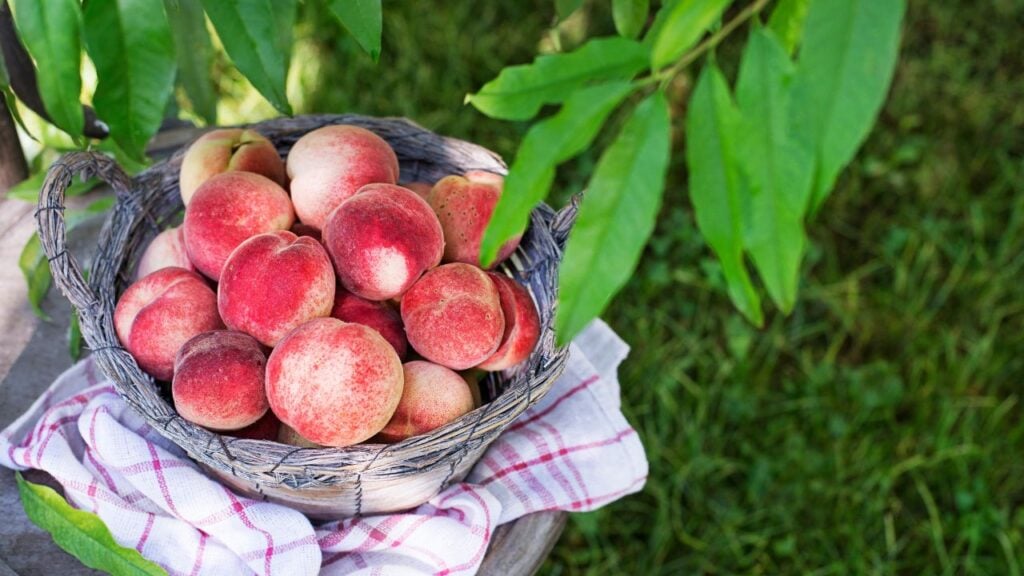
University of Georgia Extension puts a ripe peach's danger zone at 36 to 46 degrees, which causes chilling injury within a week, and a home refrigerator sits inside it.
Georgia's roadside stands are built around rules like that one, the kind of practical knowledge a tourist never thinks to ask about until the fruit goes mealy.
9 Things Georgia Peach Farm Stands Do That Tourists Never Expect
11 Passenger Behaviors Georgia Flight Attendants Spot Before Takeoff
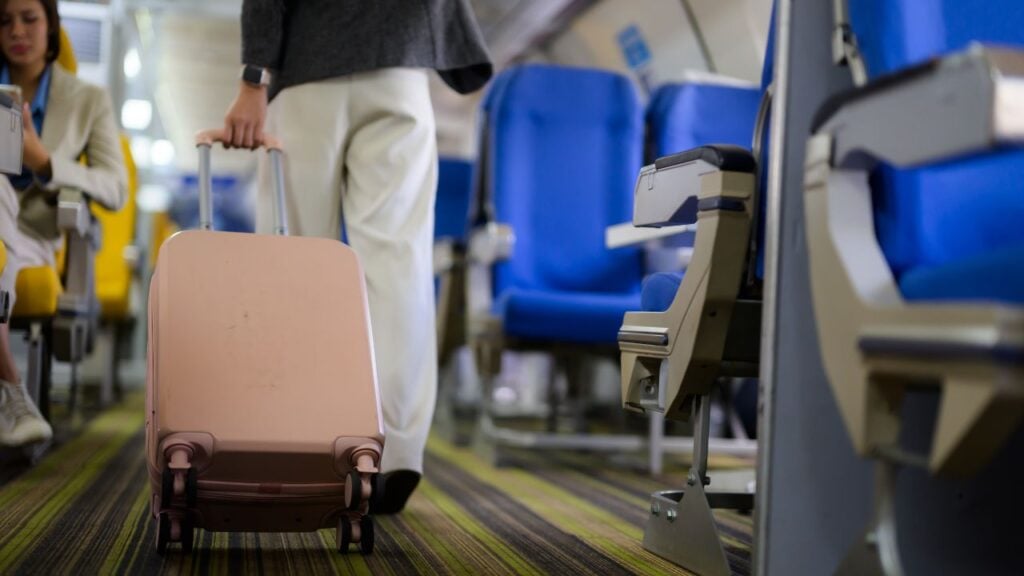
Hartsfield-Jackson ranks among the world's busiest airports, and it handles more than 2,200 flights a day.
A Georgia flight attendant working that rush has clocked every version of a nervous, distracted, or overconfident passenger, and the signs start well before boarding.
11 Passenger Behaviors Georgia Flight Attendants Spot Before Takeoff
