
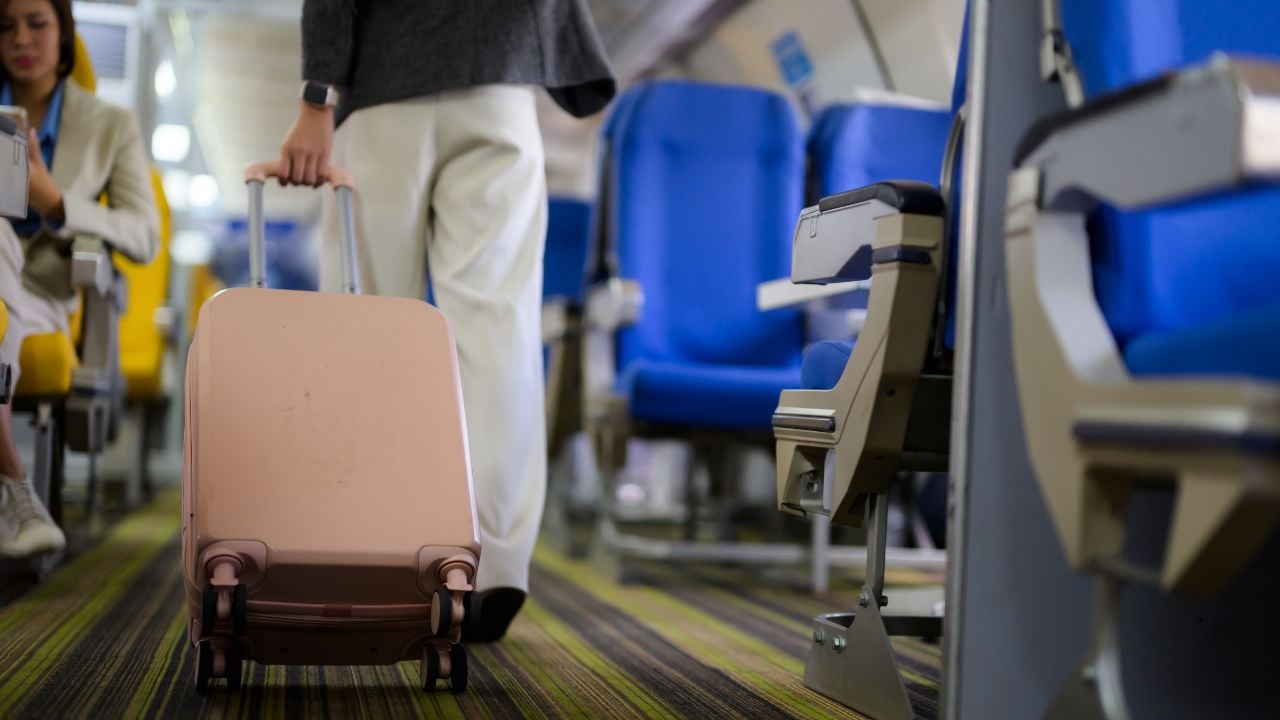
11 Passenger Behaviors Georgia Flight Attendants Spot Before Takeoff

Hartsfield-Jackson moved 106.3 million passengers in 2025, more than any other airport on the planet, according to Airports Council International.
More than 2,200 flights leave there on an average day.
A flight attendant working that rush has seen every version of a passenger, and the signs start early.
These are the passenger behaviors Georgia flight attendants spot before takeoff.
1. Crowding the Gate Early
A cluster forms at the gate before boarding even starts, and a flight attendant is already watching it.
Airlines call the cluster “gate lice.”
The name covers any passenger who crowds the door and tries to board before the gate agent calls their zone.
Hartsfield-Jackson moved 106.3 million passengers in 2025 alone.
Gate crowds come with that kind of volume.
More than 2,200 flights move through the airport on an average day.
American Airlines built scanning technology that beeps and rejects an early boarding-pass scan.
It’s running at more than 100 U.S. airports now, Hartsfield-Jackson among them.
The scan isn’t perfect.
A gate agent usually spots the line-jumper first.
A flight attendant checks the boarding pass again at the cabin door, matching the zone printed on it against whatever group the gate agent just called.
Whoever slips through with a Group 6 pass behind a Group 2 boarding call gets sent back up the jet bridge to wait their turn.
2. Making a Call as the Door Closes
A passenger still mid-call is easy for a flight attendant to spot while walking the aisle before pushback.
Federal Communications Commission rule 47 CFR 22.925 bars a cellular call once the plane leaves the ground.
Flight attendants enforce the airplane-mode switch well before that, during boarding and taxi, so nobody’s still on a call when the wheels come up.
A passenger who asks for one more minute usually gets it, right up until the safety demonstration starts.
Once that demonstration starts, the ask stops being a favor.
It becomes an instruction.
A flight attendant repeats it at every row that still has a phone pressed to an ear.
3. Leaving Your Seat During Taxi
Federal rule 14 CFR 121.311(b) is the reason flight attendants insist on a fastened seatbelt from pushback all the way through takeoff.
The rule covers movement on the surface, takeoff, and landing, one continuous window a lot of passengers assume ends the moment the door shuts.
A flight attendant clocks it fast when someone unclips a belt while the plane is still rolling toward the runway to dig a charger out of the overhead bin.
It’s still moving.
The restroom pulls people out of their seats too, especially during a long taxi at a busy hub like Hartsfield-Jackson.
A flight attendant sends them back to the seat and waits to see the belt buckled before moving on to the next row.
There’s no exception for a quick trip.
4. Wobbling Through the Door
Every passenger gets a greeting at the cabin door, and the flight attendant offering it has more than hospitality in mind.
Federal rule 14 CFR 121.575(c), part of the Code of Federal Regulations (CFR), bars a carrier from boarding anyone who appears intoxicated.
Crew get maybe two seconds with each face.
It isn’t long.
Unsteady footing, slurred words, and a passenger who won’t make eye contact are the signals that get a second look.
Screening happens mostly at the gate, before a passenger ever reaches the jet bridge.
Flight attendants train for exactly this, catching whatever slips through that first check.
5. Overstuffing the Overhead Bin
Flight attendants watch the overhead bins as closely as they watch anything else during boarding.
A passenger with a bag that won’t lie flat turns it, shoves it, and forces it in sideways until something else has to give.
Moving another passenger’s bag to make room for yours breaks an unwritten rule flight attendants take seriously.
Passengers flag down a flight attendant to sort out whose bag went where.
On a full flight, flight attendants ask passengers to pull a jacket or a small bag back out so a rollaboard can fit.
That happens often.
An easy boarding turns slow fast once that starts.
6. Draping the Seatbelt
A flight attendant can tell in one glance whether a belt is fastened or just draped.
A seatbelt worn correctly sits low and tight across the hips, not spread loosely under a blanket or a jacket.
Passengers who buckle up and then cover the belt make that glance harder.
A blanket over the belt is often enough to stall the check completely.
No exceptions apply.
Turbulence is one of the most common causes of in-flight injury, especially for someone who isn’t buckled in.
It can hit without warning, even under a clear sky.
A flight attendant who spots a loose or hidden belt asks the passenger to show it.
7. Claiming the Wrong Exit Row
Federal law backs flight attendants when they have the final say over who sits in an exit row.
Rule 14 CFR 121.585 spells out who doesn’t qualify for that seat.
Anyone under 15 is out, along with anyone who can’t read or hear emergency instructions without help.
So is anyone who lacks the strength or mobility to pry open a hatch and handle the slide.
Not every passenger who picks that seat for the legroom meets those requirements.
Flight attendants reassess the row before every departure, not just at check-in.
A flight attendant moves a passenger traveling with a young child, or one who’d rather not handle an emergency exit, without a fuss.
Nobody has to explain why.
What Flight Attendants Can’t Ask You
Flight attendants reassigning an exit row seat can only ask whether a passenger can perform the required functions, never why they can’t.
The same federal rule protects passengers who need childcare, who don’t have full vision without extra aids, or whose condition could put them at risk during an evacuation.
None of those passengers have to disclose a diagnosis or explain themselves before a flight attendant reseats them.
A flight attendant makes the call, and that’s the end of the conversation.
8. Keeping Your Window Shade Down
Flight attendants ask for window shades up during taxi and takeoff, and it isn’t just etiquette.
An open shade lets crew check for fire, smoke, or debris outside before opening an emergency exit.
It also gives passengers’ eyes a head start adjusting to daylight if an evacuation happens fast.
No U.S. airline can cite a passenger for keeping a shade down.
It isn’t a federal law.
It’s a request, not a federal rule, unlike the seatbelt or the tray table.
Flight attendants on many U.S. flights still walk the cabin before departure asking passengers to raise them anyway.
A closed shade near an exit row draws a second ask almost every time.
9. Tuning Out the Briefing
From the aisle, flight attendants can see exactly who’s paying attention during the safety demonstration.
Headphones in, eyes on a phone, is how a lot of passengers tune it out.
Some are already asleep before the seatbelt sign even comes on.
Others keep talking through the whole thing.
None of it stops a flight attendant from noticing exactly who skipped it.
The briefing covers what to do if the cabin fills with smoke or the plane ends up in water, moments many passengers will never face.
Flight attendants deliver it anyway, every flight, to a cabin that’s rarely watching.
They don’t skip a word.
It doesn’t matter how many headphones stay in.
10. Leaving Your Tray Table Down
Every row gets one last check from a flight attendant before an airplane ever moves.
Federal rule 14 CFR 121.577 bars a plane from taxiing, taking off, or landing with any tray table left down.
A drink balanced on that tray counts too.
So does a laptop still open on it.
None of it matters.
Flight attendants walk the aisle to their jump seats, tray by tray, on the way.
A table that won’t latch shut earns a second try, then a seat change if it still won’t close.
Psst! How much do you know about flying etiquette? Flip these cards and find out.
11. Vaping Before the Doors Close
Once the boarding door swings shut, flight attendants treat the lavatory differently.
The FAA calls using a vape or e-cigarette on an aircraft a federal offense, not just an airline rule.
Spare batteries and vapes have to stay in carry-on bags, never in checked baggage. A fire in the cargo hold is much harder to reach than one in the cabin.
One puff in a lavatory can set off the smoke detector.
The detector doesn’t care why.
Crew can hold an entire flight at the gate while they investigate.
Flight attendants keep an ear out for that lavatory door during the last few minutes before pushback, right when a nervous flier is tempted to sneak one in.
6 Publix Clearance Tags Georgia Shoppers Never Learn to Read
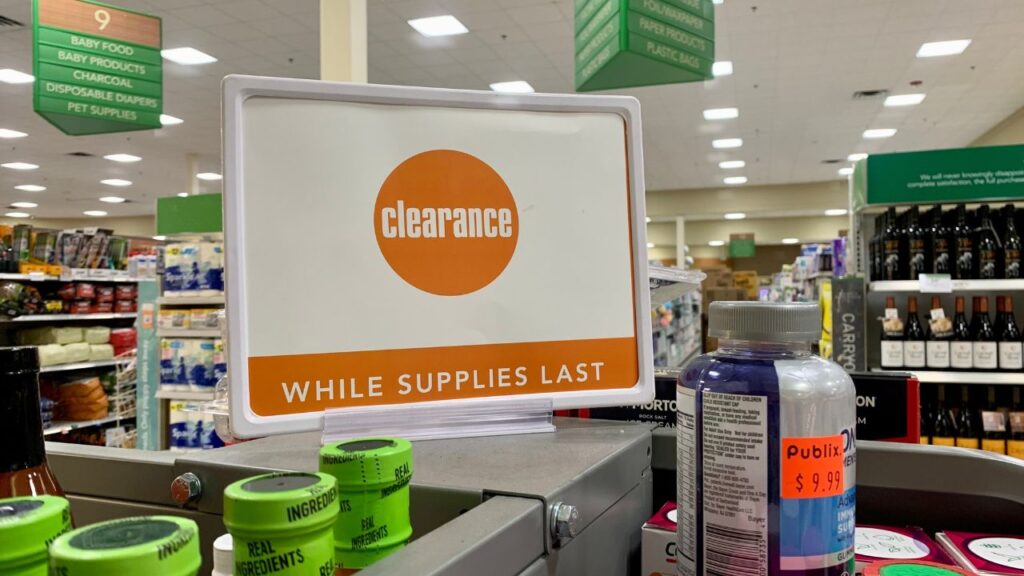
Publix has donated more than a billion pounds of food since 2009, food that never made it anywhere near a clearance shelf.
Every mark printed on those tags carries a hidden meaning, and almost none of it is what a shopper assumes walking up to the shelf.
6 Publix Clearance Tags Georgia Shoppers Never Learn to Read
8 Medicare Enrollment Mistakes That Cost Georgia Retirees All Year

Some Georgia retirees carry a lifetime Medicare surcharge that runs close to $487 a year.
One overlooked deadline is all it takes to land there.
8 Medicare Enrollment Mistakes That Cost Georgia Retirees All Year
