
6 St. Louis Pizza Opinions That Split Missourians From Everyone Else

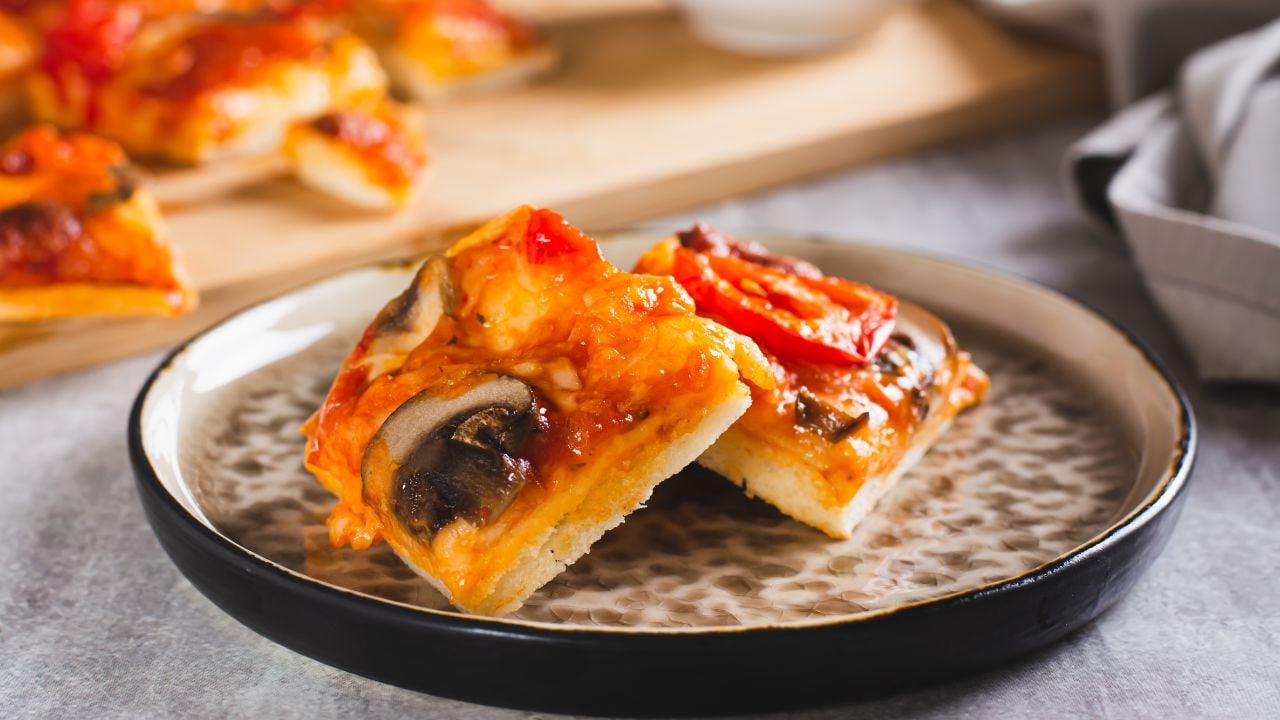
St. Louis-style pizza gets cut into squares, not wedges.
Some Missourians love that. Others think it’s one more reason to apologize for the whole pie.
Here are the St. Louis pizza opinions that split Missourians from everyone else.
1. Whether Provel Is Cheese
St. Louis-style pizza rests on Provel, a processed blend of cheddar, Swiss, and provolone with a low melting point.
Federal rules describe pasteurized process cheese as one or more cheeses mixed and heated together, with approved emulsifiers allowed.
Many Provel skeptics reach for that label when they say it isn’t cheese.
Food writer Kenji López-Alt has said all cheese is processed and that Provel is American cheese with an extra emulsifying salt added.
St. Louis Magazine has described the cheese as divisive, with devotees on one side and detractors on the other.
Both sides have a point.
If you order a pie, you’ve picked a side before the first bite.
The pie tasted almost the same the next day, which St. Louis Public Radio credits to the stabilizers and emulsifying salt in Provel, so if you eat leftovers, that’s one point for the cheese.
2. Provel as a Requirement
St. Louis-style pizza didn’t begin with Provel.
Melrose Café & Pizzeria opened in 1945, which St. Louis Public Radio counts as the city’s first pizza parlor.
Its early pies were topped with provolone, not Provel.
Provel came later.
Some purists object when a pizzeria leaves Provel off the pie.
A 2019 Takeout column told readers that if you want the “pure strain” version of the style, you need Provel.
Many pizzerias in St. Louis use cheese blends or straight mozzarella and still call the pie St. Louis-style.
St. Louis Magazine, citing Bon Appétit, calls Provel difficult to find virtually anywhere else in the country.
If you spot St. Louis-style pizza on a menu in another state, ask what cheese it uses.
3. Crust or Cracker
St. Louis-style pizza starts with a crust that’s usually made without yeast, so it snaps like a cracker.
Melrose’s pizza in 1947 used a rich yeast dough, though.
Local historian Ron Elz says the crust defines the style and has to be thin.
A March 2019 tweet dismissed the pie as processed cheese on square crackers.
Food writer López-Alt wrote for Serious Eats that it’s less a pizza than a big nacho, and he loves it anyway.
The crust is sturdy enough that you don’t need to fold a slice.
Your slice has no thick crust edge to push aside.
Crunch is the point.
Quiz
Pizza Geography IQ
Answer these questions on pizza history and the regional styles from Naples to Detroit. We bet you can’t get them all right. Prove us wrong?
Hawaiian pizza is widely credited to a restaurant in which place?
4. Squares or Wedges
St. Louis-style pizza gets cut into squares instead of wedges.
A 1947 St. Louis Post-Dispatch photo caption shows Melrose's owner snipping a pie into squares with scissors.
The squares were held with a paper napkin and eaten by hand.
In January 2020, NJ.com's Amy Kuperinsky wrote that the Chicago-style square cut goes against everything we know about slicing pizza, and The Takeout fired back.
Its defense was that the square cut is meant to feed a crowd, and that bars use it to give away free slices.
The same cut is also called tavern or party style.
Squares also let you choose, with a corner piece for more crust or a middle piece for more cheese and sauce.
The cut isn't exclusive to St. Louis, either, since pizzas in Columbus, Ohio, are cut into squares too.
Pick your piece.
5. Chicago's Claim
According to the Riverfront Times, a Bloomberg story crediting Chicago with cracker-thin, square-cut pizza never mentioned St. Louis-style.
A Chicago pizza maker told Bloomberg the cracker-thin pie belongs to Chicago.
The paper answered in August 2023 that Chicago was taking credit for a style St. Louis has long championed.
It's a turf war.
St. Louis TV station KSDK traces the style back to Chicago taverns, where tavern-style pizza is said to have been created between 1933 and the end of World War II.
Melrose's owner was a Chicago native whose pizza resembled Chicago's tavern style more than anything from Italy.
There is one difference, since Chicago tavern pizza uses mozzarella and St. Louis pizza typically uses Provel.
Many St. Louisans take that credit claim personally.
If you've eaten a Chicago tavern pie, you've tasted a close relative of St. Louis-style, minus the Provel.
6. Pride or Apology
López-Alt noticed that St. Louisans seem split between those who love the pizza and those who apologize for it.
People often grade St. Louis-style pizza against whatever pizza they grew up on.
New York Times food writer Sam Sifton has a pizza cognition theory, which holds that the first style you eat becomes your definition of pizza.
That would explain a lot.
López-Alt visited St. Louis in 2014 and said he enjoyed the pizza more once he stopped thinking about it as something to compare to other styles of pizza.
Once he stopped comparing, he enjoyed it more.
Try a slice with no comparison in mind, and you may land on the proud side.
Where Provel Came From
The cheese you'll find on St. Louis-style pizza traces to J.S. Hoffman Co., a Chicago-based company.
The company's first Provel trademark application, in 1947, was denied because the name was too close to another cheese called Provole.
The trademark was granted in 1950 for a processed blend of cheddar and provolone.
Swiss joined later.
Tony Costa of Costa Grocery in downtown St. Louis reportedly worked with the company on it.
Luigi's Restaurant is often credited with being the first to put Provel on a pizza, in 1953.
You can follow that paper trail today because a Washington University student and a food writer tracked down the original trademark in 2012.
Provel at the Statehouse
The cheese on your St. Louis-style pizza reached the Missouri House in January 2024.
That's when a lawmaker from the St. Louis area introduced a bill to name Provel the state's official cheese.
Provel went political.
Kansas City TV station KSHB reported that the cheese is beloved by many St. Louis natives, while others oppose both its taste and its texture.
If you've never tried Provel, House Bill 2189 describes it as a combination of cheddar, Swiss, and provolone that's prominent in St. Louis cuisine.
Rep. Adam Schwadron of St. Charles, the bill's sponsor, told Missourinet later that month that Provel should be Missouri's official cheese.
8 Well and Septic Inspection Surprises Missouri Buyers Run Into

A house with a well and a septic system can look like any other at a showing.
Many buyers in Missouri learn the rules only once the inspections begin.
8 Well and Septic Inspection Surprises Missouri Buyers Run Into
