

4 Unwritten Dibs Rules Chicagoans Expect Everyone to Follow

Back in 1967, Chicago drivers were already saving shoveled spots with folding chairs.
Dibs is technically illegal, but Chicagoans expect you to follow it anyway.
Here are the unwritten dibs rules Chicagoans expect everyone to follow.
Note: This is general information, not legal advice. City parking and snow rules are subject to change, so confirm the current requirements with the City of Chicago’s Department of Streets and Sanitation.
1. Shoveling First
The idea behind dibs is that digging your car out of the snow earns you exclusive rights to the spot.
Block Club Chicago traces dibs to the January 1967 blizzard, which buried Chicago and its cars under 23 inches of snow.
Plows skipped many residential streets, which made it hard for drivers to get anywhere.
One woman, then in fourth grade, recalled in that report how much work it took to dig out a parking spot.
That’s when she saw people start saving their spots.
If you didn’t dig out the spot, many Chicagoans see no reason you’d get to save it.
2. Marking the Spot
On February 9, 1967, the Chicago Tribune described drivers staking out their spots with folding chairs and carpenters’ horses, an early sign of the dibs custom.
Your car has to leave the spot sooner or later, so many neighbors leave an item behind to hold it.
In February 2022, the city told residents to move their markers or lose them, with unofficial dibs placeholders set to be cleared that Friday, February 11.
The items people use as placeholders include chairs, stools, buckets, milk crates, card tables, plant stands, lumber, toys, vacuum cleaners and bags of garbage.
If you drive off with nothing in the spot, some drivers will see an open space.
3. Staying Out of a Saved Spot
If you park in a spot someone has claimed with dibs, Chicago public television station WTTW’s explainer says your car may pay the price.
Asked about dibs in 2001, then-Mayor Richard M. Daley said drivers shouldn’t pull into a spot someone spent time digging out.
Chicago public radio station WBEZ found 64 reports of dibs-related vandalism in police records from the week after each big February snowstorm in 2011, 2015 and 2018.
The damage included 51 slashed tires, and the reports came from all parts of the city.
The 64 reports led to just one arrest.
Many of the victims said they were unaware of the dibs custom when they parked.
Even so, some neighbors will think you should have known better.
Psst! How much do you know about winter parking and snow plowing in the Midwest? Tap each card and see how many you can get right.
4. Leaving the Marker Alone
In February 2015, a McKinley Park driver moved some boxes that marked a dibs spot, according to a police report WBEZ reviewed.
He told police he meant to put the boxes back after dropping his child at school.
He came back to spray-painted door handles and a spray-painted rear license plate.
Good intentions didn’t help.
A man quoted by CBS Chicago in January 2023 said you shouldn’t move other people’s belongings out of a spot.
Time Out Chicago warned in 2021 that anyone who moves a marker should be ready to face the consequences.
If you slide a marker aside for a quick stop, you could be taking the same risk.
The End of Dibs
WTTW noted in 2022 that dibs lacks legitimate rules, leaving people to create ad hoc limits.
On the 2300 block of South Wolcott Avenue in Pilsen, some neighbors said in 2017 that dibs is in effect year round.
The Chicago Sun-Times editorial board proposed a three-day limit in 2021.
If you can’t tell whether a spot is still claimed, check with a neighbor before you park.
Dibs and the City Code
NBC Chicago reported in January 2026 that dibs is technically illegal, since the city’s municipal code prohibits it.
If you set out a chair to hold a spot, that could violate the code.
Crews can’t be everywhere picking up items, so the city asks you to be neighborly.
Chicago’s Rule on Storing Goods on Public Ways
Chicago’s code bars you from using “any public way for the storage of personal property,” with a fine of $50 to $250 per offense.
Each day a violation continues counts as a separate offense.
The same section covers a barrel, box, crate or package you leave on a public way longer than needed to move it to or from a nearby building.
Calls to 311
If dibs items are a problem on your block, you can report them by calling 311.
WBEZ reported in January 2024 that the city had logged more than 12,000 requests to remove dibs items since January 2019.
The city received 6,030 such requests from December 2021 through March 2022 and 724 from December 2022 through March 2023.
By late January 2026, NBC Chicago reported, the city had received more than 2,000 requests since November 2025.
In March 2021, crews picked up unclaimed markers along their daily garbage routes and threw them in with the trash.
Neighbors Who Opt Out
WBEZ reported in 2019 that a Chicago Tribune poll a decade earlier found Chicagoans split right down the middle on dibs.
Then-Mayor Lori Lightfoot said in December 2020 that she didn’t encourage dibs, even as she called it a long-standing tradition.
Some anti-dibs neighbors have made fake parking tickets to stick on the household items holding a spot, Block Club Chicago reported in 2024.
If you’d rather skip dibs, many Chicagoans would agree with you.
Some go further.
In January 2014, a Humboldt Park woman took the day off and shoveled spaces on both sides of the 2600 block of West Evergreen Avenue.
She used the hashtag #nodibs in her posts, and CBS Chicago reported that she received overwhelming support.
7 Things Indiana and Illinois Drivers Do Differently at the State Line
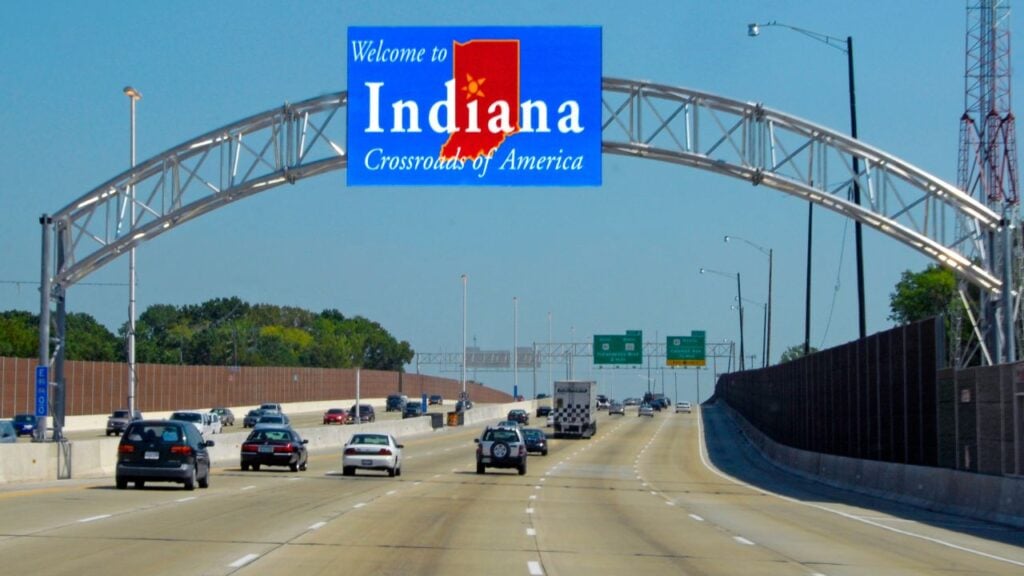
Hoosiers and Illinoisans share the same highways but not the same rulebook.
Some of the differences can catch you off guard the moment you cross the state line.
7 Things Indiana and Illinois Drivers Do Differently at the State Line
