
12 Fruits Floridians Pick in Their Backyards That Northerners Rarely See Growing

Ever cut down your own banana plant right after it gave you fruit? In a Florida backyard, that’s exactly what you do.
It sounds backward, but there’s a reason, and your next crop depends on it.
Here are the fruits Floridians pick in their backyards that Northerners rarely see growing.
Note: This is general information, not medical advice. Guidelines are subject to change, so talk to a doctor about your situation.
1. Jaboticaba
Jaboticaba trees grow berries straight from the trunk and older branches.
Many Northerners have a hard time picturing a tree like that.
University of Florida Extension says the tree thrives in hardiness zones 9a through 11.
Florida trees typically reach 10 to 15 feet, while trees left to grow naturally in Brazil can hit 50 feet.
If you plant a seed, you may wait 8 to 10 years for fruit, while grafts and air layers can fruit within a few years.
Berries come more than once a year, with peak harvests from February through May.
You can pick the berries once they turn black, though some selections ripen red or yellow.
Picked berries last only one to two days at room temperature.
Eat your haul quickly.
2. Satsumas
Satsuma fruit is ripe in November, ahead of the hard freezes.
Satsumas peel easily.
North Florida winters can freeze fruit on a sweet orange tree before it ripens, so early timing is the satsuma’s edge.
You only need one tree because satsumas are self-fruitful.
Mature, dormant satsuma trees on cold-hardy rootstock have survived lows of 14°F to 18°F, according to an Okaloosa County Extension agent.
You can cover a young tree with a cloth during a freeze, since young trees are less hardy.
The fruit has few to no seeds and is sweet and juicy.
3. Star Fruit
Star fruit, also called carambola, can grow in warm spots along the southeastern and southwestern coasts, such as Merritt Island and the Tampa Bay area.
Harvest generally runs from June through February, with peaks in August and September and again from December through February.
You pick star fruit when it turns from green to yellow in the furrow between the ribs.
Star fruit doesn’t gain sugar after you pick it, so the fruit is sweetest when you let it ripen on the tree.
Trees pruned to 12 feet or less generally survive hurricane-force winds without toppling.
Keep your tree short.
Star Fruit and Kidney Disease
Star fruit may contain enough oxalic acid to cause a rapid decline in kidney function.
If you’ve been diagnosed with kidney disease, University of Florida Extension says not to eat star fruit unless your doctor says it’s safe.
4. Loquat
Backyard loquat trees bloom in fall and early winter, so you may spot flowers on one in November.
The fruit arrives much later, from February through May.
The tree can withstand temperatures down to about 8°F to 10°F.
The flowers and fruit can’t, since temperatures below 27°F kill them.
Fruit is the fragile part.
You can taste a few loquats before harvest to learn which color is ready to pick.
You can protect fruit from Caribbean fruit flies by bagging the whole fruit cluster in paper.
5. Lychee
Lychee trees can’t take much cold, so plantings are limited to coastal areas in southern Florida.
You can pick the fruit from mid-May to early July, depending on the variety.
Getting a crop is the hard part.
Many ‘Brewster’ trees bear a good crop only about one year out of three or four.
That’s a gamble.
Seedlings may take 10 or more years to bear fruit, so air layering is a common way to propagate a lychee tree in Florida.
Some varieties have small, shriveled seeds nicknamed chicken tongues.
You can’t rush the fruit, since it has to ripen on the tree for the best flavor.
Lychees taste best when you eat them soon after you harvest them.
6. Papaya
Papaya plants can grow up to 33 feet tall without any wood.
If you take care of the plant, it may flower 4 months after planting and bear fruit 7 to 11 months after planting.
You can pick a papaya when yellow covers 1/10th to 1/3rd of the peel.
Cold is the catch.
Papaya plants are damaged or killed below 31°F, so a freeze can end your plant.
Some papaya plants are male, some are female, and some have both male and female parts.
Only female plants and those with both normally produce fruit.
Papaya ringspot virus is a major papaya disease in Florida, so you’ll want to replant every 18 to 24 months.
Psst! How much do you know about Florida’s fruit history? Take our quiz and see if you can ace it.
Quiz
Florida Fruit Trivia
Answer these questions on Florida’s citrus and tropical fruit history. We bet you can’t get them all right. Prove us wrong?
In February 1895, a freeze hit Florida’s citrus groves. About how far did the temperature drop in less than 24 hours?
7. Mamey Sapote
Mamey sapote trees may bear 200 to 500 fruit a year once they mature.
Many fruit run 3 to 8 inches long, with a thick, woody, russet-brown skin and salmon-pink to reddish-brown flesh.
'Pantin' fruit matures mainly in July and August, while 'Magana' ripens in spring.
Together, 'Pantin' and 'Magana' make up most of Florida's mamey sapote acreage.
If you plant three or four cultivars, University of Florida Extension says you may have fruit year-round.
Grafted trees begin to bear in 3 to 5 years, while seedlings need 7 years or longer.
That's a long wait.
Your fruit is mature when the scratched skin layer changes from green to pinkish-brown, orange or red.
Picked at the right stage, the fruit softens within a few days to a week.
8. Bananas
Banana stalks fruit only once.
After harvest, you cut the stalk at the base, and a follow-up stalk produces the next crop.
Allow 9 to 20 months from planting a small sucker to harvest.
Banana plants can serve as ornamentals in your yard.
A freeze below 28°F can kill a banana plant to the ground, but new growth usually returns from the underground rhizome when warm weather comes back.
You can pick the fruit 7 to 14 days before it ripens on the plant, then ripen it in a cool, shady spot.
9. Pineapples
Pineapples aren't grown commercially in Florida, but they're common dooryard plants in warm locations throughout the state.
Each pineapple forms when the ovaries of 50 to more than 200 flowers fuse into one seedless fruit.
One plant can produce up to two fruit: A first crop, then a second crop called a ratoon crop.
You can expect 18 to 24 months from planting to harvest.
It's a slow crop.
You'll know a pineapple is ready when 1/3 to 2/3 or more of the shell has turned from green to greenish yellow.
A ripe pineapple has a yellow-green to yellow peel and a pleasant aroma.
They're best adapted to the warmest areas along the southeast and southwest coasts, though protected spots elsewhere in the state work too.
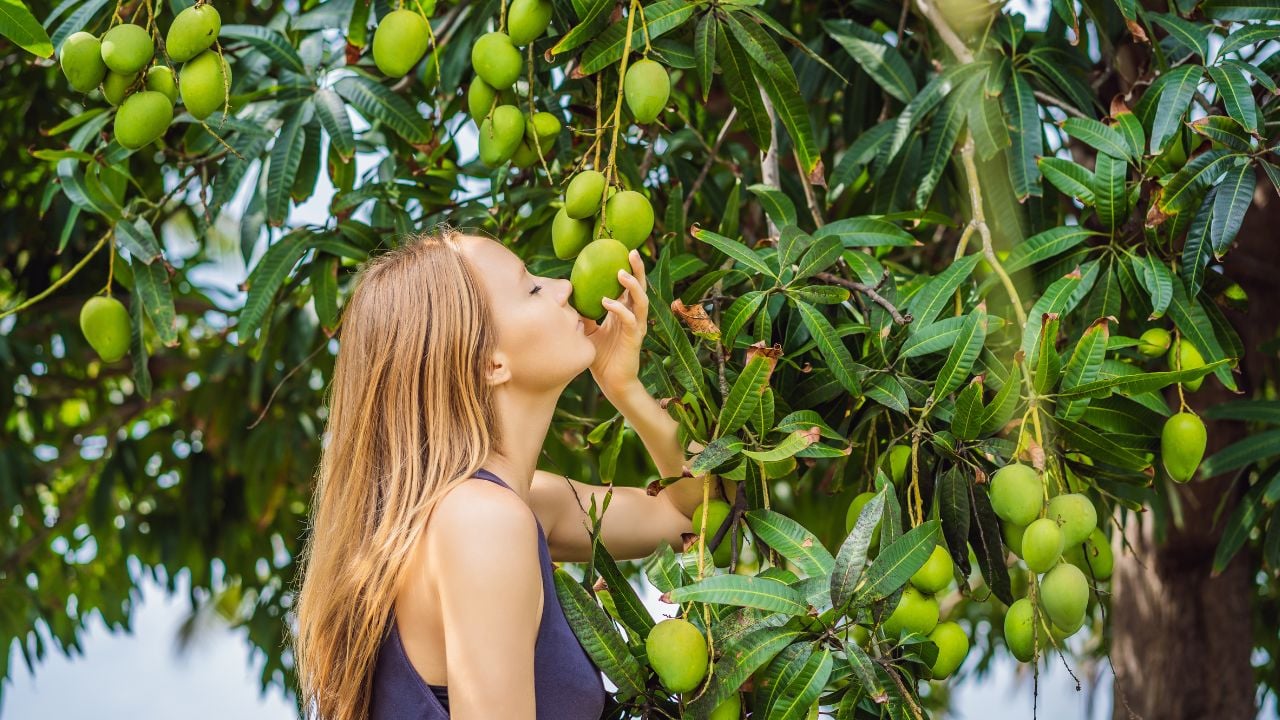
10. Mangoes
You can pick a mango from May through September, depending on the variety.
'Haden' fruit matures in June and July, while 'Keitt' comes in August and September and can weigh 20 to 40 ounces.
Once you pick a mature mango, it ripens in 3 to 8 days.
That's quick.
Mango trees grow 30 to 100 feet tall if you leave them unpruned.
Mangoes belong in the warmest areas of the state, along the southeast and southwest coasts.
Home trees also grow along the southern shore of Lake Okeechobee.
Grafted trees begin to bear 3 to 5 years after planting.
A mature tree can take temperatures as low as 25°F for a few hours.
11. Longan
You can grow longan as an excellent shade tree in a home landscape.
The south Florida harvest runs from the middle of July to early September, mostly in August.
August is your month.
The fruit has a thin, leathery tan peel, whitish translucent pulp and a single seed.
Young trees suffer severe damage at 29°F to 31°F, while branches on older trees can be injured at 25°F to 26°F.
Longans won't get sweeter after you pick them.
Longans you harvest at home can keep in the refrigerator for 5 to 7 days in plastic bags.
12. Muscadine Grapes
Muscadine grapes are native to Florida.
They can be grown successfully in all parts of the state, as long as the soil isn't high in calcium or poorly drained.
You can enjoy the grapes straight off the vine.
Many cultivars have at least two harvest windows, from July for some to late September for others.
Pierce's disease plagues common grapes.
Muscadines resist Pierce's disease.
If you plant a vine, skip low-lying spots, which are more prone to frost and waterlogging.
Wild vines are either male or female, so you need a partner vine nearby to get fruit.
Self-fruitful cultivars have 'perfect' flowers, so a single vine can set fruit.
12 Things Floridians Do the First Morning It Drops Below 60 Degrees
The first cool morning of the season feels like big news in Florida.
You may reach for a sweater that's been in the closet a while.
12 Things Floridians Do the First Morning It Drops Below 60 Degrees
5 Florida Terms and Rules That Don't Mean What They Sound Like
A label that sounds simple can mean something very different once your money is on the line.
Here's what some terms and conditions mean for Floridians, in plain English.
5 Florida Terms and Rules That Don't Mean What They Sound Like
